

Q: What do you think is the favorite season among birds?
A: Good question, and since they can't tell us, I'm going to speculate that autumn takes the top slot as birds' seasonal favorite. Winter's cold and food scarcity present many challenges, while spring is full of territorial fights and scant food. Summer is stressful as birds rush around raising their broods. So I'm picking fall, when the youngsters are off on their own, food is abundant and the rigors of migration are still a few weeks away.
Junk food?
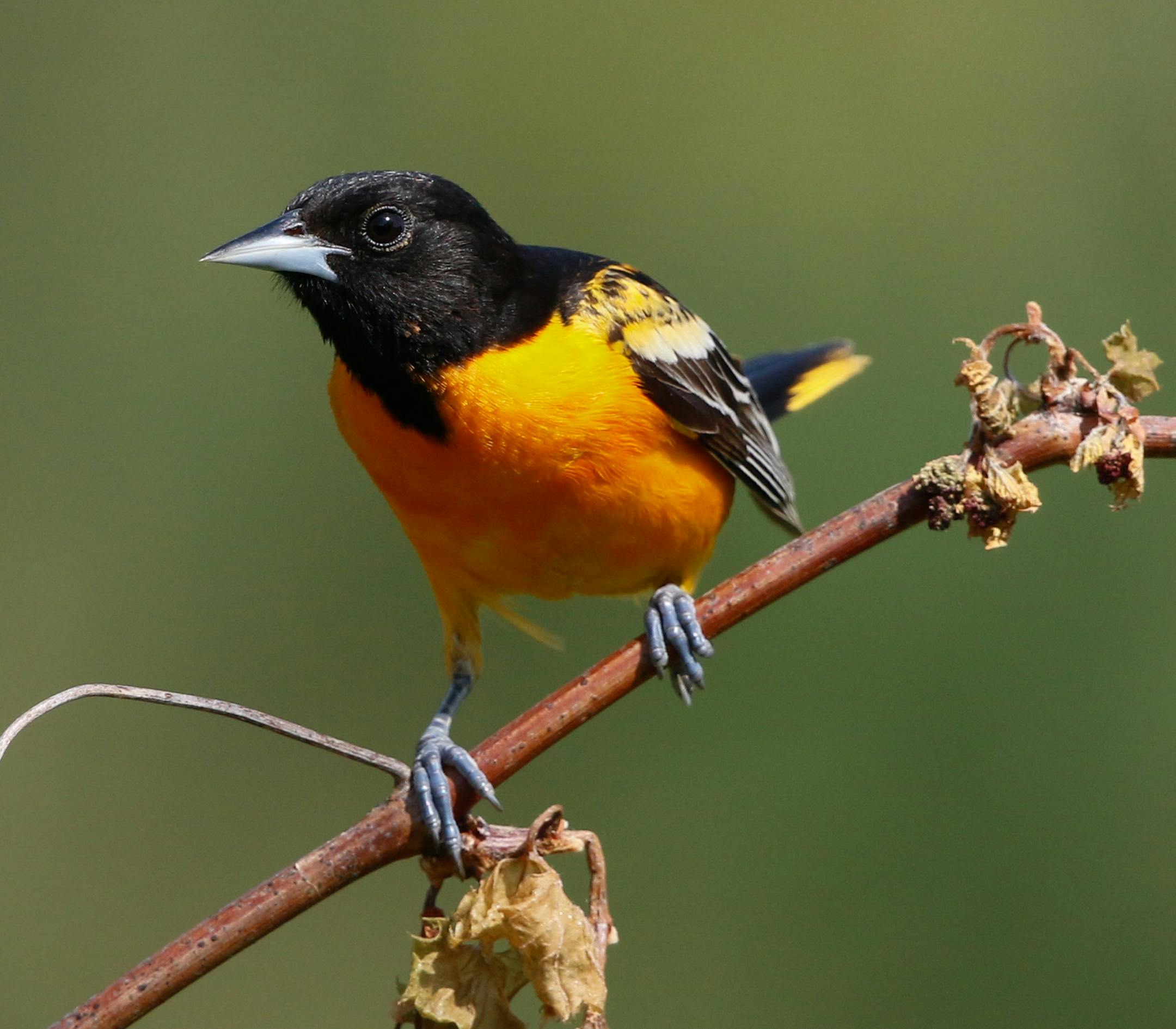
Q: I had so many orioles at my grape jelly feeder at the end of the summer, and it worries me that they may not have been getting the right food balance before migration.
A: It's good of you to provide so much jelly for orioles and other fruit-eating birds, but you don't need to worry that they're not getting appropriate nutrition. Jelly and nectar provide calories and energy, but birds balance this with protein from the insects, spiders and other invertebrates they catch.
'Wheep' bird
Q: An unusual bird nested in our old purple martin house this summer. I looked it up and the book says it was a great crested flycatcher. Are they common in Minnesota?
A: Yes, these large, handsome flycatchers are commonly found in the woods, where they fill summer days with their ringing "wheep, brrr, brrr, brrr" calls (hear them here: www.allaboutbirds.org/guide/Great_Crested_Flycatcher/sounds). They nest in cavities, whether natural or manmade. I've seen adults flying in and out of a bluebird house, indicating a nest inside, although I hadn't heard of one nesting in a martin house before.
Lined up
Q: I've always wondered why birds sit on power lines. Is it for the view? Do they line up in trees like this but we don't see them? Do their feet feel something on the wires?
A: That's a good question, and while it's lovely to think of birds on power lines getting mild foot massages from the electricity it's unlikely that they feel anything at all. The lines are insulated and birds have few nerves in their feet. The reality is that the lines make convenient perches, and give birds a great vantage point for watching for food (insects, seeds) on the ground and predators in the skies. In rural areas, the power lines provide a rare place to perch among flat farm fields. If there were trees around they'd probably prefer to perch in them (but wouldn't need to sit in a single line), because the leaves would provide some cover.

