

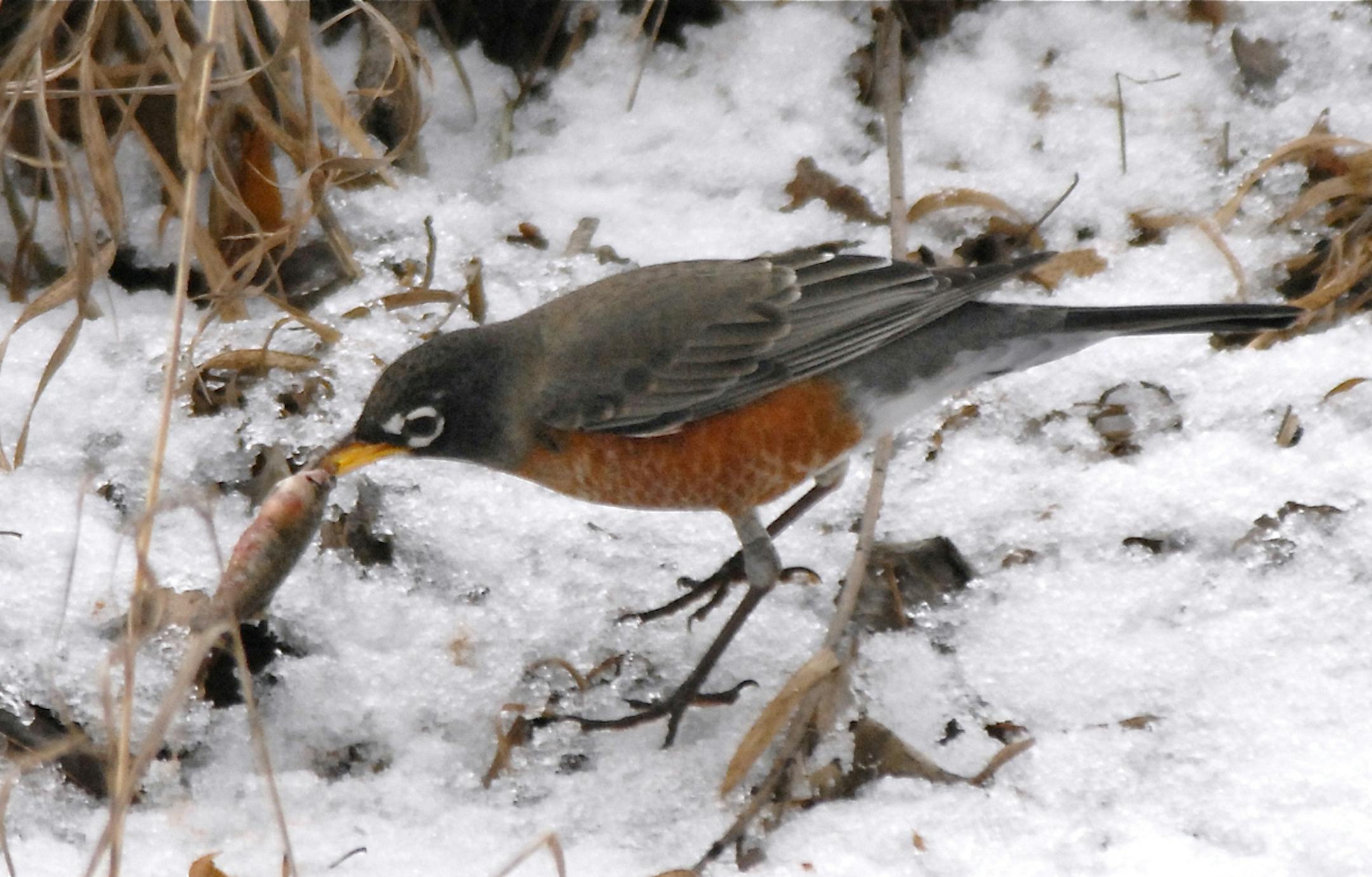
Robins are an arresting sight in winter, so unexpected against a backdrop of snow and cold. These chunky, orange-breasted thrushes are much more closely associated with the blue skies and green grass of spring and summer.
But as it turns out, robins aren't exclusively warm-weather birds. They can survive our winter conditions without hardship as long as the food holds out and they have access to open water.
And food is the major factor: A robin's summer diet is very different from its winter regime. Summer is all about earthworms and insects, providing concentrated protein for the energy-demanding tasks of raising broods of youngsters and molting new feathers. Winter doesn't require such intense bursts of energy but instead is all about survival. To meet their calorie budgets in the cold months, robins switch over to fruit and berries, a diet high in fats and sugars.
Diet change
We look for robins hopping across the lawn from May through September, but when the ground freezes, they move higher to feed in shrubs and trees. At this time of year one of their favorite foods is the hackberry, a tasty, pea-sized berry found on tall, imposing deciduous trees. This past January the hackberry trees in a park near my home were festooned with hundreds of robins noisily snapping up the berries. And they were not alone: Woodpeckers, finches and squirrels were eager to share the bounty.
When the hackberries were gone, so were the robins, moving off to find new sources of food. They might drop down onto a stand of crabapple trees one day, later moving on to mountain ash or juniper berries. A flock may be found bending the branches of wild rose bushes as they gobble the hips or scurrying along wild grape vines to harvest the desiccated fruits. The dry-looking clumps on top of staghorn sumac shrubs are another source of food as is (unfortunately, since birds help it spread) the invasive buckthorn, with its big, dark berries.
Those birds that remain behind in winter travel in flocks, moving from tree stand to shrub clump to meet their daily energy needs. Flocking confers the benefit of providing many eyes to search for new food. Winter's robins sleep together in large flocks at night, usually in dense stands of conifers.
Warming trend
Climate records show that winter nights in our region are becoming less cold, and robins are capitalizing on this. To be clear, the American robin is a migratory species and the vast majority of them still leave the state in autumn. Most head to the South, while a few travel as far as Guatemala for the cold months. But a few hardy birds have always stayed behind in the north in winter, and more are doing so all the time.
"The number of robins wintering in northern states has been increasing dramatically in recent years," says Duluth naturalist and bird expert Laura Erickson, "possibly due to warming trends and an increase in ornamental fruit trees."


