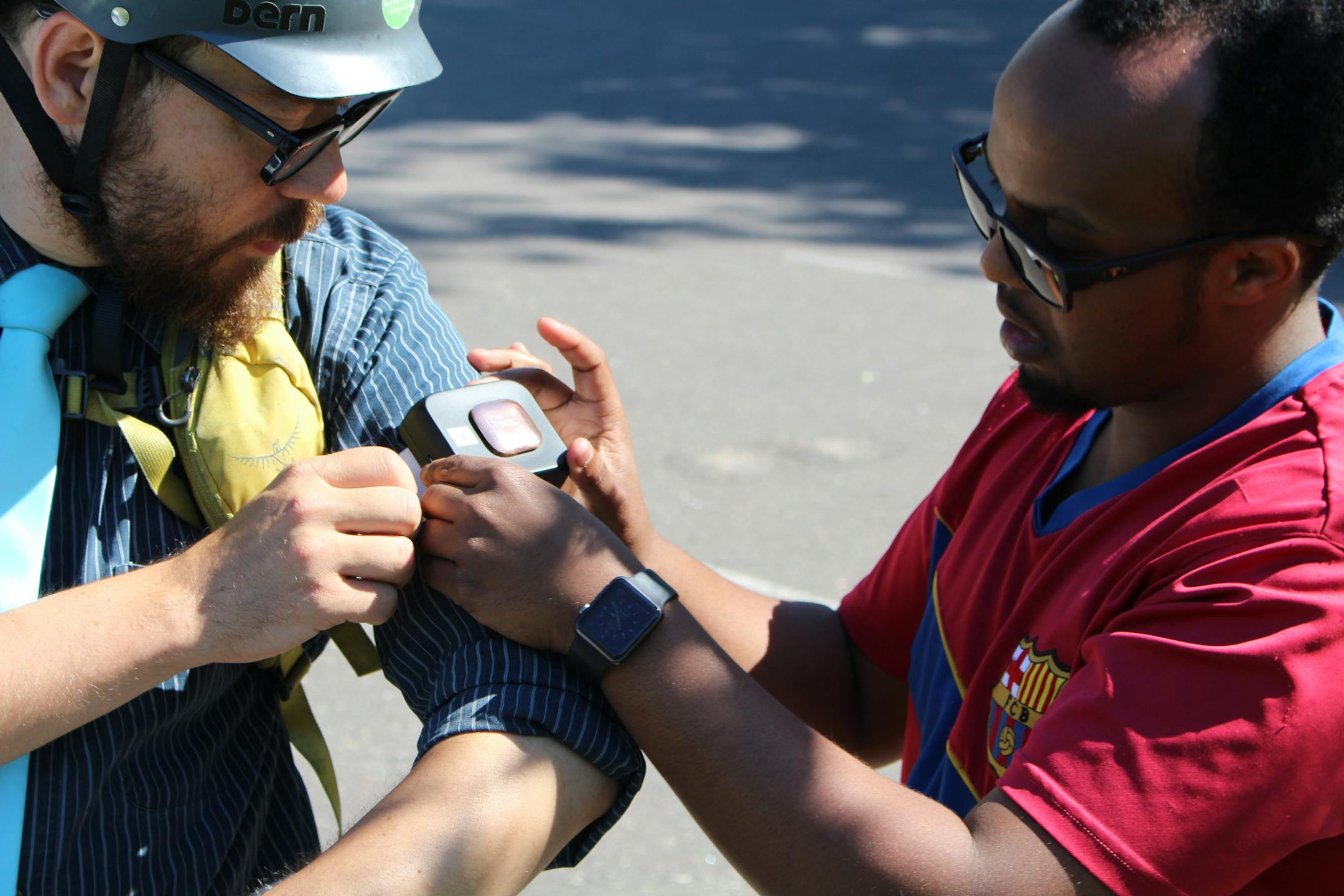
Bicyclists are used to getting left in the dust, but now a group of pedaling Minneapolis staffers is collecting it for science.
Air-quality sensors are hitting the streets in Minneapolis and St. Paul this summer as local regulators experiment with cutting-edge, low-cost wearable devices that could illuminate how pollution varies across cities and neighborhoods. They hope those readings reveal more ground-level detail than the large, regional air monitors that report broader trends across the metro area and the state.
"People want a block-by-block ranking of air quality," said Cassie McMahon, environmental research scientist with the Minnesota Pollution Control Agency (MPCA). "And that's logistically impossible to do with our traditional monitoring equipment."
Several Minneapolis employees on bicycles will strap devices to their arms and pedal to all corners of the city testing the readings against a high-end monitor. And in a separate project, the MPCA will distribute about two dozen similar devices to a group of people in St. Paul's south St. Anthony Park area, giving residents there license to experiment with collecting localized air quality data.
Wearable air pollution monitors got a test at the 2015 State Fair. The highest readings? The smoky stretch of Judson Avenue where charbroiled pork chops on a stick are served up. The monitors, which are made by a variety of companies, link with smartphones to report and map data in real time.
Dan Huff, Minneapolis' director of environmental health, said they could ultimately be strapped to citizens to measure their exposure while cooking at home, for example, or on the bus to work.
"A dream study would be having people with asthma wear these," Huff said, noting that Minneapolis has the highest asthma hospitalization rates in the state. If someone noticed symptoms flaring up, they could try to pinpoint the cause. "Was it because there was an increase in [particulate matter], or was it something completely different?"
Looking for variations
The wearable devices are not as accurate as the 53 large sensors that the MPCA uses to determine if regional air quality is meeting federal standards. Those monitors, typically atop buildings, cost more than $150,000 apiece to install, however, while wearable sensors cost several hundred dollars.