

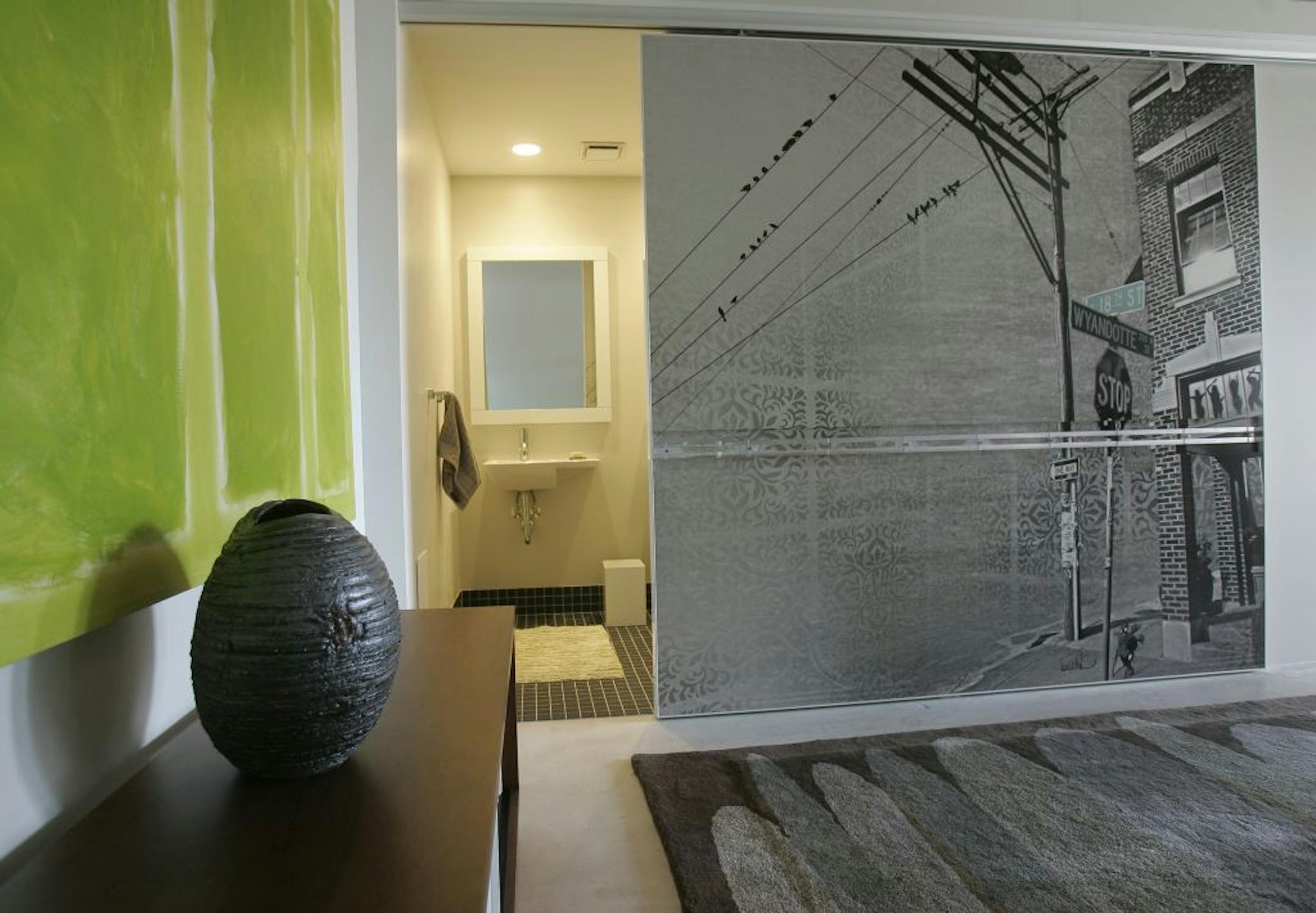
The urban barn door is moving to the home front.
Demand for the movable monoliths has grown in recent years as homeowners, including condo dwellers and suburbanites, are looking for solutions with character.
Besides their industrial-chic style -- a product of the lofting of America -- the sliding doors and hardware serve useful purposes. An everyday hinged door takes up 9 square feet, eating up precious floor space in a hallway or square-foot-crunched condo, points out Jeremy Crowder, vice president of KNC, a third-generation door hardware business in Canada.
"Not only are sliding doors efficient for the homeowner, they're good for condo developers," Crowder says.
However, extra wall space is required to the left or right of an urban barn door to accommodate its large size. Ideally, the door should be at least 6 inches wider than the opening. Still, it's more efficient than a 36-inch swinging door or sets of them.
Hardware is often the priciest part of the indoor sliders, usually starting at about $1,000. A few months ago, KNC introduced the Crowder Round Track, exposed European-style stainless steel with nylon wheels at the top. A barely visible guide-block in the floor helps keep the door on track. All it takes is two fingers to silently and smoothly glide 400 pounds of wood, metal, glass or other material. The hardware is shock-absorbing to keep a residential door from sounding like an authentic hay-holding barn door.
Lee Norman recently bought the neighboring unit to his condo in Kansas City. The wall between the two loft spaces was removed. Norman wanted the space to be open sometimes, closed others.
"'Shut' is important," says Norman, whose 28-year-old son is temporarily living with him. Norman wants him to have privacy. "But he knows they're both my sides."


