

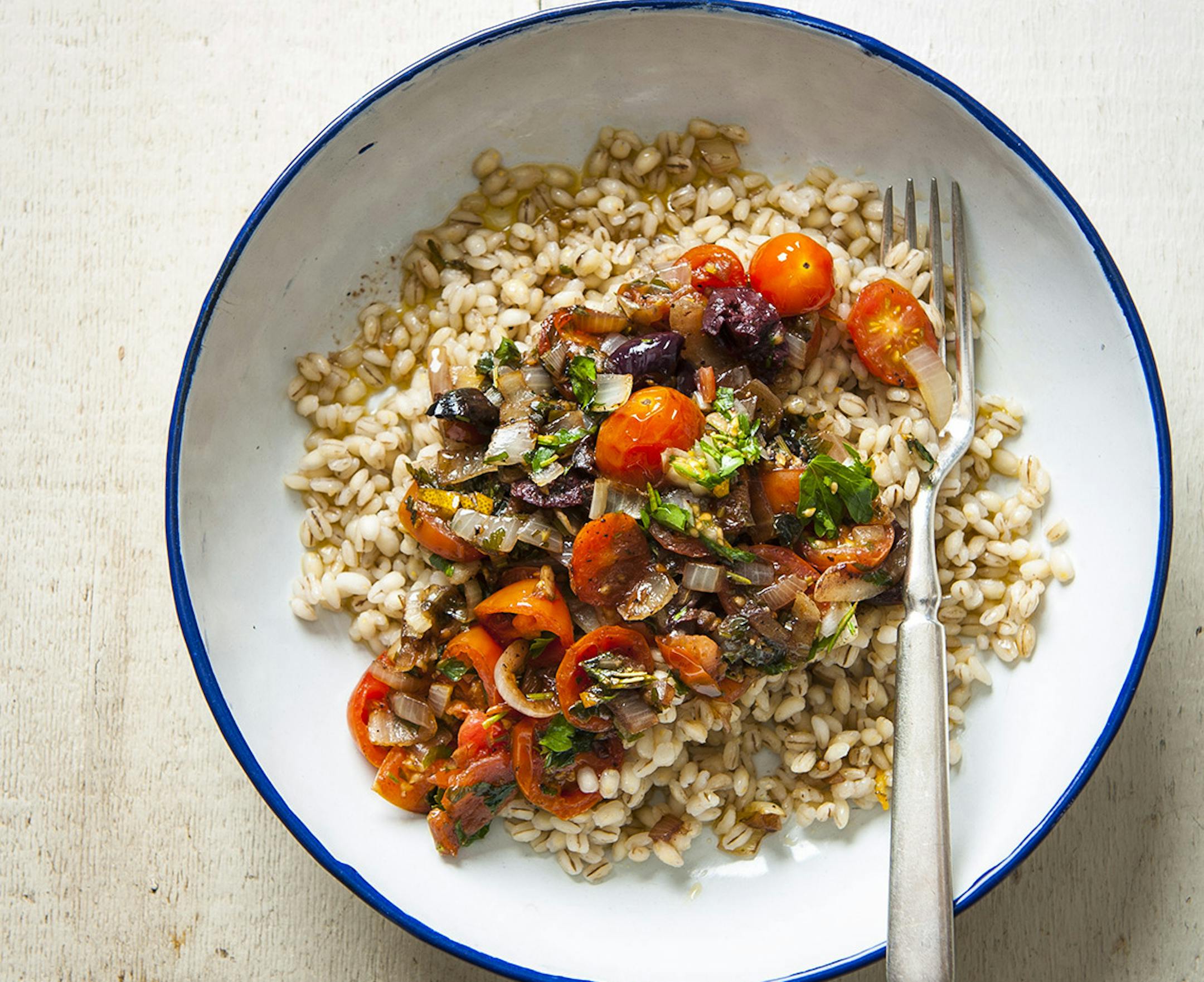
Much as I like white rice, it's tricky to cook. Not so with barley, which has become the new white rice for me. It has a heartier texture and rich, wheaty flavor, and stands up to rich curries, stews and roasts.
Barley grows well in our region and is harvested for food, animal forage and malt, which is used to make beer, whiskey, vinegar and more. Many cooks overlook barley, though it's versatile, nutritious, inexpensive and widely available. As important, it's easy to cook and leftovers store well.
Barley is a glutinous grain that can be used to thicken soups and stews and to replace rice in risotto. Barley flour makes a dense, chewy bread. Rolled barley is a hearty alternative to oatmeal. In England, barley tea, made by simmering the toasted grain in lots of water, is a popular iced summertime drink; sweetened with honey, it's a warming winter brew.
Sometimes called groats, barley is sold several ways. Pearl barley, the most widely available, is also the most popular. Extensive processing removes the two outer hulls along with the bran, leaving ivory-colored grains that are lower in fiber than other varieties. Pearl barley takes about 25 to 35 minutes to cook.
The bran layer remains intact for either hulled or whole-wheat barley, where only the outer hull is removed. These are high in fiber and nutrients, but require a longer cooking time than pearl barley, at least 45 to 50 minutes.
Quick barley is pearl barley that has been steamed and then dried; it cooks in less than 15 minutes and has the least fiber, nutrients and flavor.
Barley is especially good with mushrooms or earthy root vegetables in the fall and winter. Come spring, it works well with peas, spinach and tomatoes.
In risotto recipes, pearl barley is far less temperamental than Arborio rice. Unlike a traditional risotto that requires constant stirring with judicious additions of warm stock, with pearl barley it essentially cooks on its own with an occasional stir.


