When Barbara Kingsolver is not writing, she may be shearing sheep, or harvesting vegetables. Most recently, peppers, tomatillos and cardoons. Cardoons?
"They're like celery on steroids, about 4 feet tall," she said. "You cook and eat the roots of the leaves, like artichokes."
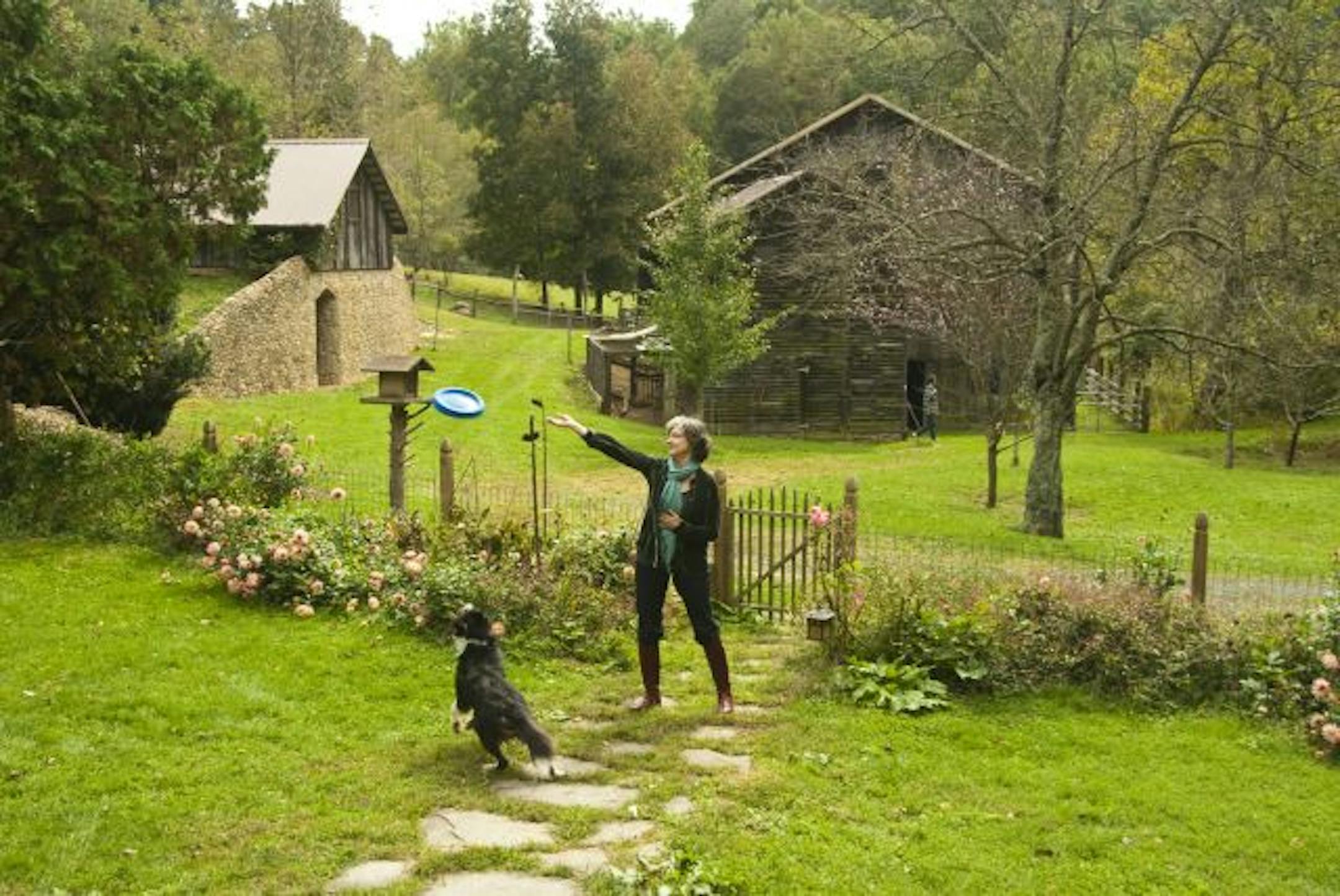
Kingsolver, whose seventh novel, "The Lacuna," comes out next week, described farming as "wonderful for the body and spirit. It gets me outside every day, and unlike the gym, you can't blow it off." So each weekday at 7:30 a.m. she pulls on her mud boots and first walks her daughter Lily to the school bus, a half-mile down the lane from her Appalachian farm in the southwestern corner of Virginia between Roanoke and Knoxville, Tenn.
"If I didn't have a family and a farm, I would write every minute of every day. So it's just as well that I do have these other things in my life to keep me healthy," she said.
In the two years since Kingsolver's last book, "Animal, Vegetable, Miracle," a bestselling first-person paean to being a locavore, the eating locally movement has taken off.
"It was the crest of a wave, which astonished us. I've never been trendy in my life. Instead, I sit at my desk and dream up the next crazy idea."
"The Lacuna," Kingsolver's first novel in nine years, is her next big conversation starter. As always, she writes about the ways that cultures clash, but also the ways that people connect and find commonality, or at least empathy. Whether her stories are set in the American South or Southwest, Africa, Mexico or Central America, her characters' personal lives play out against the broader conflicts of history. Through it all, a primary theme emerges: the continuous human struggle to determine not only what belongs to individuals vs. the community, but to what and whom we all belong.
This time, an American boy named Harrison Shepherd grows up in Mexico in the 1920s with his man-hopping mother. Harrison winds up working for Diego Rivera and Frida Kahlo, meeting Leon Trotsky and witnessing social revolution both in Mexico City and back home in the States, where he eventually becomes a celebrated writer. But he is caught up in a McCarthy-foreshadowing scandal fomented and distorted by rabid media (symbolized early on by howler monkeys), and the most widely printed words he ever writes wind up being: "Most of us never choose to believe in our country, we just come up short on better ideas."