

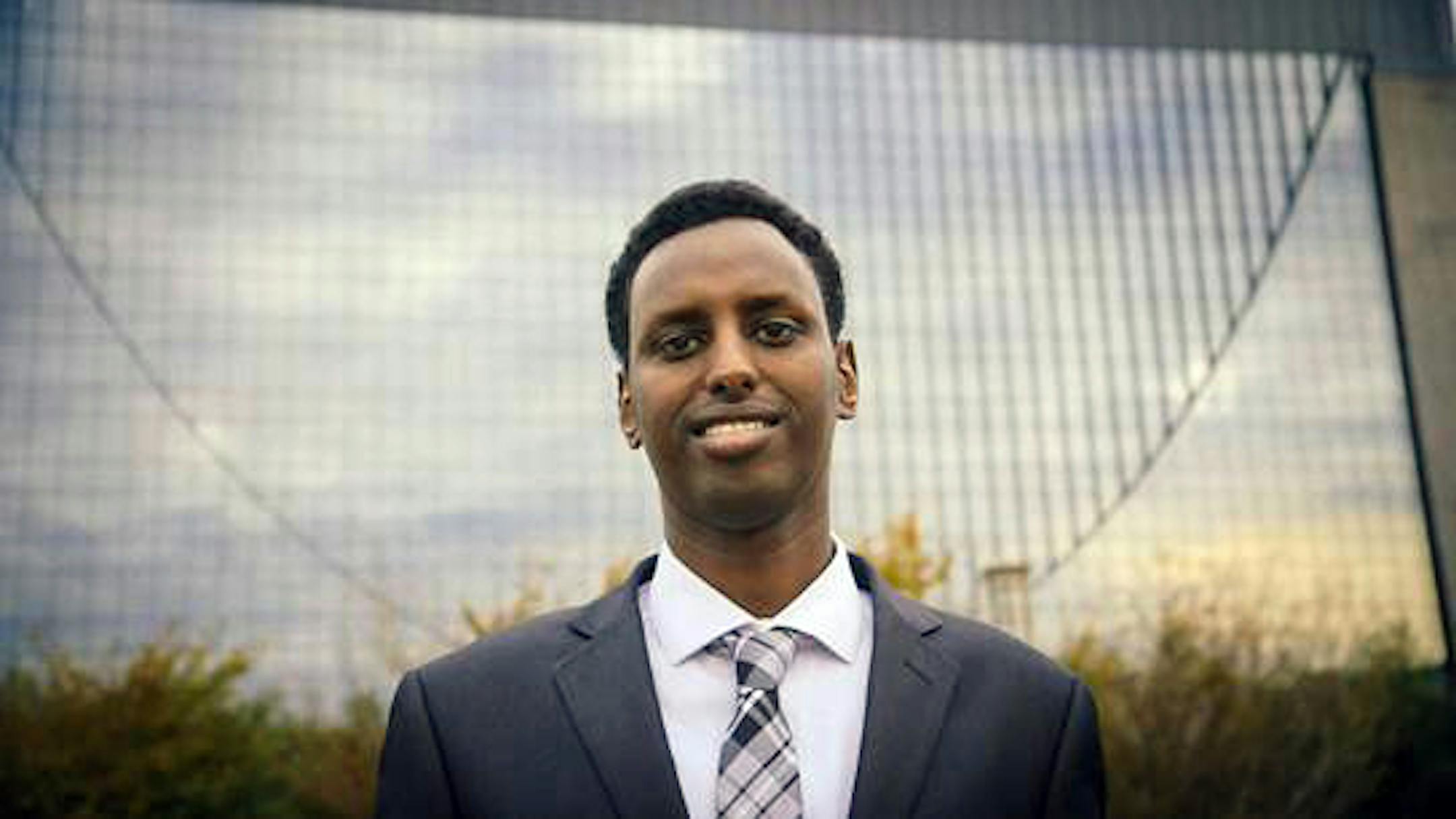
When 12-year-old Hamse Warfa arrived in a Kenyan refugee camp, he received a piece of paper with a number, which he used to get food rations and other services. For him and his parents — former business owners in Mogadishu — the papers came to symbolize a lost identity.
Now a doctoral candidate and Bush Foundation fellow in the Twin Cities, Warfa has developed software that he hopes will allow refugees and others to create a digital "economic identity," helping them track financial transactions and build credit. Along with the likes of Google, MasterCard and Microsoft, Warfa's company, BanQu Inc., is taking part in an initiative the Obama administration announced this week to get the private sector more involved in helping refugees.
"When you own your data, you become a dignified human being," he said.
Earlier this month, Obama announced a goal of resettling 110,000 refugees in the United States in the coming fiscal year — a 30 percent increase that drew sharp criticism from congressional Republicans and others. The Obama administration is also making a push to get other countries and businesses to pitch in more to help the world's 21 million refugees, more than at any time since World War II.
At a summit in New York on Tuesday, the administration announced commitments from 50 U.S. companies, including BanQu. The company's co-founder, Ashish Gadnis, an immigrant from India, attended the event.
Warfa says shared experiences with extreme poverty and displacement brought the men together to launch the company.
"In the camp, we became statistical figures," said Warfa. "We lost our identity and our dignity."
Warfa, who is completing a doctorate in public administration at Hamline University, left a job with Margaret A. Cargill Foundation to start BanQu. The effort won a $350,000 grant from the Rockefeller Foundation.


