

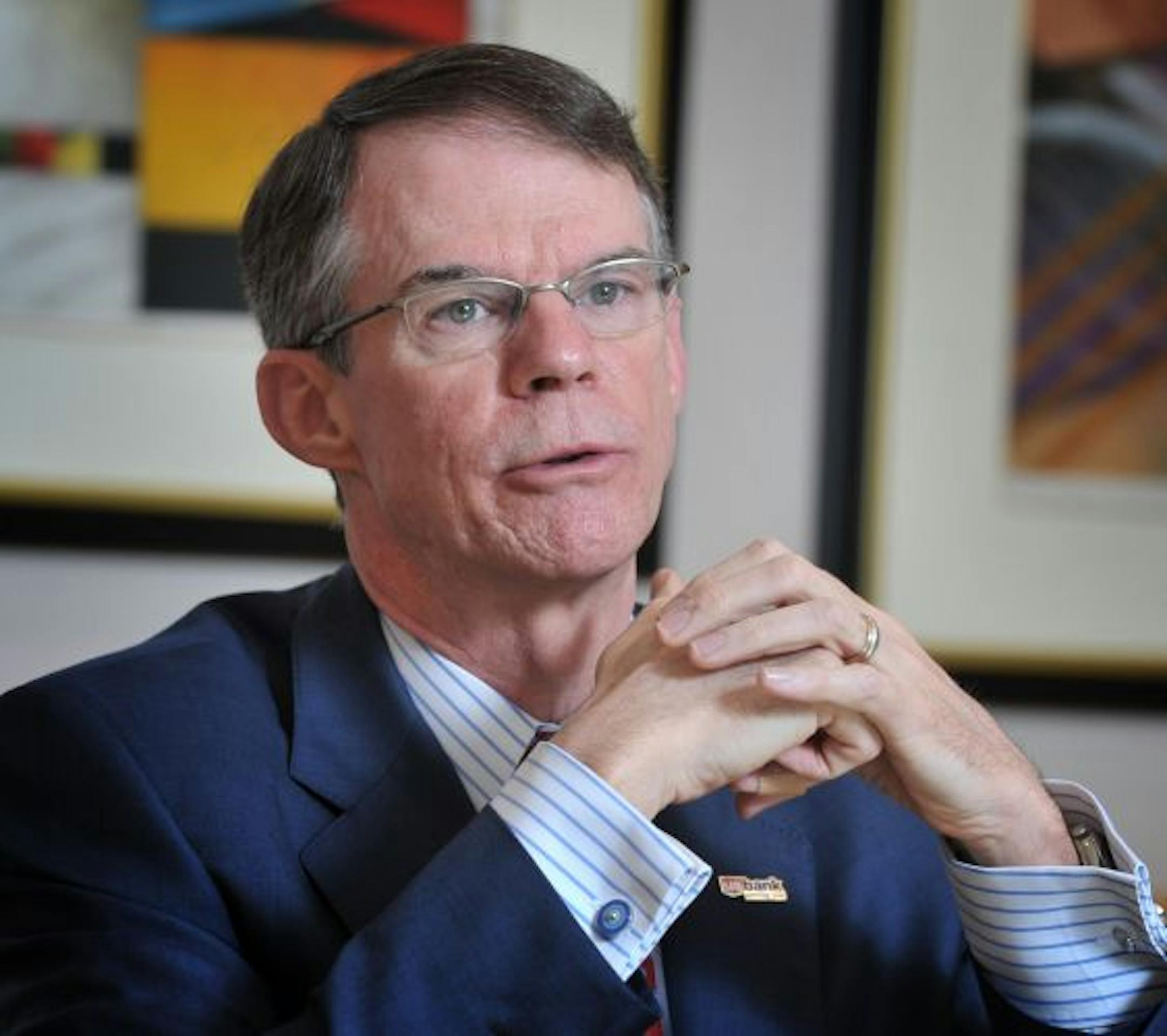
U.S. Bancorp CEO Richard Davis has emerged the unassuming and candid national voice of an industry that's been in the public dumpster since the financial crisis began two years ago.
"We got into this [mess] because a number of our brethren bankers made some loans they should not have," Davis said of the real estate bubble and mortgage-backed securities debacle. "We need to regain the trust of Americans."
In a wide-ranging September interview, Davis also pointed out that the Federal Reserve and Bush-era regulators did little to cool the boom or curb the dangerous-to-criminal practices by many non-bank players until it was too late.
Davis this year became the unanimous, clean-whistle choice to head the Financial Services Roundtable, the industry trade group for the nation's 100 largest financial institutions. While the roundtable represents large banks and money managers, it does not represent the big Wall Street brokerages that drew public wrath for their role in the global financial crisis.
Davis, 52, distinguishes between the mainly responsible commercial lenders in his industry and bad actors such as Washington Mutual and Countrywide that set the stage for a recession and record foreclosures. That group also includes failed Lehman Brothers, still-ailing Citigroup and AIG, which took $150 billion in taxpayer investments to stay afloat after its housing-related plays tumbled one of the world's paramount insurers.
By contrast, U.S. Bancorp quickly raised private capital in early 2009 to pay back $6.6 billion in government rescue funds, remains well capitalized, has acquired about 10 smaller or capital-depleted businesses over the last couple of years, and is considered likely to make more acquisitions.
USB reported strong growth in earnings, revenue and loans in the second quarter. Its stock price, albeit down from its pre-crash high of $37.99, trades around $21.80, sharply higher than its March 2009 low of $8.82.
Davis and his board plan to increase USB's dividend, which was slashed in 2009, as soon as the Federal Reserve gives the high sign to healthy banks, probably in early 2011.


