

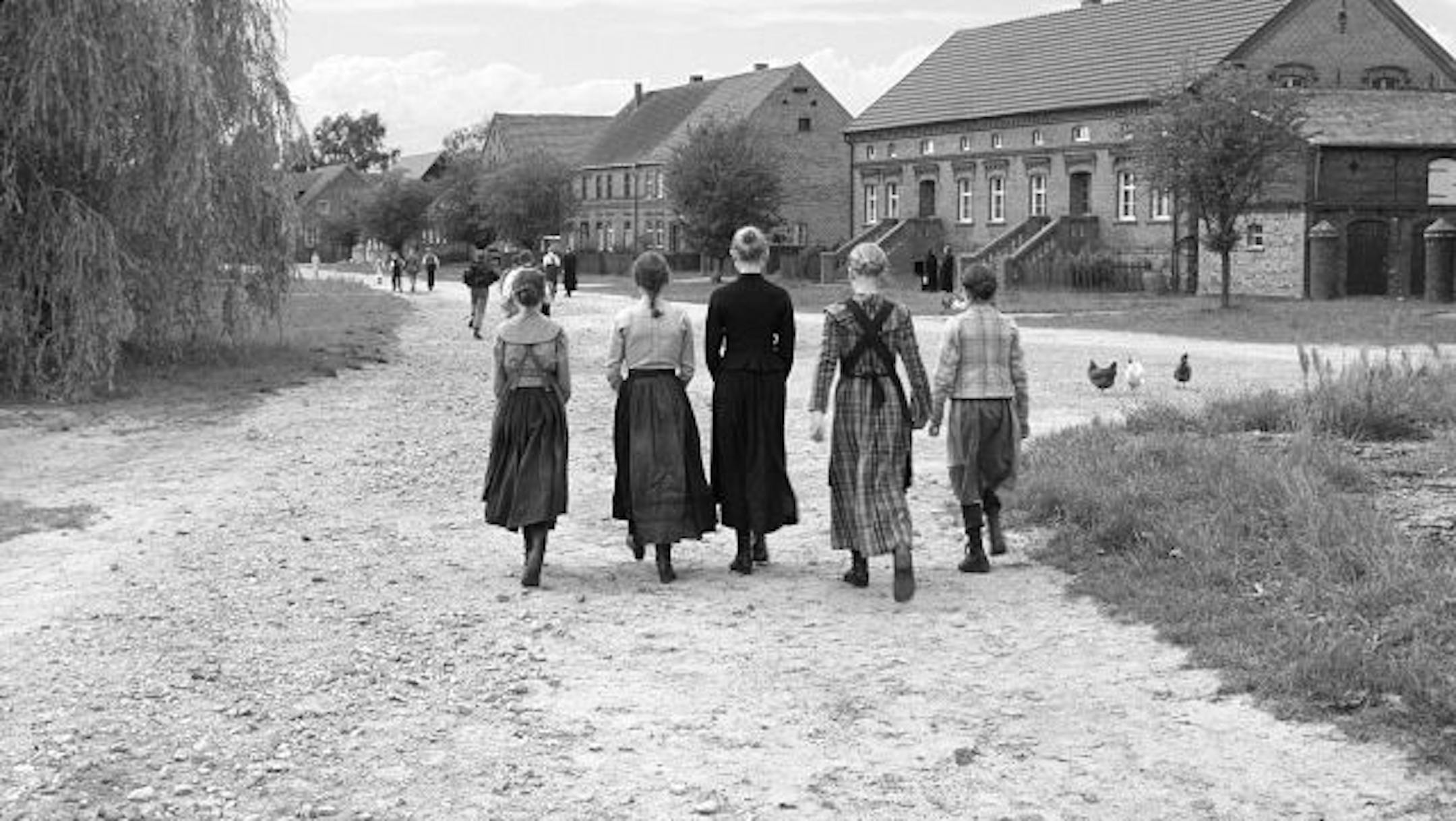
We don't go to Michael Haneke films for comfort, but to gaze through a glass darkly. That vision -- tense, provocative and unnerving -- is on full display in "The White Ribbon," a culmination of this difficult director's brilliant career.
Set in an ordinary German village on the eve of World War I, the film looks at the children who would grow into the generation that would bend to Hitler's sway. Shot in black and white, which serves as both a statement and a style, Germany's Oscar entry has rightfully been collecting critical acclaim since it took the top prize at the Cannes Film Festival last May.
Here the dramatic interplay of innocence, evil and human behavior so often on Haneke's radar has been joined by themes of guilt and responsibility. He's woven all this into a mysterious, often eerie parable that attempts to explain the seeds of Nazism. That the setting is a seemingly idyllic farming community is not accidental.
But accidents are very much at the heart of "The White Ribbon." As the narrator explains, there were a series of strange events years ago in his village that "could perhaps clarify some things that happened in this country." His grandfatherly, almost apologetic tone might lead you to expect that he will fill in all the missing pieces for us. Don't be fooled. This is a film that requires concentration -- a don't-blink, don't-breathe approach will serve the viewer well.
The world we're dropped into by cinematographer Christian Berger, whose work with Haneke includes two of the director's better known films, "Cache" and "The Piano Teacher," is both beautiful and harsh. The farmland, with its rolling fields of wheat, stands in lush contrast to the families in the region, hard folk tied to a rigid Protestant vision of morality, where pleasures are few, forgiveness is slow in coming and retribution rules the day.
"The White Ribbon" is told from the point of view of the village schoolteacher, with Christian Friedel playing him as a young man onscreen and Ernst Jacobi narrating as his latter-day, much wiser and reflective self. The story is framed by the family life of all those who make up the region.
It all begins when the village doctor (Rainer Bock) is thrown after his horse runs into a trip wire set on the road to his home. After school that day, the village children gather at the doctor's house. When someone spots them outside, innocent faces smile and explain that they're just there to see after their classmate, the doctor's teenage daughter.
But their politeness is eerie; the way they move through the village in groups suddenly seems sinister. Haneke is just starting to sow the seeds of mistrust, and like any good provocateur, he soon has us suspecting everyone in town of secret schemes and dark deeds.


