
Aspirin studies no cause for panic, Twin Cities doctors say

Risk-benefit calculation changes for some, not all.

September 28, 2018 at 5:33AM
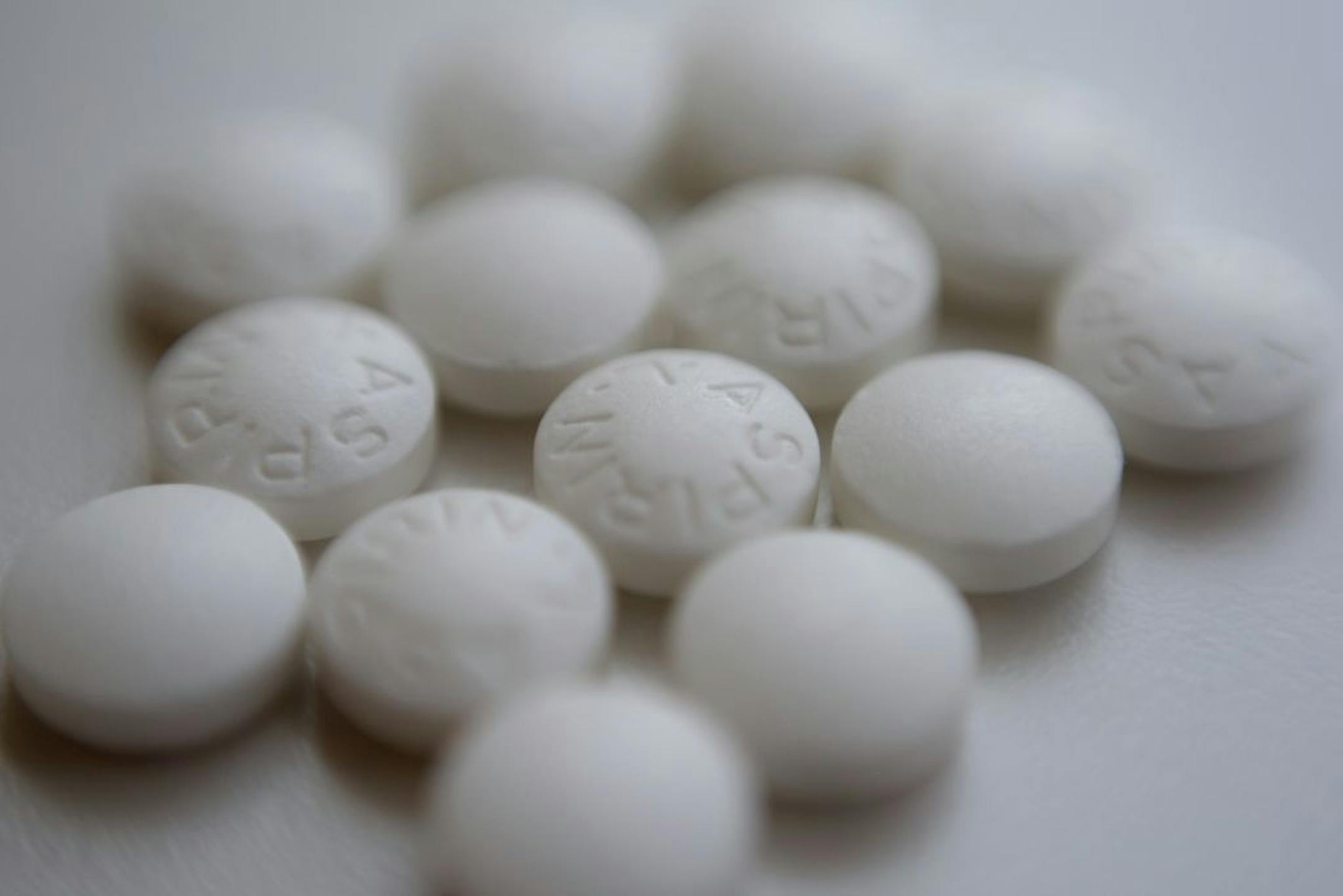
This Thursday, Aug. 23, 2018 photo shows an arrangement of aspirin pills in New York. New studies find most people won't benefit from taking daily low-dose aspirin or fish oil supplements to prevent a first heart attack or stroke. Results were discussed Sunday, Aug. 26, 2018, at the European Society of Cardiology meeting in Munich.
This Thursday, Aug. 23, 2018 photo shows an arrangement of aspirin pills in New York. Three studies challenged the guidance for certain older adults taking aspirin daily. (Associated Press/The Minnesota Star Tribune)

Dr. Karen Margolis hasn't had to face patients since her study weakened the argument in favor of daily aspirin to prevent cardiovascular disease, but she has had to face her husband, and her father.

"Both are taking aspirin because I recommended it, once upon a time," she said.

Aspirin has been a top topic all week — in clinics, living rooms and offices — because three studies challenged the guidance for certain older adults taking it daily.

The latest study, known as ASPREE, followed 15,000 healthy adults ages 70 and older over five years. It found that those taking aspirin had no greater protection from disabilities or heart attacks but did have higher drug-related risks of internal bleeding.

Margolis and Bloomington-based HealthPartners enrolled 250 adults. Minneapolis-based Hennepin Healthcare led the U.S. arm of the study, which was based in Australia.

Dr. Anne Murray, the Hennepin geriatrician who led the research, has been flooded with questions about her results: "It's been a combination of patients and colleagues, some of whom are taking aspirin themselves."

Many aspirin users will be unaffected. The study examined "primary prevention" in people who haven't had cardiovascular events. It has no bearing on aspirin usage for people who have already suffered events such as heart attacks. The study also only examined aspirin usage in people 70 or older, for whom there was no concrete evidence of benefit anyway.

One of the other new studies examined aspirin usage in people 55 and older at elevated risk of heart problems. Murray said its results weren't conclusive enough to overturn current aspirin guidance.

"I would not change what you're doing now if you're in that 50 to 69 range," she said.

The findings create dilemmas for some, such as people 70 and older who have been taking aspirin for years. Should they stop? "We don't have a great answer," Murray said.

Follow-up research will target these questions.

One in 10 patients in ASPREE (Aspirin in Reducing Events in the Elderly) were already taking the pills and had to stop before enrolling in the study. Some then only took placebo pills. Following them could determine whether earlier aspirin use had a "legacy effect" after they stopped taking it.

Authors of the studies will meet soon to discuss how their results might alter the U.S. Preventive Services Task Force's aspirin guidance.

For now, the guidance remains intact. And while it might be cliché, Murray offered one tip to patients debating whether to take aspirin: talk to your doctor.

Jeremy Olson • 612-673-4250

about the writer

about the writer

Jeremy Olson

Reporter

Jeremy Olson is a Pulitzer Prize-winning reporter covering health care for the Star Tribune. Trained in investigative and computer-assisted reporting, Olson has covered politics, social services, and family issues.

See Moreicon