President Donald Trump's latest shot in the trade war he started a year ago ricocheted through Minnesota on Friday.
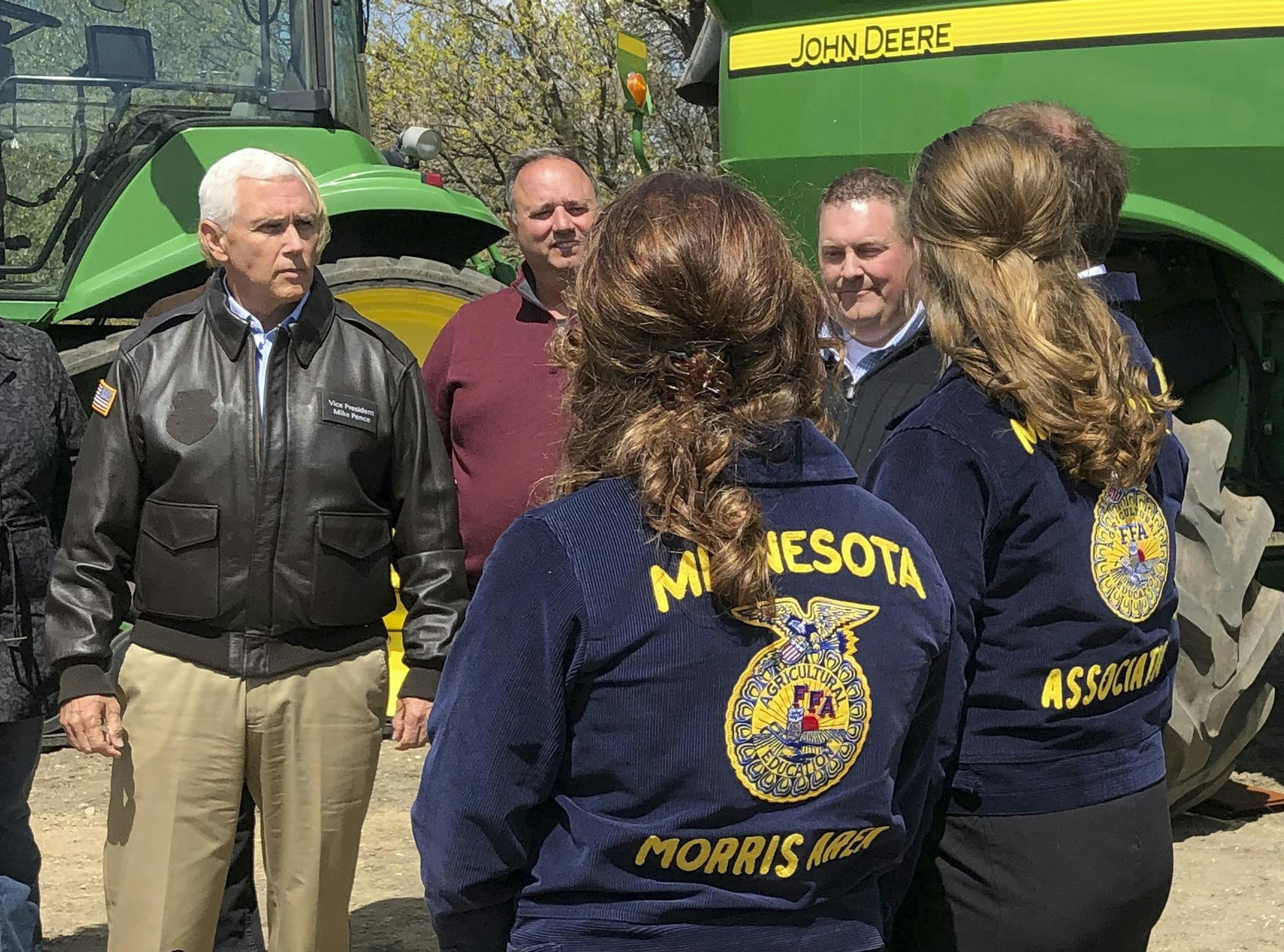
Brian Thalmann, who farms near Plato, said he felt "extreme frustration" after learning that Trump threatened tariffs on Mexico just as the two countries and Canada complete a new free trade deal. "We can't keep doing this. Our country is known for being a dependable, reliable supplier, and we've worked for years to build that reputation," said Thalmann, president of the Minnesota Corn Growers Association.
Trump late Thursday tweeted that he would impose 5% tariffs on nearly $360 billion of Mexican goods on June 10 unless Mexico does something to reduce the number of immigrants entering the U.S. at its border. He did not specify precisely what Mexico needed to do but said the tariffs would rise incrementally to 25% if nothing happened by Oct. 1.
The threat provoked stronger criticism than Trump saw from previous tariff threats, with Republicans in Congress, business executives and leaders of Mexico all pushing back. Trump began imposing tariffs on other countries in May last year, initially to help U.S. steel producers and later in response to partners' retaliatory actions.
The latest tariff threat also sent stock prices lower Friday, with manufacturers and food companies hit hard. General Motors shares fell 4%. Shares in 3M Co., Minnesota's most valuable manufacturer, closed down a half-percent, ending a punishing month in which the stock dropped 15% in value.
Tariffs on the nation's largest trading partner would increase the prices that U.S. consumers pay for cars, electronics, food and many other products. They also raise the prospect that Mexico would retaliate with tariffs of its own.
That would damage the free movement of parts and semifinished goods between manufacturing plants in the two countries. A prolonged tariff battle could scuttle ratification of the United States-Mexico-Canada Agreement, which is a new version of NAFTA, the 1990s free trade pact between the three nations.
"Certainly this isn't going to help," Kevin Paap, president of the Minnesota Farm Bureau, said as he talked about the new free trade pact. "We feel like we're taking a step backward because of a couple tweets."