The extreme cold came and we bundled up. Then the snow came and we shoveled, and then shoveled some more.
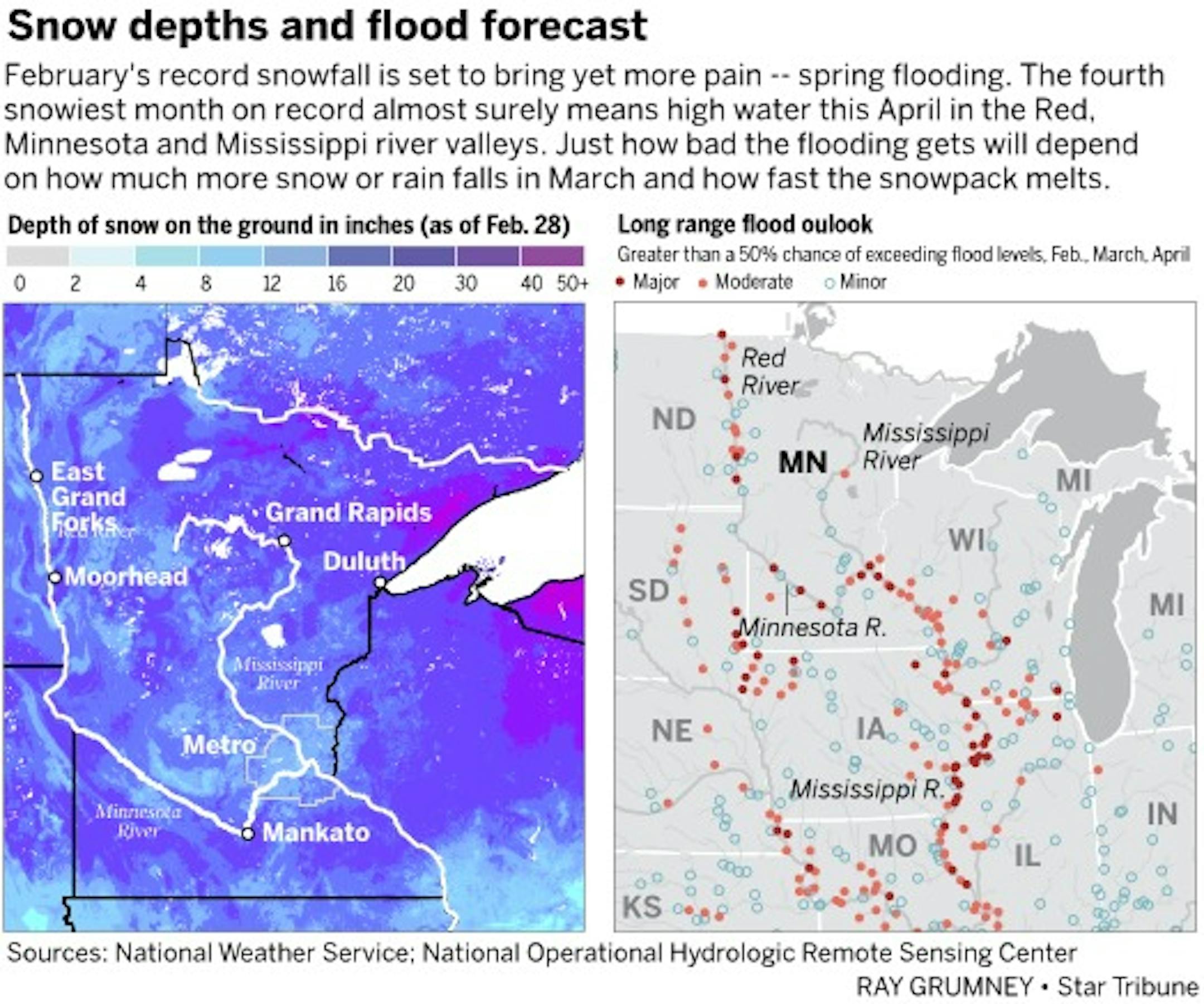
Now there's growing concern that winter's onslaught could bring trouble this spring. With snowbanks large enough to engulf small vehicles and another few inches of snow expected Friday, there's a higher-than-usual chance of spring flooding, said Craig Schmidt, senior service hydrologist with the National Weather Service in Chanhassen.
So far, steady cold has kept most of Minnesota's snow from melting, and 18 to 30 inches blanket the ground, Schmidt said. Underneath, the soil's frost depth is 2 to 4 feet. If the piles of snow melt too rapidly, much of the water would wash over the frozen ground into rivers, creeks and low-lying areas. Added to that, a fairly wet fall in some areas, particularly southern Minnesota, saturated the soil before the ground froze, leaving even fewer places for snowmelt to go, Schmidt said.
For now, however, it's a wait-and-see game from the Red River Valley down to the Mississippi, Minnesota and St. Croix rivers.
"There are two scenarios," Schmidt said. "In the best case, we would have a slow, gradual warmup with temperatures in the upper 30s and 40s during the day and then dropping to below freezing at night. If we get that, it's an orderly melt."
Streams and rivers would rise, creating some minor flooding but nothing catastrophic, he said. That scenario would mimic 2014, when the snowpack was as deep as this year's and the melt was gradual.
Then there's the worst case: a sudden warmup with a string of days featuring highs in the 60s and temperatures falling only to 40 to 45 degrees at night, with high dew points, setting off a rapid meltdown.
For those who watch flooding, the season took a turn in late January when cold and snow combined to rack up snow totals. In the Twin Cities, the 39 inches that fell last month made it the snowiest February on record.