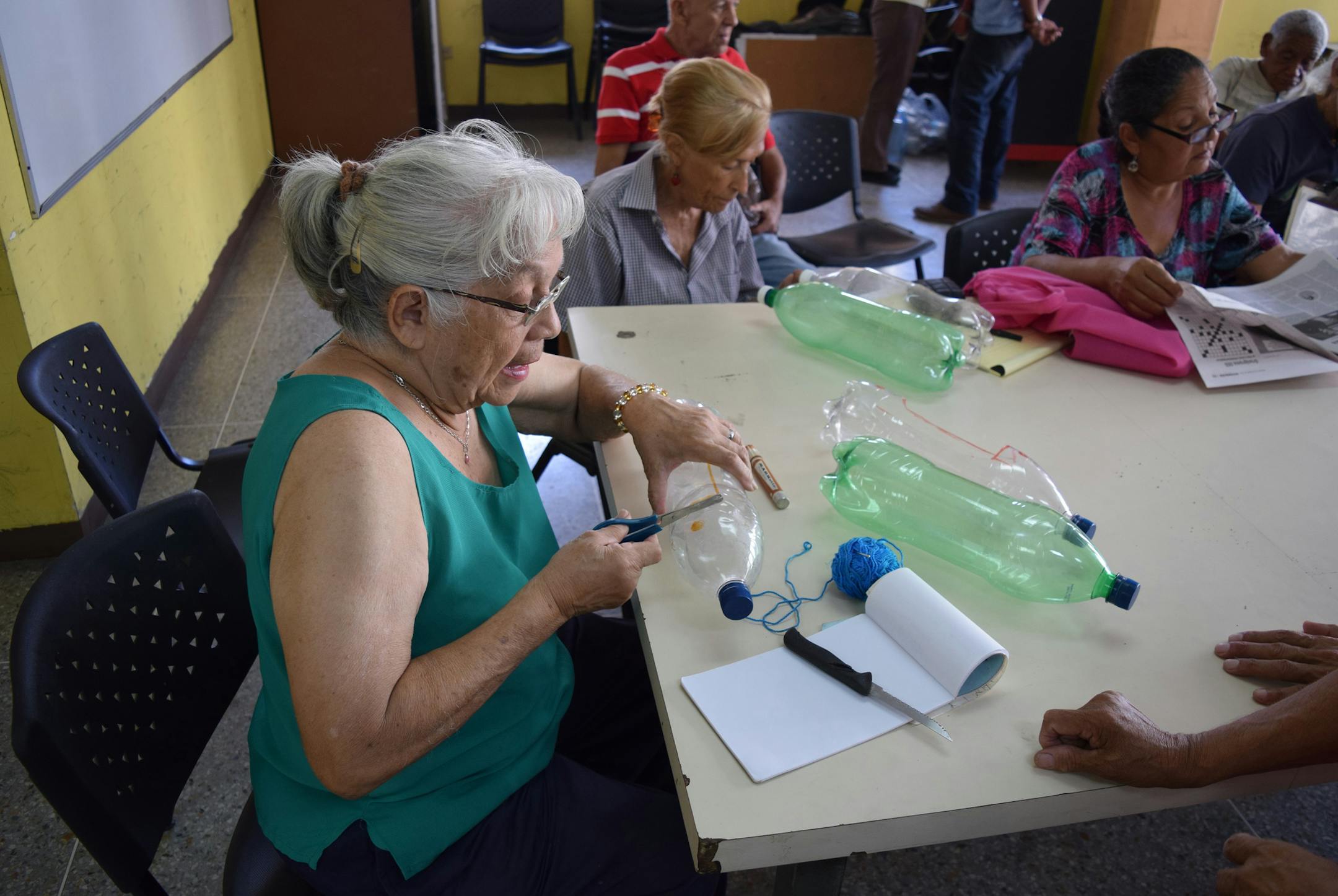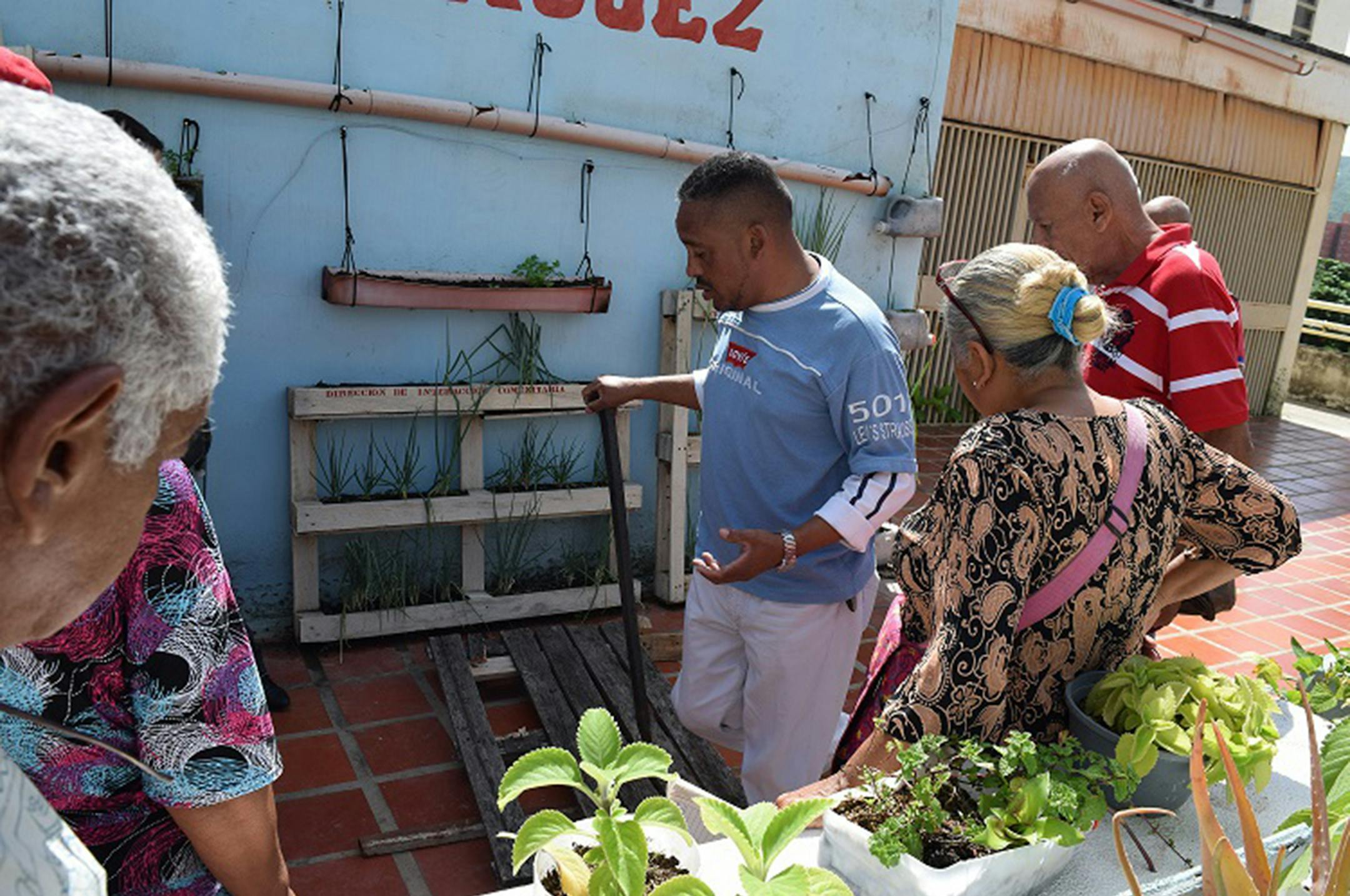
CARACAS, Venezuela – On a recent weekday, just a few miles from where the government was holding military exercises preparing for a foreign invasion, about a dozen senior citizens were gathered in a classroom learning about another wartime innovation.
"Vertical gardens were pioneered during World War II," a teacher said as he instructed them on how to turn plastic bottles into planters that could be hung on a wall or balcony. "We need to take advantage of every space possible."
This is Venezuela's latest weapon in its battle against hunger: urban agriculture.
As the country has been swamped with images of empty shelves, soul-crushing lines and food riots, the administration is urging city-dwellers to embrace modern-day Victory Gardens.
In January, President Nicolas Maduro created the Ministry of Urban Agriculture, saying it was critical to "fight the grave economic situation" being produced by "falling oil prices and the war being waged by the U.S. Empire against our national economy." More recently, the administration has said metropolitan areas should grow at least 20 percent of their own food.
Petra Meneses, a 66-year-old retired doctor, said the soaring prices of vegetables had driven her to get serious about home gardening. In her neighborhood, a bag of green peppers is running about 1,800 bolívares — that's about $4 dollars, or almost a tenth of her monthly social security check.
"With everything being so precarious we have to go back to the land," she said. "Even if that land is inside the city — in our homes."
Why a country that boasts the world's largest oil reserves is struggling to keep food on the table is as much about global forces as perverse policies.