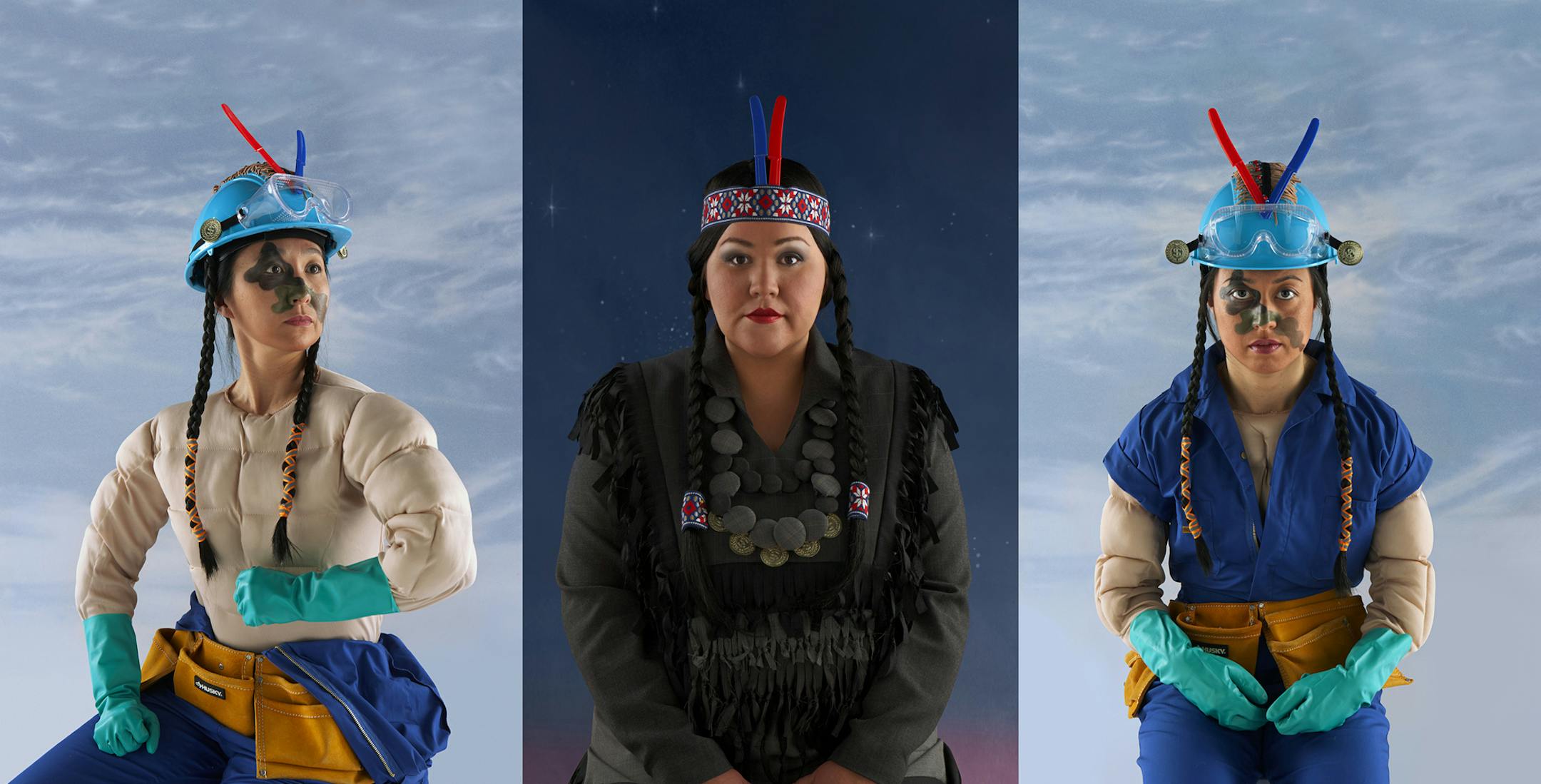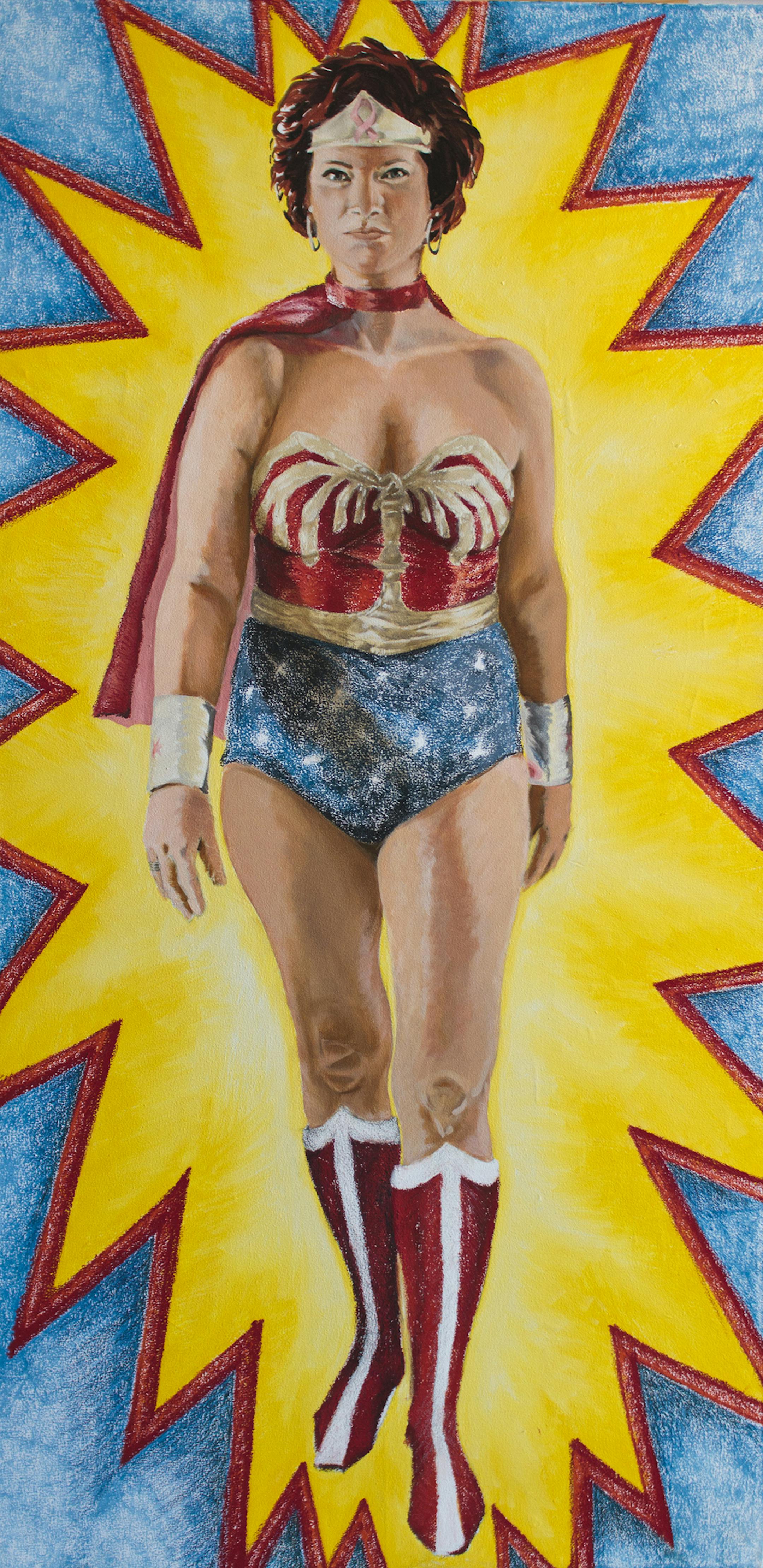
From the moment she decamped from Paradise Island to help save the world in 1941, Wonder Woman was an instant feminist icon. Having mastered "all the arts and science and languages of modern as well as ancient times," the glamorous do-gooder was prepped for success. As her mom, the queen of the Amazons, put it, "We are not only stronger and wiser than men — but our weapons are better — our flying machines are further advanced!"
No wonder that gal still inspires, well into her seventh decade.
Her feisty spirit radiates from "Wonder Women," a smart, savvy show by nearly 50 international artists, all women. Thought-provoking, richly sourced and just plain fun, it's a must-see exhibit at the University of Minnesota's Katherine E. Nash Gallery through Feb. 14. Which is not nearly long enough.
Comics, pop culture inspire
Wonder Woman is its namesake, but the show is more than a riff on the comic, the television show and other spinoffs. It features contemporary photos, videos, installations, paintings and art ranging from banners to knitwear, thumb puppets, shower curtains and wallpaper. Great pieces by young Minnesota talents, vintage Los Angeles feminists and veteran New Yorkers spice the display.
It does include a replica of the first 1941 Charles Moulton comic quoted above, and several of the artists incorporate the heroine in paintings and film clips. Other pop culture females are abundant, including Barbie, Aunt Jemima, the Land O'Lakes Indian princess, manga girls and pop divas, to say nothing of the 19th-century French personification of Liberty as a bare-breasted, flag-waving rabble-rouser.
"All of the artists are women who have been inspired or influenced by comics, animation or popular culture," said Howard Oransky, who curated the show with Frenchy Lunning, a design and pop-culture theorist at the Minneapolis College of Art and Design (MCAD), and Susan Smoluchowski, executive director of the Film Society of Minneapolis St. Paul, which is showing a series of related films.
Skewering stereotypes
Given its feminist bona fides, the show naturally skewers some stereotypes. Jolly hardworking Aunt Jemima appears as a cartoon scrubwoman affixed to an old-fashioned miniature washboard in a Betye Saar sculpture. Instead of scrub rags, though, she's packing guns and the slogan "Extreme times call for extreme heroines." In Rebecca Parham's sophisticated video "Bottled Opera," a computer-generated black opera singer is compelled to perform in country western, punk rock and other pop formats before literally shattering expectations and ending on an operatic high note. Amazingly, Parham not only produced the video but sang all the roles. Brava!
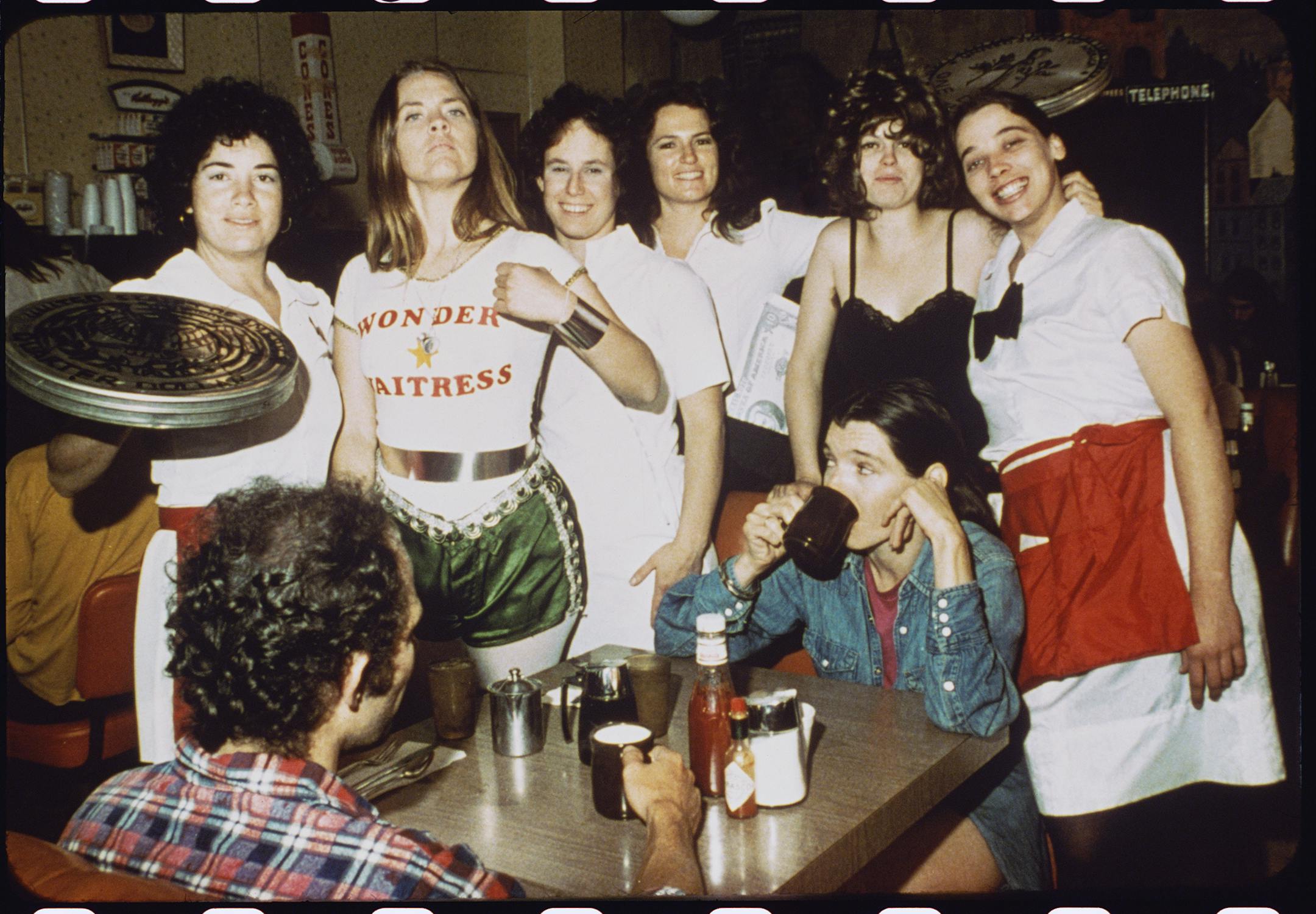
In two deftly staged photos, Nicole Houff uses dolls to suggest Barbie's "Dirty Laundry" and her limited, albeit glamorous, 1960s-era career as an airline stewardess. In the 1970s a Los Angeles performance-art duo, the Waitresses (Jerri Allyn and Anne Gauldin), cheerfully mocked their sometimes-jobs with impromptu performances as "Wonder Waitresses" in local coffee shops, hilariously documented in period photos. In a set of nine photos, Barbara Kruger recast the Victorian-era admonishment, "Children should be seen and not heard," as a feminist manifesto: "We will no longer be seen and not heard."