

Forty-one years ago, 14 people gathered in a small room on California Boulevard in Fayetteville, Ark., for the wedding of an aspiring local politician and his law-school sweetheart from up north. The bride was wearing a $53 dress bought at a local mall, the groom the same suit in which he'd been seen in TV commercials when he ran unsuccessfully for U.S. Congress. He only owned one other suit.
The bride wanted a small, private ceremony and got it. The groom favored a big reception for his many friends, but there was no room for it in the house or its tiny yard. Ann Henry, a law professor at the University of Arkansas and a Democratic Party activist, volunteered her 2-acre property for it. "Could I have ever imagined I'd be hosting a wedding for a U.S. president, a senator, a governor and a secretary of state, and perhaps another president ¬ — and they were the same two people?" Henry says now.
The street on which Bill Clinton bought the $22,000 house in 1975 to persuade Hillary Rodham finally to marry him is now named after him, and so is an avenue in Little Rock. The airport in the state capital bears both spouses' names. A glittering Clinton Center, which houses the presidential library, is teeming with visitors. And yet Arkansas will be voting overwhelmingly for Donald Trump, not for Hillary Clinton, on Nov. 8.
As an outsider, this struck me as profoundly strange. It would be unthinkable for, say, German Chancellor Angela Merkel to lose her longtime constituency in West Pomerania. I set out to find out why.
The Clintons still have close friends in Arkansas, so I started with them. Skip Rutherford, dean of the Clinton School of Public Service in Little Rock, responded in part by ticking off Clinton projects that were still going strong: Arkansas Advocates for Children and Families, the neonatal-intensive-care unit at the Arkansas Children's Hospital, a project to help poor parents with preschool youngsters and the Arkansas Single Parent Scholarship Fund, and more.
That these initiatives are still alive and expanding is a testament to Hillary Clinton's doggedness and ability to build working structures rather than Potemkin villages, he said. And yet these achievements haven't endeared her to most Arkansans.
"If you go to a Wal-Mart and ask ordinary Arkansans, they won't name a single one of these," says Rex Nelson, senior vice president at Simmons Bank in Little Rock who worked for many years as policy and communications director for former Gov. Mike Huckabee, a Republican presidential contender in 2012 and 2016. I tried asking random people I met in Arkansas about Hillary Clinton's legacy; indeed, they drew a blank. Only her educational reform efforts sounded vaguely familiar to some.
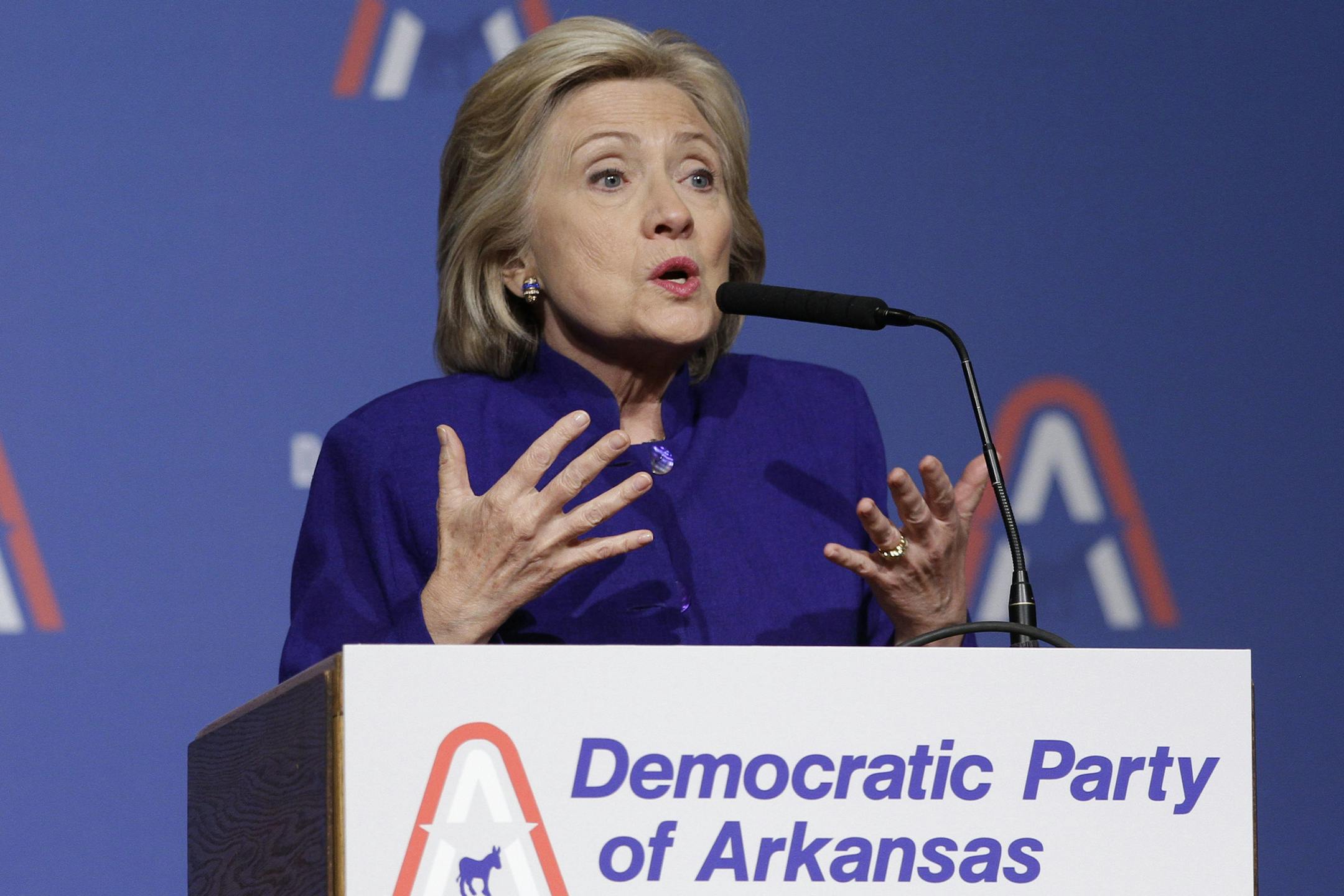
Clinton's achievements in Arkansas are, admittedly, 25 to 30 years old, which means almost half the state's voting-age population isn't old enough to remember what she did when she lived here. That might not have been a problem had the local Democratic Party been around to remind them. It wasn't. Until the mid-1990s, Arkansas was thoroughly Democratic. Now, it's largely Republican, for all the well-documented demographic, economic and social reasons.


