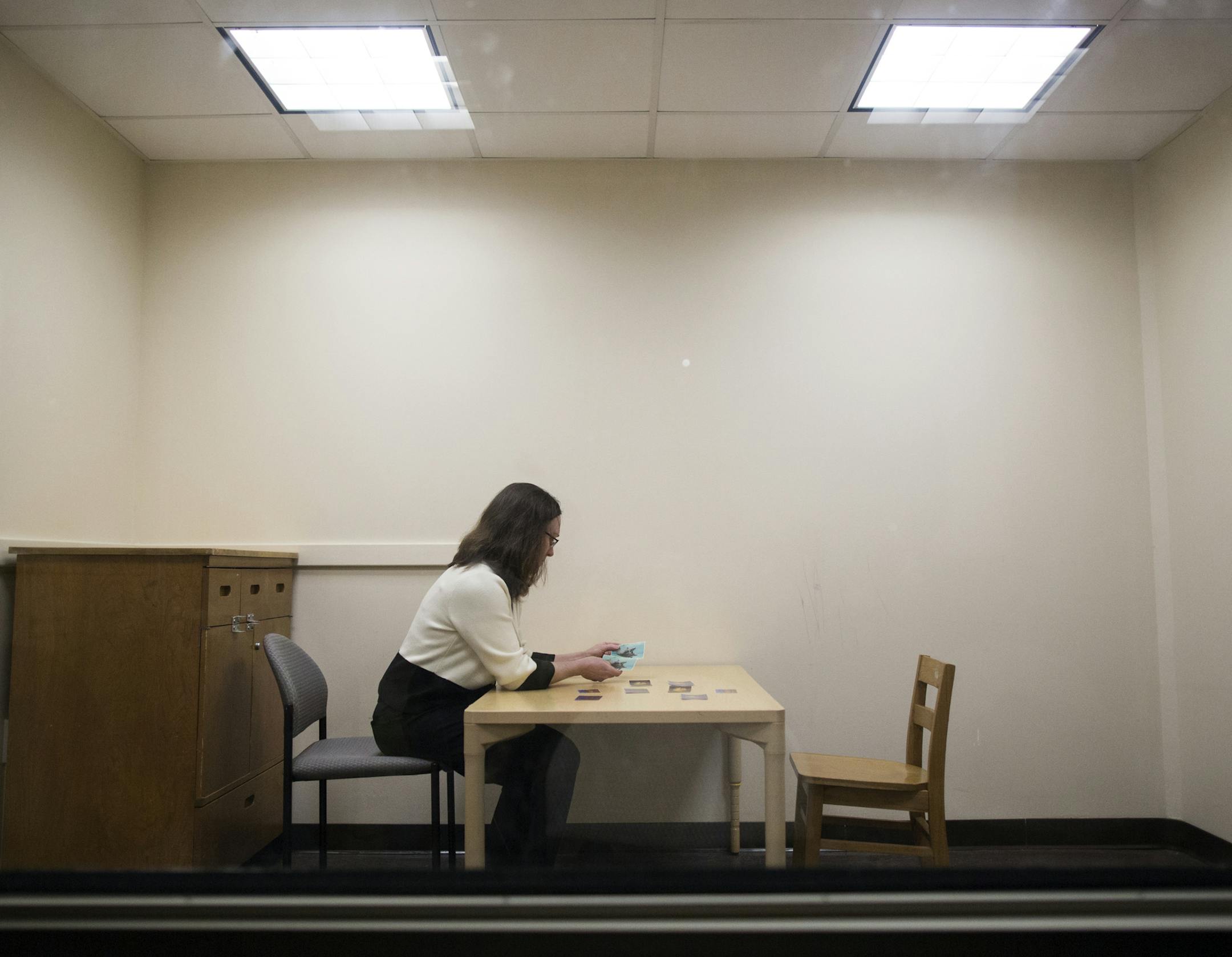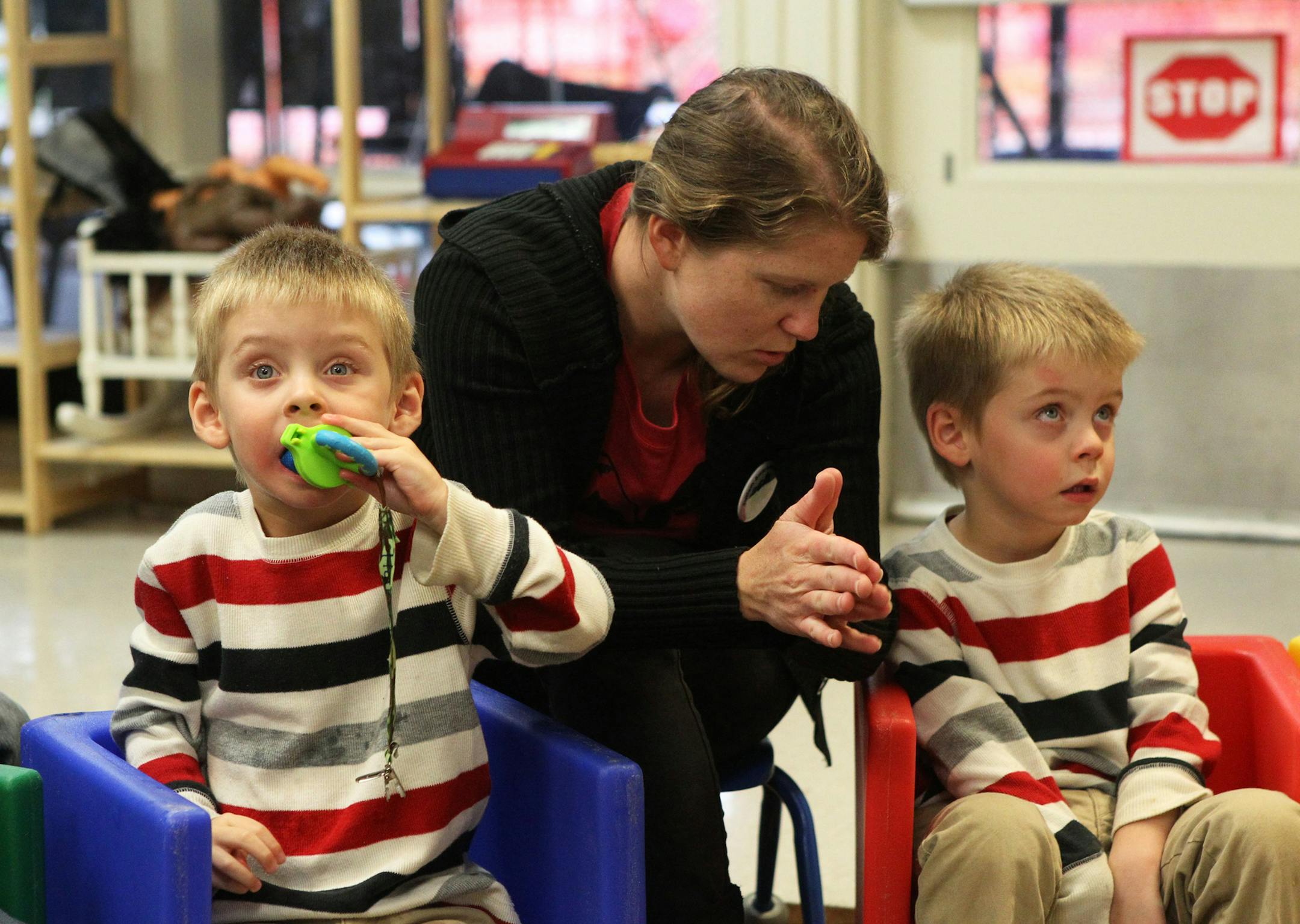
Therapists who specialize in autism often use a child's own interests, toys or obsessions as a way to connect, and sometimes to reward effort and progress on social skills. The more eye contact a child makes, for example, the more play time he or she gets with those precious maps or stuffed animals.
But now a group of scientists and the author of a new book are suggesting that those favorite activities could be harnessed in a deeper, more organic way. If a child is fascinated with animated characters like Thomas the Tank Engine, why not use those characters to prompt and reinforce social development?
Millions of parents do this routinely, if not systematically, flopping down on the floor with a socially distant child to playact the characters themselves.
"We individualize therapy to each child already, so if the child has an affinity for certain animated characters, it's absolutely worth studying a therapy that incorporates those characters meaningfully," said Kevin Pelphrey, director of the child neuroscience laboratory at Yale.
He and several other researchers, including John D.E. Gabrieli of the Massachusetts Institute of Technology, Simon Baron-Cohen of the University of Cambridge and Pamela Ventola of Yale, are proposing a study to test the approach.
The idea came from Ron Suskind, a former Wall Street Journal reporter whose new book "Life, Animated" describes he and his wife Cornelia's experience reaching their autistic son, Owen, through his fascination with Disney movies like "The Little Mermaid" and "Beauty and the Beast." It was his story that first referred to "affinity therapy."
He approached the researchers to put together a clinical trial based on the idea that some children can develop social and emotional instincts through the characters they love.
Experts familiar with his story say the theory behind the therapy is plausible, given what is known from years of studying the effects of other approaches.