
Anderson: Researchers turn up the volume on Asian carp

August 6, 2014 at 7:29AM
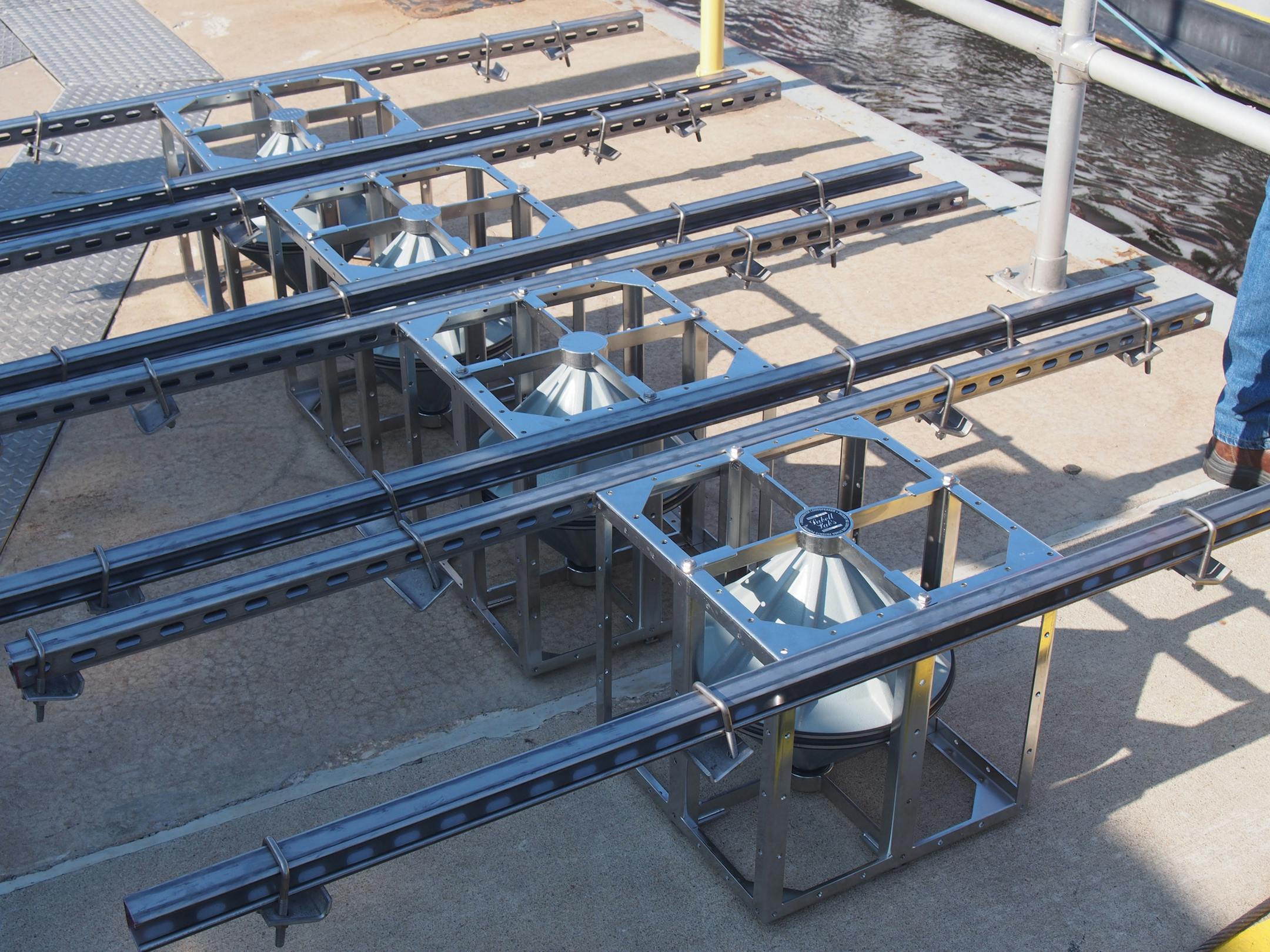
Five underwater speakers were attached recently at Lock 8 on the Mississippi River near Genoa, Wis. The experimental system is designed to repel Asian carp and prevent them from swimming up the river.
Five underwater speakers were attached recently at Lock 8 on the Mississippi River near Genoa, Wis. The experimental system is designed to repel Asian carp and prevent them from swimming up the river. (University of Minnesota photo/The Minnesota Star Tribune)

Marking an innovative beginning in what is expected to be a multiyear carp-fighting process, five underwater speakers — transducers, technically — have been mounted on the downstream lock gate of Lock 8 on the Mississippi River, near Genoa, Wis.

When the lock opens, the speakers pulsate with a form of heavy metal even Metallica fans might find over the top: The ear-busting whine of 20 outboard motors recorded underwater.

The effort is led by carp researcher Peter Sorensen of the University of Minnesota, who believes the sound has a good chance of keeping Asian carp away from the lock while it's open.

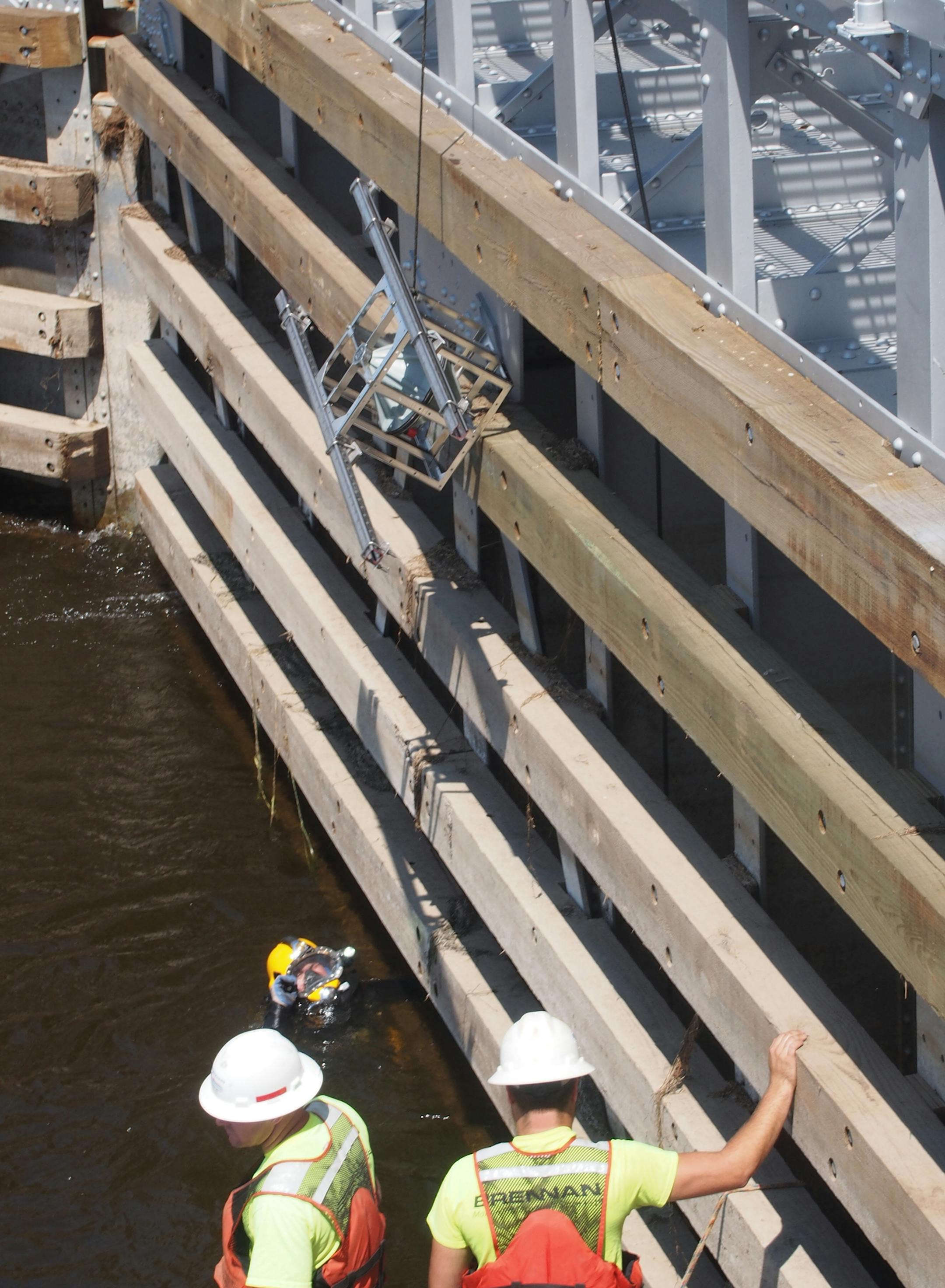
The speakers were installed last week with the help of specialty divers from La Crosse, Wis., with approval of the Army Corps of Engineers and Wisconsin and Minnesota fisheries officials.

Sorensen and other researchers also have contracted special swim-performance tests to be conducted on silver and bighead to determine the velocity of water the fish can withstand and still move upstream.

That information is important as Sorensen and others seek to develop behavior deterrents at various locks and dams to impede Asian carp from invading waters farther north.

The researchers also hope to install a sophisticated sonar system — in effect, a camera — at Lock 8 to determine firsthand the sounds' effect on both Asian carp and native fish.

"We don't believe at this time that native fish will be affected in the same way," Sorensen said. "They have different hearing abilities and sensibilities than carp. But the camera system will go a long way to understanding this better."
Fisheries experts also hope to undertake a large fish-tagging study to track movements of native fish and sterilized Asian carp.

"That will help us determine in real time how these fish are affected by the sound," Sorensen said.

Asian carp threaten the fisheries and ecosystems of the entire Mississippi River drainage system. So far, only a relative few adult specimens have been found near the Twin Cities and in the St. Croix River, leading researchers to believe reproducing fish haven't migrated this far north yet.

Lock 8 was chosen for the first speaker installation in part because it is located south of the Mississippi's confluence with the Minnesota River, perhaps providing protection against invasive carp for that system.

U researchers also are using the school's super computers to assess the possibility of developing unified river flow management through the locks and dams. The goal in part is to create flows strong enough to help repel carp from moving upriver.

"In the big picture, all of this is being doing in concert, though we don't have funding yet for all of the research," Sorensen said. "The premise of this work is that we don't want to let a critical mass of carp move upriver and start reproducing."

Meanwhile, research is underway to study possible pathogens that might specifically attack and kill Asian carp.

"Until we have that, the best hope is deterrent and prevention," Sorensen said.

Dennis Anderson danderson@startribune.com

Workers lowered an underwater speaker to a scuba diver recently so it could be attached at Lock 8 on the Mississippi River near Genoa, Wis. The experimental system is designed to repel Asian carp.
Workers lowered an underwater speaker to a scuba diver recently so it could be attached at Lock 8 on the Mississippi River near Genoa, Wis. The experimental system is designed to repel Asian carp. (University of Minnesota photo/The Minnesota Star Tribune)
about the writer

about the writer

Dennis Anderson

Columnist

Outdoors columnist Dennis Anderson joined the Star Tribune in 1993 after serving in the same position at the St. Paul Pioneer Press for 13 years. His column topics vary widely, and include canoeing, fishing, hunting, adventure travel and conservation of the environment.

See Moreicon

More from No Section

See More
FILE -- A rent deposit slot at an apartment complex in Tucker, Ga., on July 21, 2020. As an eviction crisis has seemed increasingly likely this summer, everyone in the housing market has made the same plea to Washington: Send money — lots of it — that would keep renters in their homes and landlords afloat. (Melissa Golden/The New York Times) ORG XMIT: XNYT58
Melissa Golden/The New York Times

It’s too soon to tell how much the immigration crackdown is to blame.