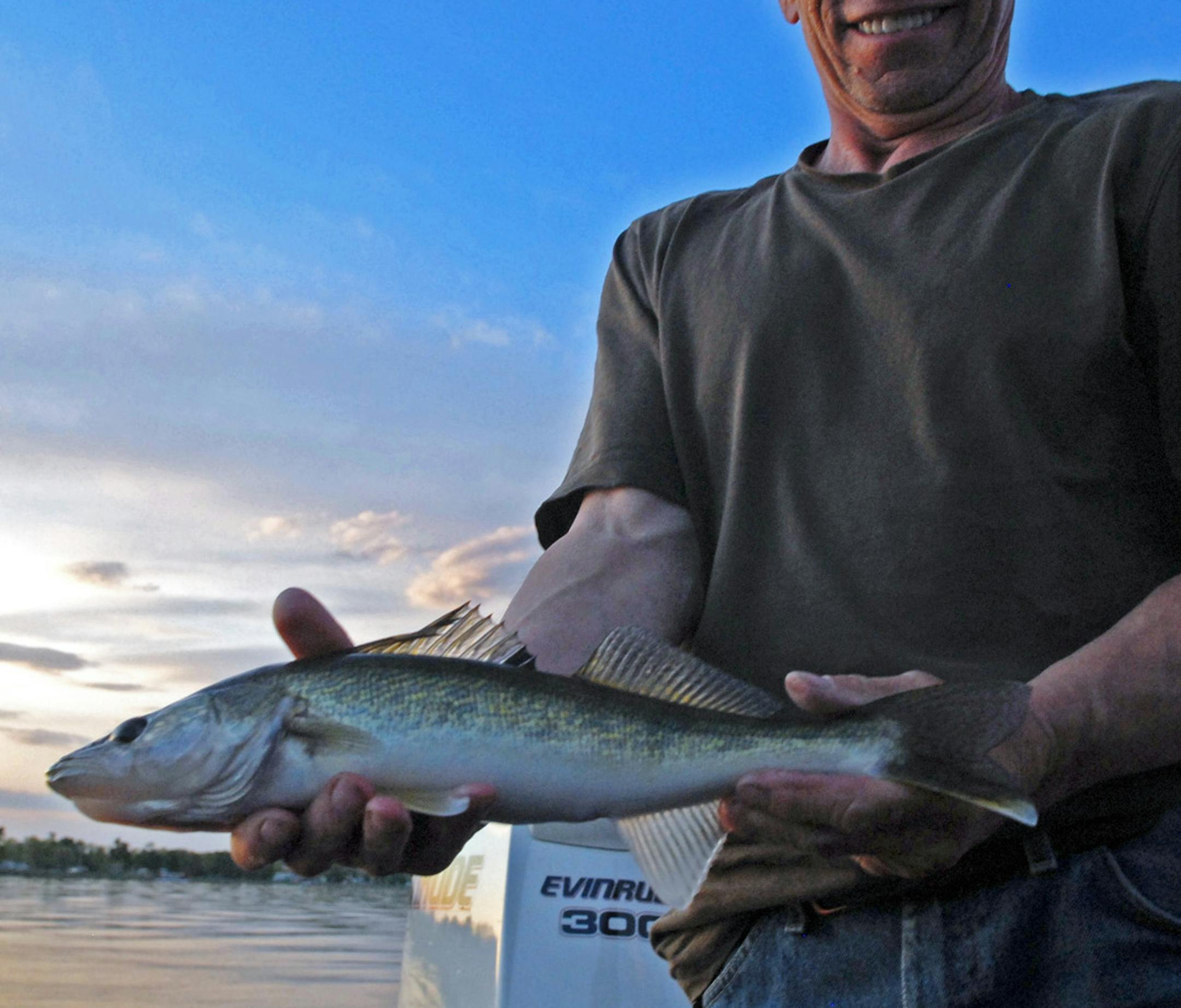
• OK, but why not let anglers this summer keep one walleye over, say, 26 inches? Arguably, this would reduce the lake's predator population while also giving anglers something to fish for. So maybe that could be done. But how many walleyes 18 to 26 inches would be caught and released — some of which would subsequently die — before an angler found one over 26 inches? Probably quite a few, especially as summer progresses and the lake water warms. So, the possible adverse effect on these smaller walleyes would have to be accounted for in the harvest calculus undertaken in the run-up to establishing this summer's regulations.
• Now consider the Chippewa nets, which have been strung in the lake during the spring spawn since the late 1990s. In and of themselves, the nets are not the lake's problem. Not entirely, anyway. But don't forget: The harvest slots that govern walleye angling on Mille Lacs are a corollary of the nets. One (the nets) begot the other (the harvest slots) as the DNR and the Chippewa have attempted to manage the lake's harvest cooperatively. But now it seems clearer that each, probably in combination with the other, has contributed to, or perhaps even entirely caused, the current Mille Lacs walleye problem.
• The Chippewa could increase the size of walleyes they take by requiring members to use nets of larger mesh size than is currently the case. The DNR also (as stated earlier) could steer the angling harvest toward bigger fish. But remember: The lake's walleye harvest quotas are determined not by fish numbers but by fish pounds. So the quotas would be reached relatively quickly under these changes, thus limiting harvest opportunity.
• What to do? Clearly, in my view, Pereira and his boss, DNR Commissioner Tom Landwehr, should appeal to their boss, Gov. Mark Dayton, to let them ask the Chippewa to pull their nets from Mille Lacs until, and unless, the lake's walleye population recovers. As a secondary possibility, the Chippewa should be asked to focus their harvest on bigger walleyes. If they refuse either option, the state should take them to court. That's what the court's for.
Regardless which actions are taken, the local economy will suffer.