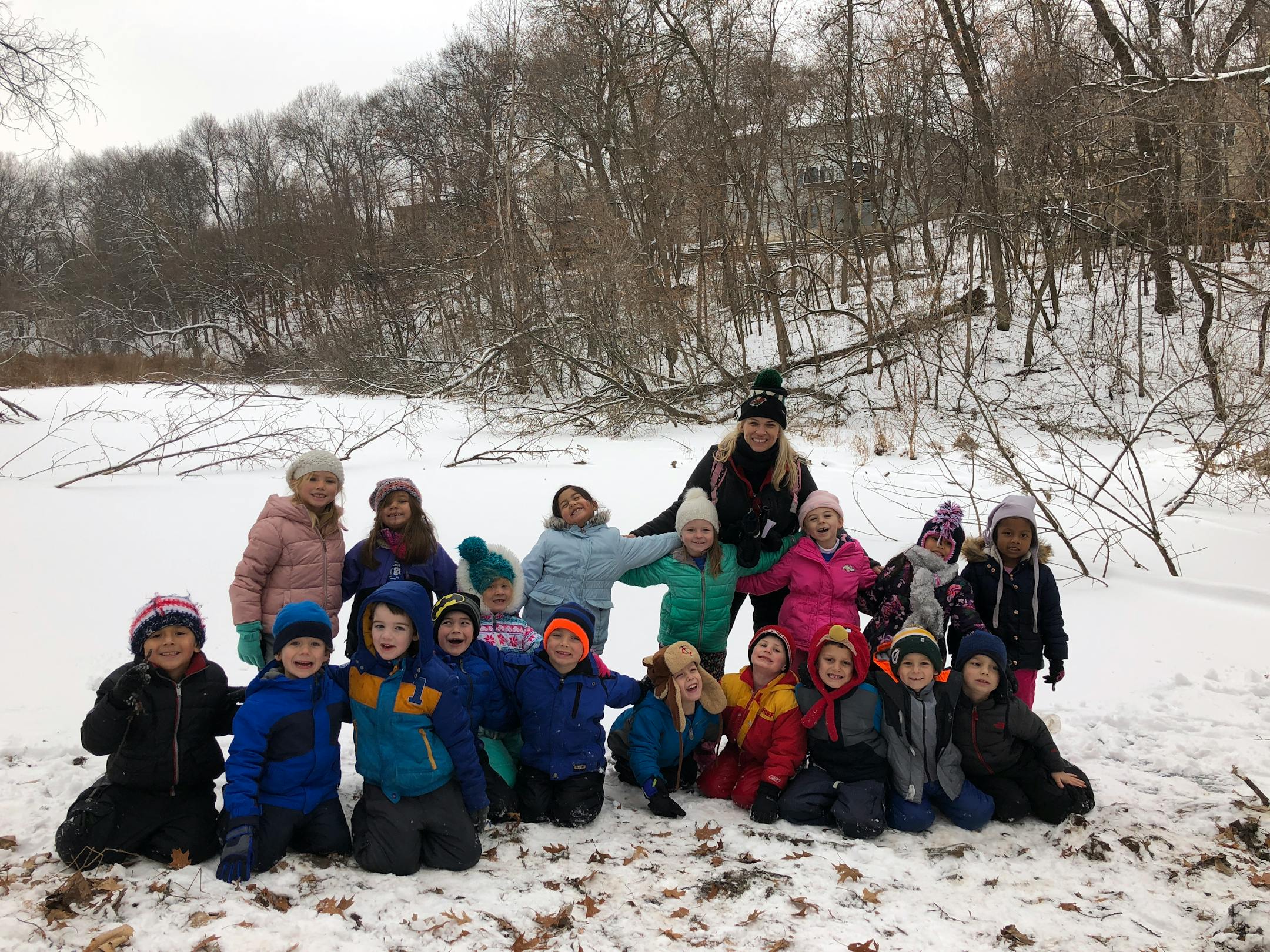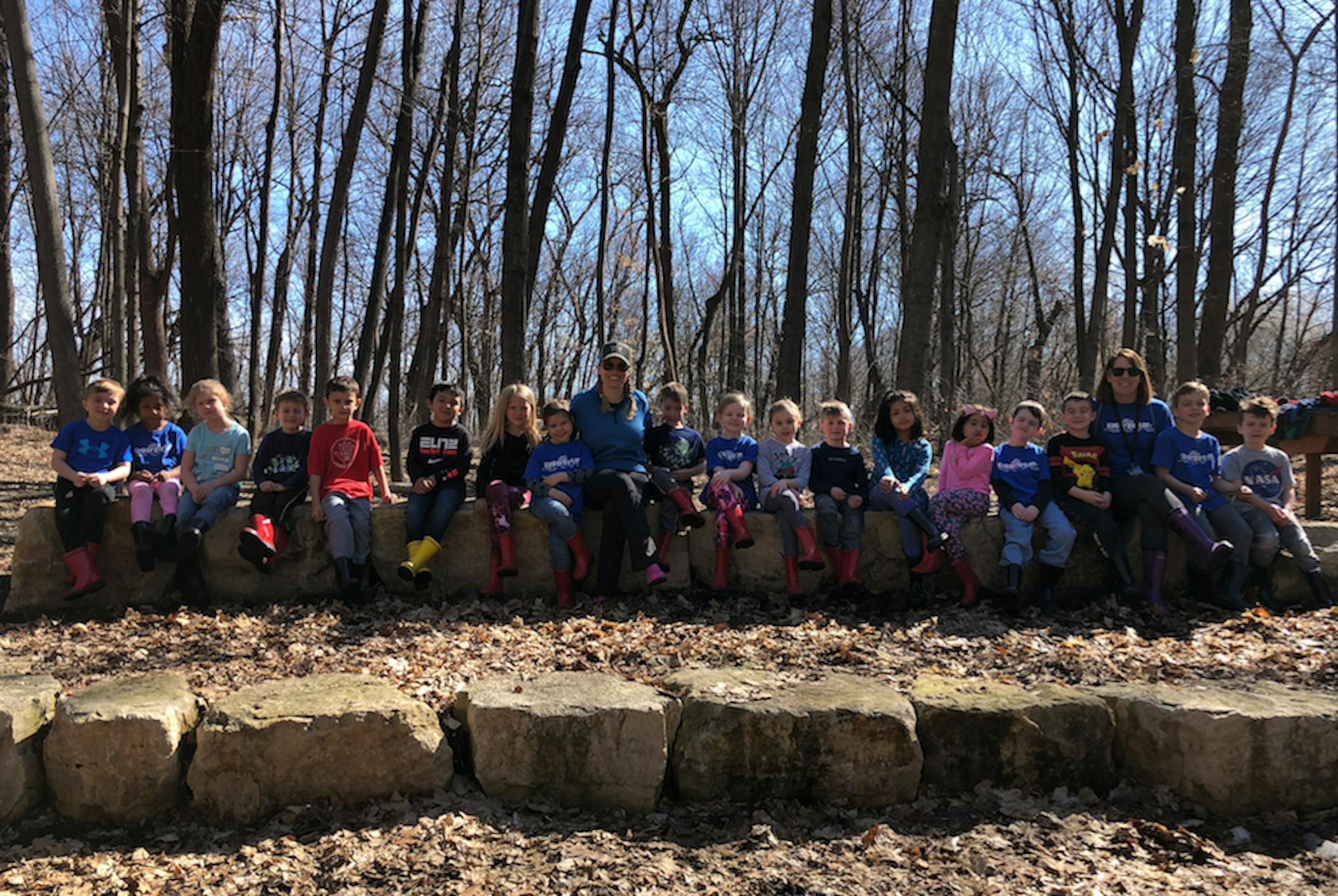
It's not often kindergarten students get to watch their teacher smear mud on her face — and leave the mud on until the day's final school bell rings.
It's even less often the students get to spatter their own faces with wet dirt and leave them filthy for an entire school day.
But such are the tricks of the teaching trade as practiced by Eden Prairie educator Jen Heyer, 42, whose regular forays into the "wilderness" surrounding Cedar Ridge Elementary School encourage her students to learn more than just reading, writing and 'rithmetic.
"I started thinking about trying different teaching methods quite a few years ago," Heyer said. "I had been reading about an American who was teaching in Finland, and about how in that country, regularly scheduled 'unstructured' classroom time benefited students, so I thought I would try it."
A graduate of Augsburg University in Minneapolis, Heyer also holds two master's degrees. She's as intrigued by the way kids learn as by what they learn.
A resident of the greater Twin Cities, along with her husband and their 7- and 10-year-old sons, Heyer also knows firsthand the importance the outdoors can play in kids' lives.
Yet she's aware many metro kids aren't involved in outdoor activities, whether hunting, fishing or simply strolling in a park. Access is a problem for some. For others, it's a lack of money. Other kids' parents are too busy or simply disinterested.
Richard Louv's game-changing 2005 book, "Last Child in the Woods," in which he coined the term "nature-deficit disorder," gave voice to the individual and cultural downsides of raising kids "outside of nature."