

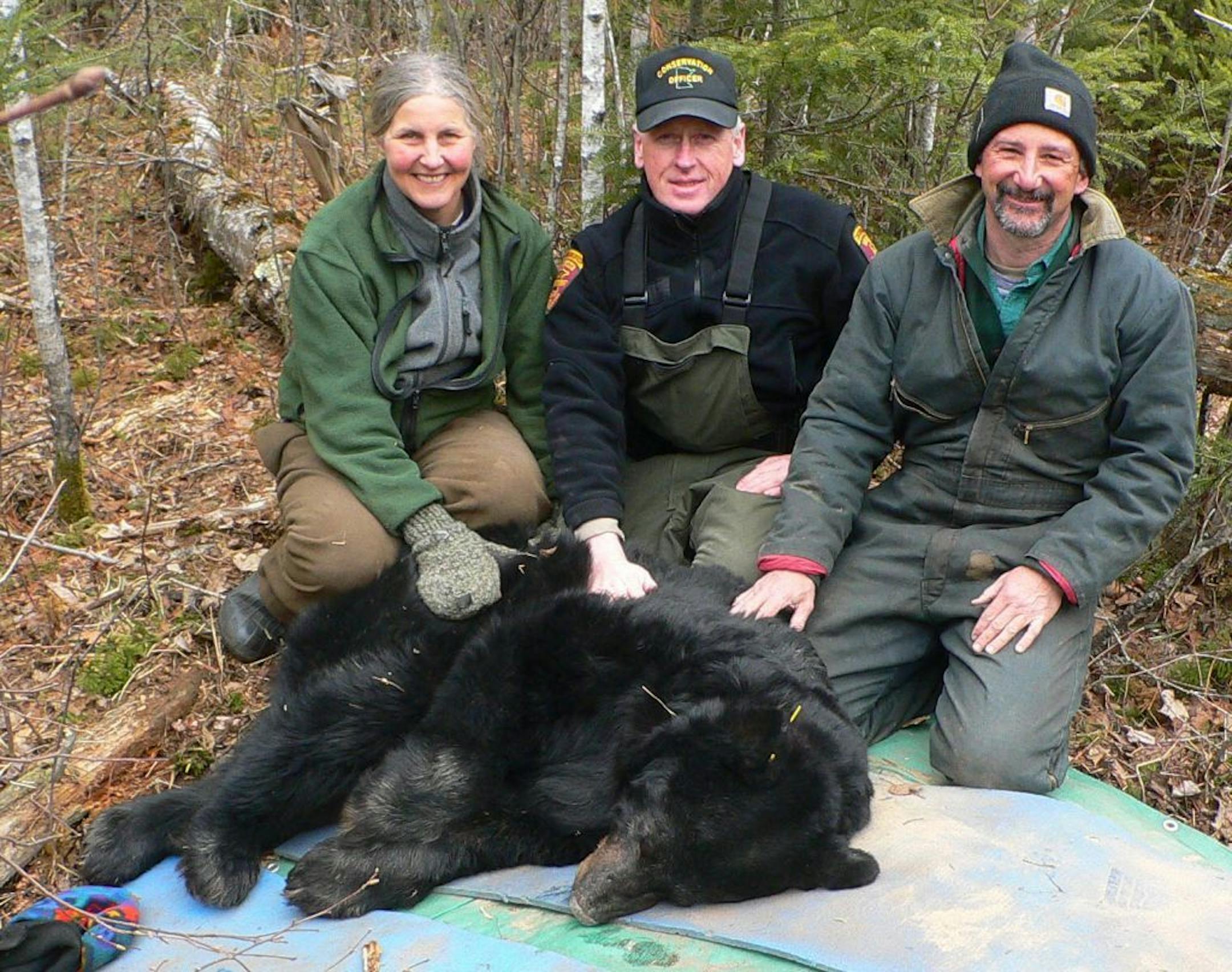
Lynn Rogers, the Ely bear researcher whose lawsuit against the Department of Natural Resources will have its first hearing Monday, perhaps has enjoyed more media attention in the past decade than any other animal scholar, of bears or otherwise.
So some observers might be surprised to learn the DNR employs one of the world's foremost bear experts, Dave Garshelis, whose work often is conducted far from the media spotlight, out of an office in Grand Rapids, Minn.
Garshelis, whose expertise extends from Minnesota black bears to sun bears in Borneo and sloth bears in Nepal, seems unopposed to the relative obscurity.
A New Jersey native, he earned an undergraduate degree in zoology from the University of Vermont before gaining a master's in bear biology from the University of Tennessee. His doctorate is from the U, where his focus — paradoxically, given his bear specialty — was sea otters.
"I could have continued with sea otters, but I would have had to move to Alaska, and my wife preferred not to," Garshelis said Thursday from his office. "Which was OK. I've always had a strong interest in bears."
Garshelis signed on with the DNR some 30 years ago as bear project leader, a title he still holds today. His one assistant, Karen Noyce, holds a master's degree in wildlife biology.
Garshelis' career spans a veritable lifetime of bear-management changes and challenges.
In 1982, for example, a year before he joined the DNR, a state bear hunting-permit quota system was instituted, thus beginning a complex Whac-A-Mole game that continues today as Garshelis and other wildlife managers attempt to match hunting pressure with various Minnesota subpopulations of bears.


