

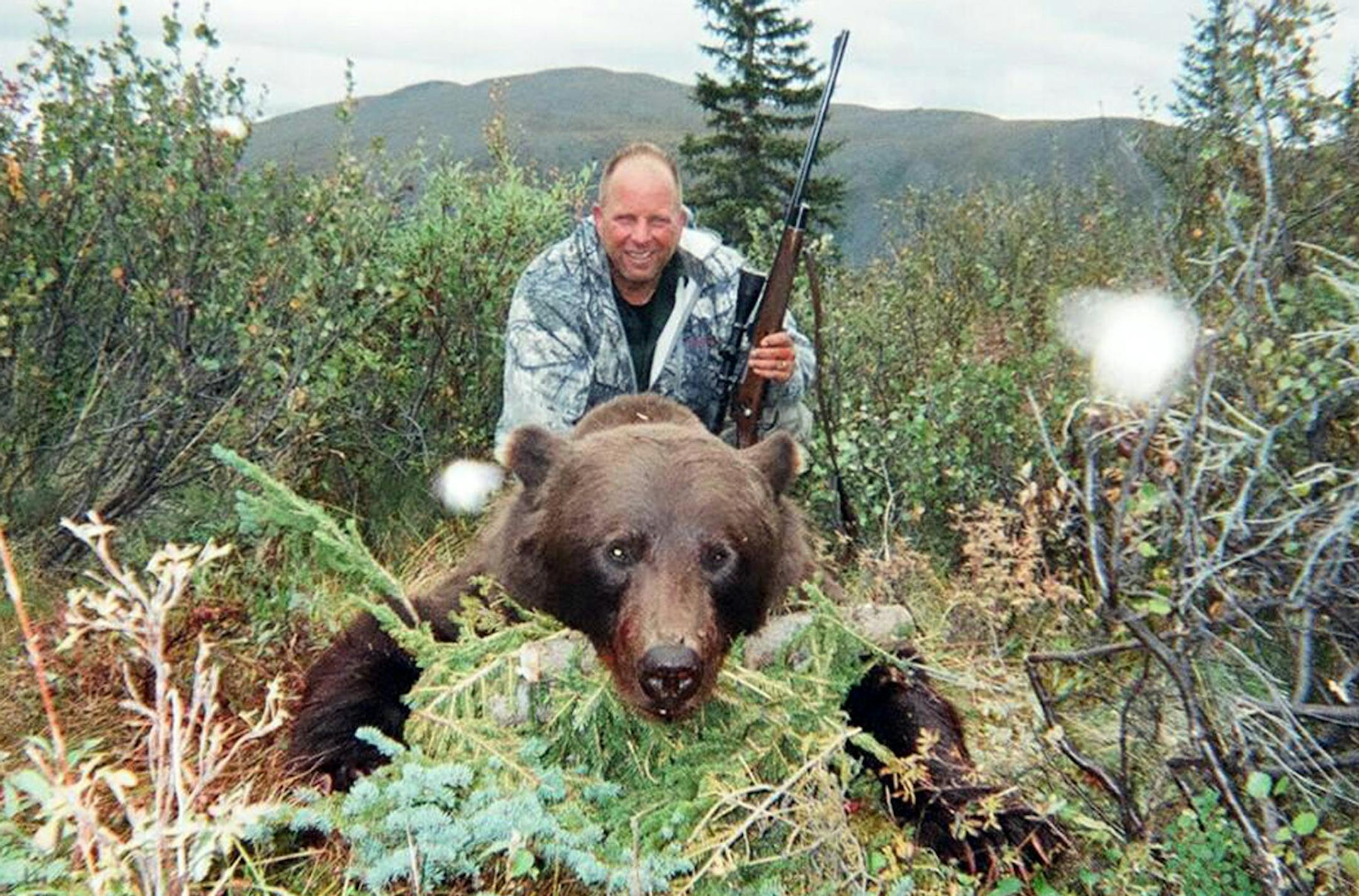
Beginning last spring, every morning at 3 Bob Ball climbed out of bed in his Albert Lea, Minn., home, gathered up his Labrador retriever, Eleanor, and stepped outside, walking at first, then running, 2 miles in all.
"I wanted to get in shape for the hunt,'' Ball said. "I didn't want to go all the way to Alaska and be too tired to move around.''
Booking an adventure that in its primitiveness wasn't much different from if it had been taken a century ago, Ball returned to Alaska in August for the second consecutive year.
"Last year, I had moose, caribou and grizzly tags, and I only filled my moose tag,'' Ball said. "When I left, I was determined to get back up there. I had dreamed about bear hunting since I was a kid, and when I didn't get a bear in Alaska last year, I felt empty. So I went back.''
It's not uncommon to spend as much as $25,000 on Alaskan big game hunts, depending on length of outing and number of species pursued.
To raise money for his return trip, Ball clocked overtime last winter at his job as a power company line foreman. As a bonus, his wife, Laura, was supportive of his effort.
So it was that on a recent morning — Aug. 26 — Ball found himself in a spike camp in the middle of nowhere, Alaska, accompanied by a single guide, 32-year-old Dave Doxey.
"He cooked; I did dishes and chopped wood,'' Ball said. "This was an old-school hunt. We didn't have generators or any of that stuff. We did things the hard way, the same way guys did them in the 1940s.''


