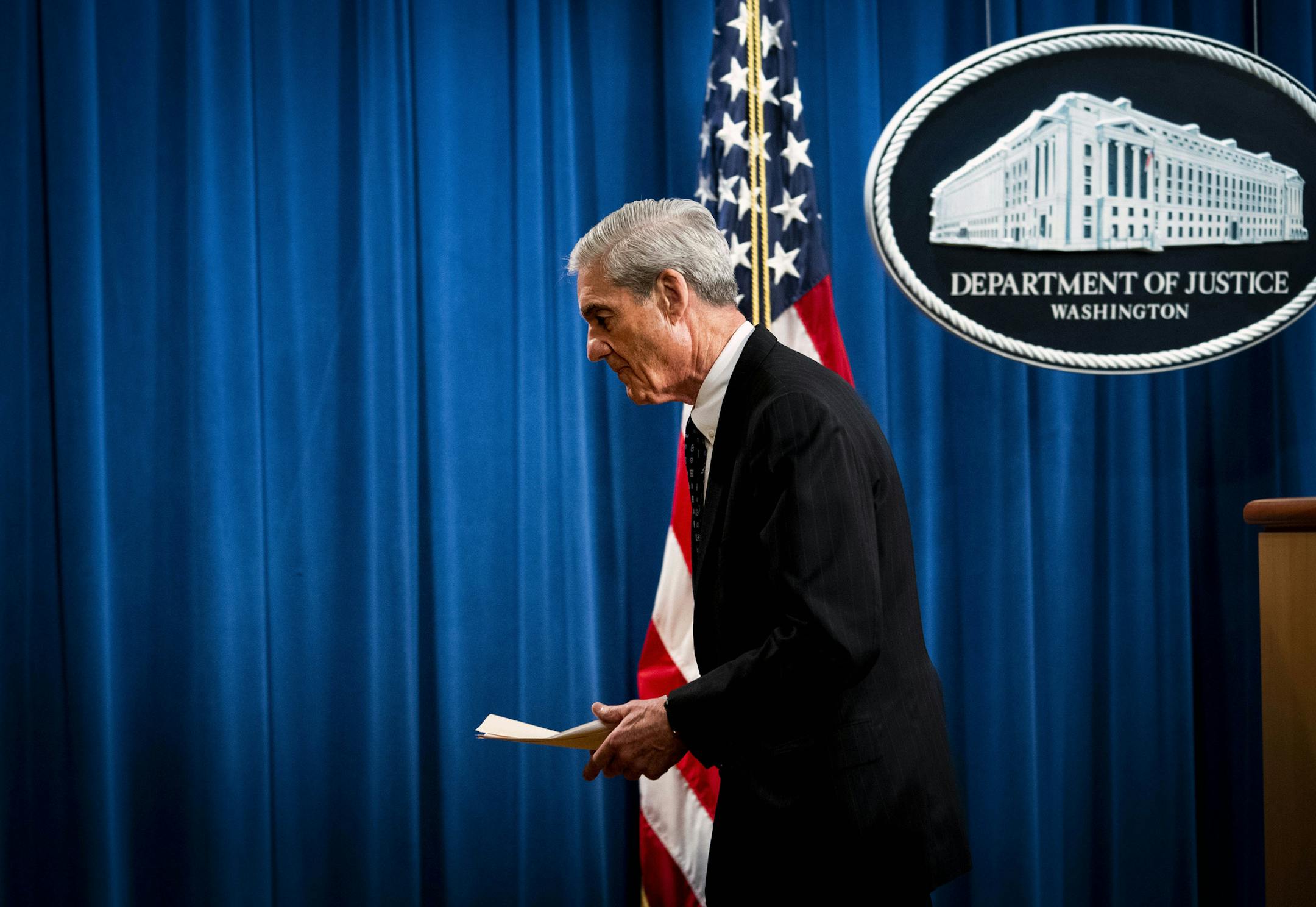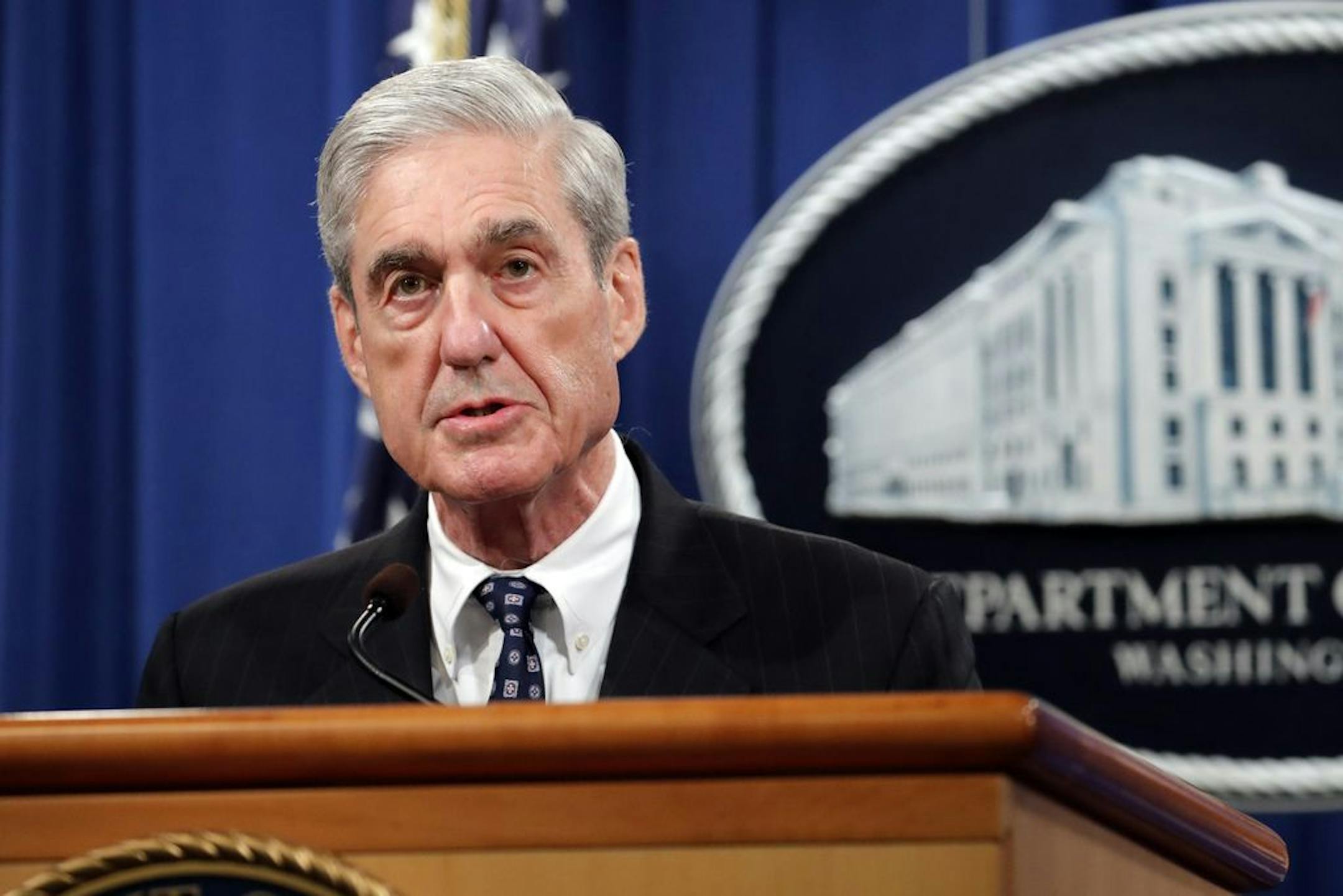
For months, congressional Democrats have looked to Robert Mueller to offer the justification for opening an impeachment inquiry against President Donald Trump for obstruction of justice. On Wednesday, the special counsel did everything but flash the green light for which they've been waiting.
Mueller's 10-minute statement was a careful and telling distillation of the 448-report he issued earlier this spring. He repeated that, had he and his team been able to clear the president of obstruction, they would have done so, but did not. He then made clear that because charging a sitting president with a crime is prohibited by Justice Department regulations, the only way to hold a sitting president accountable for possible crimes lies with Congress and powers vested by the Constitution.
Mueller's appearance now leaves House Democrats, led by Speaker Nancy Pelosi, D-Calif., with an unpalatable choice. She can authorize a politically explosive impeachment inquiry opposed by a majority of the American people - and one that surely would die in the Republican-controlled Senate - or appear to abdicate in the face of the evidence of obstruction contained in the Mueller report.
This is the choice that has been weighing on the speaker for some time, but Mueller's statement -- and his declaration that he would offer nothing more substantive than what is in the report even if called to testify on Capitol Hill -- adds significantly to the pressure to make a decision, one way or the other. Pelosi, however, appears to prefer to defer that decision as long as possible.
Nothing Mueller said Wednesday was not there in the pages of his report, but the power of his appearance -- the first time he has spoken publicly since he took charge of the investigation two years ago -- carried weight that the written word might not have.
Mueller left it to Congress to make its own decisions about impeachment, but overall he provided little comfort to the president. To the contrary, he made a series of points that undercut what Trump has claimed about the investigation and about what the investigators concluded.
The president had said repeatedly that the investigation was a "witch hunt." He has repeatedly questioned whether the Russians interfered in the 2016 election and that their efforts were aimed at helping him and hurting Hillary Clinton. He has claimed, since the report was issued, that Mueller's team found no collusion, no obstruction and therefore the report amounted to "total exoneration."
Mueller justified the investigation as a response to "multiple, systematic efforts to interfere in our election" by the Russians. That his team concluded that there was not sufficient evidence of a conspiracy by associates of the Trump campaign, he said what Russians did "deserves the attention of every single American." That presumably includes the president.