

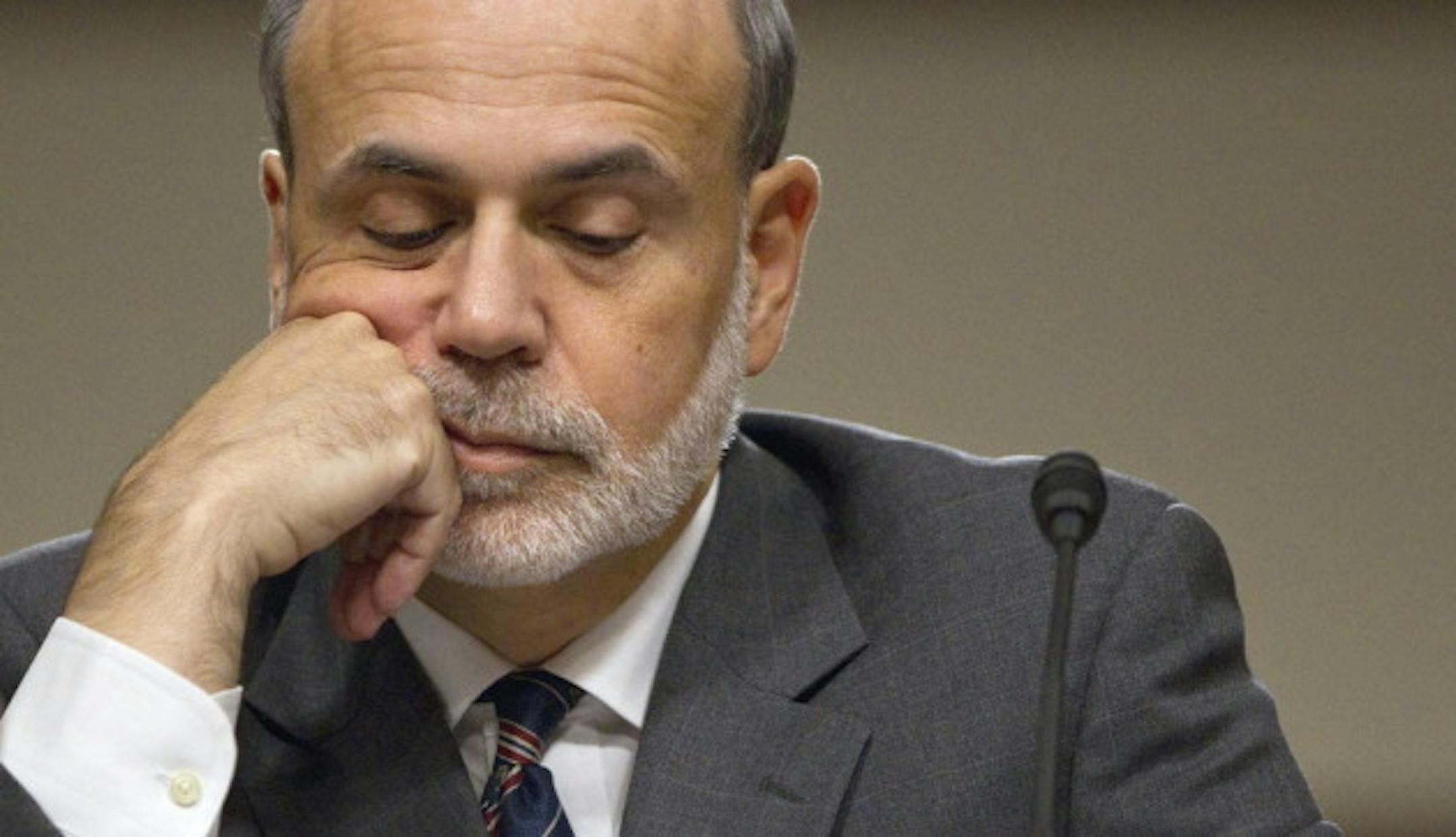
The decision-making body that influences baseline interest rates for all Americans, the Open Market Committee of the Federal Reserve, meets this week. Here are 13 questions and answers about what it means.
1. What's the meeting about? Well, interest rates. But more broadly, lending, investing, and the entire economy.
2. What does the committee do? They meet eight times a year to talk about the economy, decide whether to try to increase or lower interest rates, announce their decision, and make extremely guarded forecasts about the economy. Their next announcement is Thursday.
3. All right. Why does this committee get to make decisions about interest rates? It's the chief decision-making body for the U.S. Federal Reserve Bank. The panel is made up of 12 bank presidents and governors – including Chairman Ben Bernanke, who makes the announcement on Thursday. All the Fed regional presidents usually attend the meetings and contribute to the discussion. That includes Narayana Kocherlakota, president of the Federal Reserve Bank of Minneapolis, whose region includes Montana to the Upper Peninsula of Michigan.
4. How does the Fed try to alter interest rates and lending? It officially sets target interest rates for bank-to-bank lending and tries to influence other rates by buying certain types of securities. These interest rates are the basis for interest rates on everything else – from car payments to business lines of credit that keep shelves and factories stocked.
5. I'm still not sure what this has to do with the economy. Lower interest rates generally encourage people and businesses to borrow money and spend it, which should stimulate economic growth. High interest rates generally discourage borrowing and lead people to save money. The theory is that lower interest rates will prompt business owners to invest.
6. Aren't interest rates already pretty low? Yes, they're lower than they've been in at least 40 years. The Fed cut rates for decades, and then pushed them down to near-zero when the financial crisis hit.
7. So what's the problem? Despite the low rates, people say the economy isn't growing fast enough and too many people don't have good jobs. U.S. quarterly GDP growth has averaged 3.25 percent for the past 65 years, and in the second quarter of 2012 we clocked in at 1.7 percent. Too slow, people say. In August the economy added 96,000 jobs, a rate that won't quickly replace the more than four million jobs still lost to the recession. The Fed thinks if it can get banks to lend more money, the economy will grow faster and more jobs will be created. Stock market investors agree. The price of oil rose earlier this week partly on hopes Bernanke will announce action on Thursday that will get banks to lend more money and stimulate the economy. The market rallies pretty much every time it thinks Bernanke's going to make a move.


