

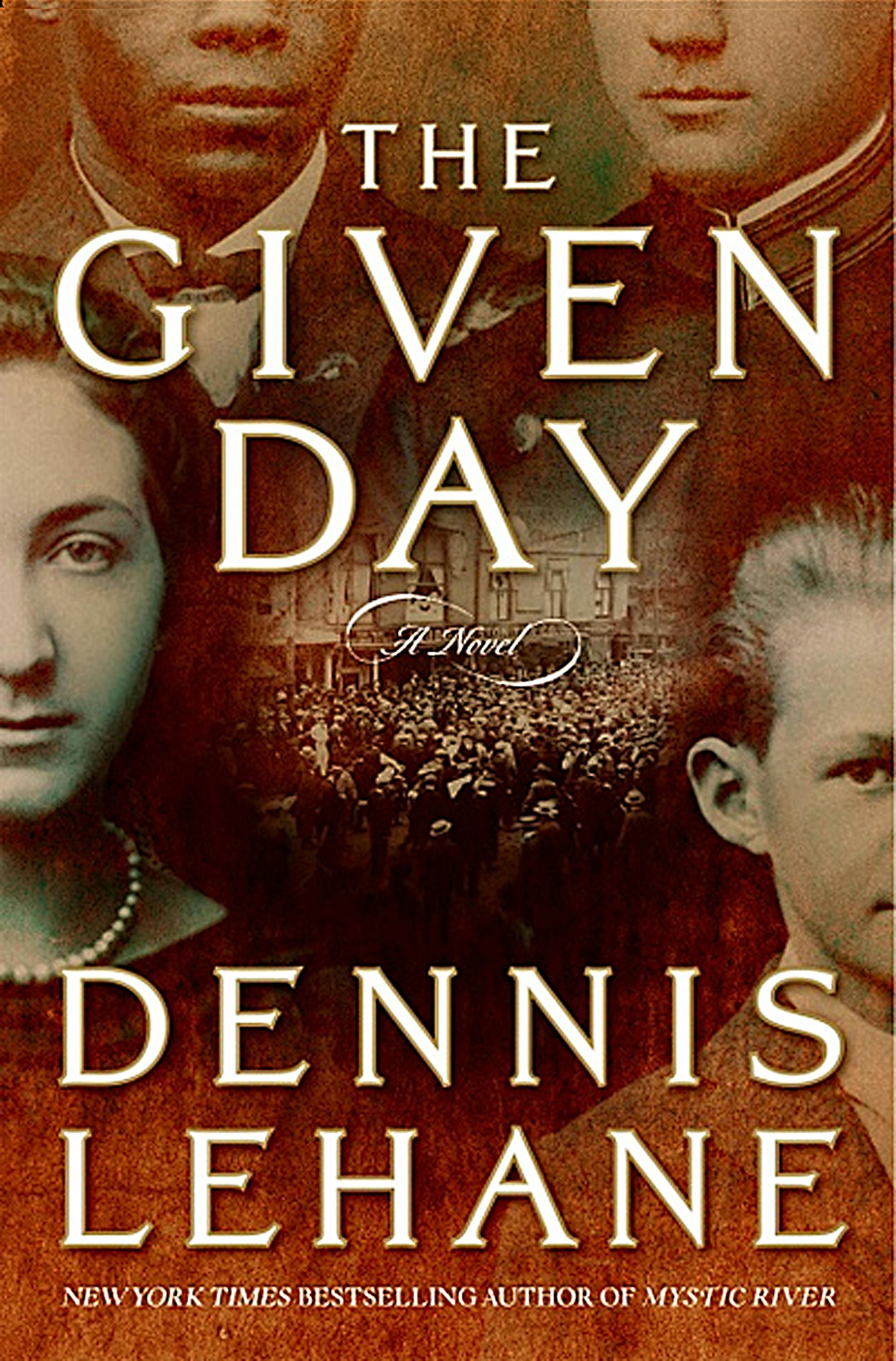
Dennis Lehane has extraordinary books to his credit: "Mystic River" and "Gone, Baby, Gone" among them. But nothing he's written before -- not a single thing -- prepared me for "The Given Day."
It is a novel of epic proportions and yet compelling reading for each of its 700-plus pages. It is a historical novel that smacks of today's politics. And it is Literature (with a capital L) disguised in potboiler clothing.
The story is set in 1918 Boston. The War to End All Wars is near an end. Race riots in several American cities, labor unrest and an influx of Bolsheviks have put the nation at a crossroads. By telling the story from the perspective of two very different individuals, Lehane brings a crucial era in the country's past vividly to life.
Danny Coughlin is a beat cop with a Triple Crown pedigree. He's Irish. His father, Thomas, is a departmental captain. And his godfather, Eddie McKenna, is an influential police lieutenant.
Luther Laurence is a black man with a sad past. Laid off by a munitions company, he falls into bad company, sells drugs and then does something worse. The conventional wisdom is that the two are natural enemies: lion and lamb, black and white, cop and criminal. But they share a sense of helplessness. Both feel like chess pieces trapped on someone else's board; every move they make seems beyond their control. They have more in common with each other than with the forces that control their destinies.
The milieu is similar to today: hysteria about Bolsheviks bringing terrorism and inciting revolution; the powers that be see that in the burgeoning union movement, and they're prepared to fight back.
In a statement that might have come directly from today's paper, Mitchell Palmer, the U.S. attorney general, says: "Ordinary times call for ordinary law. Would you call these times ordinary?"
Coughlin is asked to go undercover to ferret out terrorist leaders, but discovers that most of the people he comes in contact with are ordinary Joes with legitimate grievances. Promised a detective's shield, he spies on fellow cops at union meetings, but becomes sympathetic to the cause. Like them, he earns only 29 cents an hour for a 73-hour week, receives no overtime and must pay for his uniform.


