

President Donald Trump's imminent choice to fill the U.S. Supreme Court vacancy created by the retirement of Justice Anthony Kennedy is not likely to be much of a surprise.
Oh, the identity of the particular nominee may raise some eyebrows. But the judicial philosophy of the nominee is a given: as conservative as possible while still acceptable to a majority of senators.
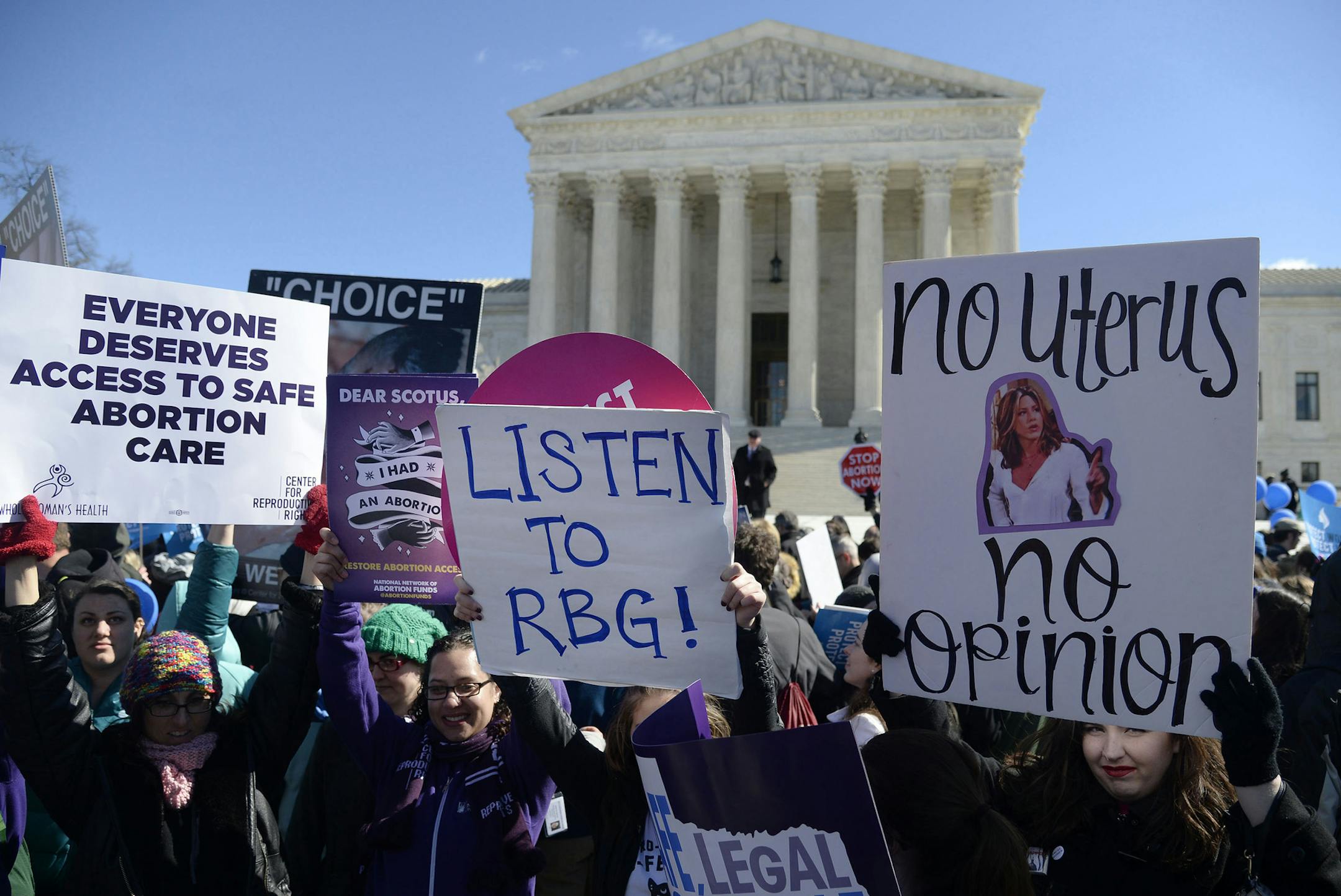
One of the most talked-about issues is the likely fate of women's right to abortion, established 45 years ago by the high court's ruling in Roe vs. Wade.
Pundits have predicted that the end is near for Roe. And certainly these developments may have a significant impact on reproductive rights throughout the country, testing the durability of the Roe decision and its subsequent variations.
These events come at a time when abortion rates generally are falling, despite a slight uptick last year in Minnesota, and anti-abortion fervor is rising. Several states are pumping out anti-abortion legislation, such as the law enacted this winter in Iowa, the most restrictive in the nation, including a three-day waiting period, which a federal judge has halted from going into effect. Other restrictive measures are popping up, primarily in Southern states, with abortion-rights advocates challenging them in a version of legal Whac-A-Mole.
Although abortion was not a dominant issue in the 2016 presidential campaign, it played a role. As a candidate, Trump at one point supported imposing criminal penalties on women who have abortions, although he retreated a bit from that stance in one of many clarifications. He declared that he would impose an abortion "litmus test" on Supreme Court nominees.
Many abortion foes are gleeful that Trump seems undeterred in keeping these campaign pledges. His first high-court appointee, Neil Gorsuch, replacing the late Antonin Scalia, has joined his conservative colleagues in some abortion-related cases, including last month's ruling in National Institute of Family and Life Advocates vs. Becerra, striking down a California measure requiring anti-abortion clinics to notify patients of the availability of free or low-cost abortions.
It seems beyond dispute that Gorsuch's presence on the court ensures four solid anti-Roe votes. The departure now of Justice Kennedy, who crossed over from the conservative side in joining justices sustaining Roe over the years, raises the likelihood of a five-member majority poised to undo Roe.


