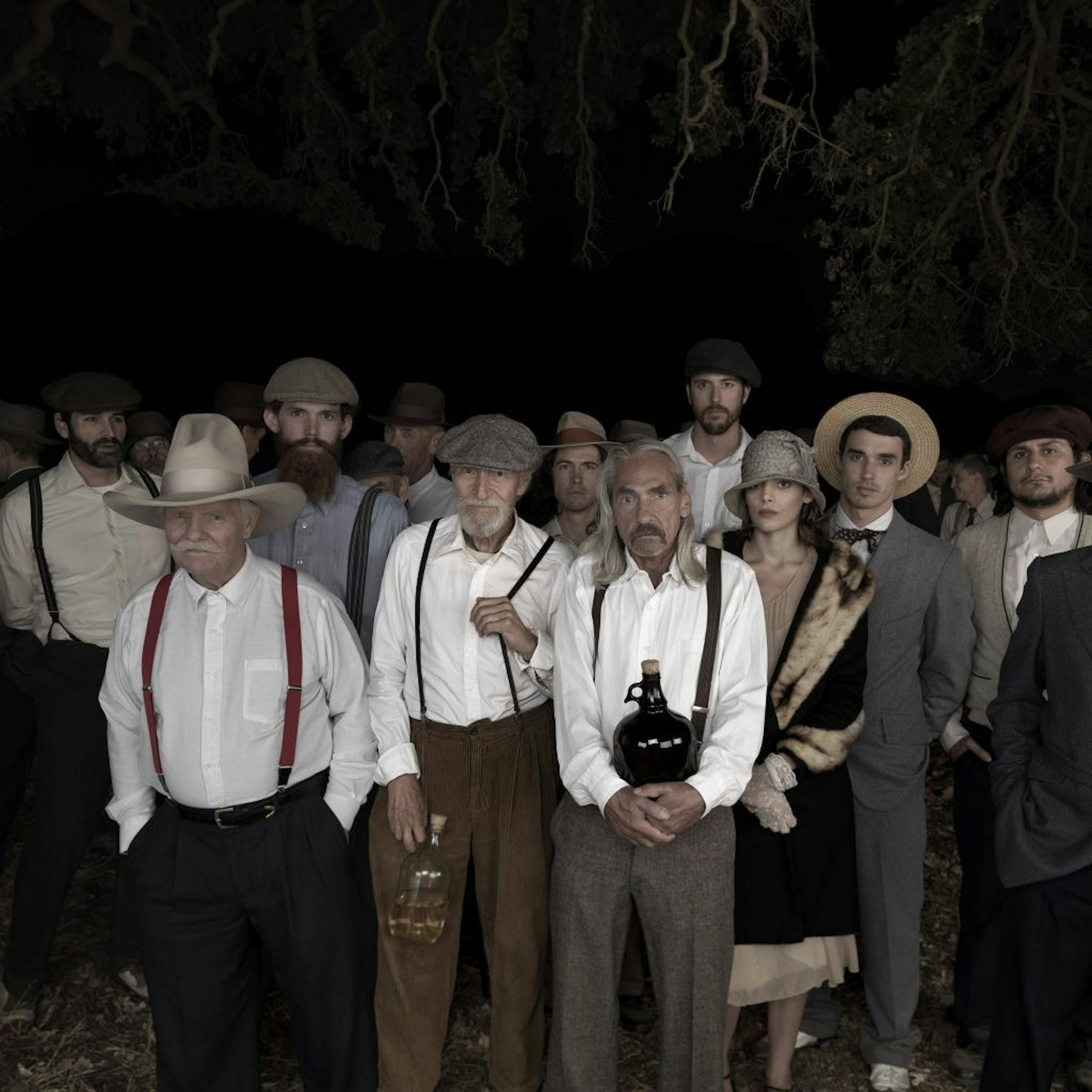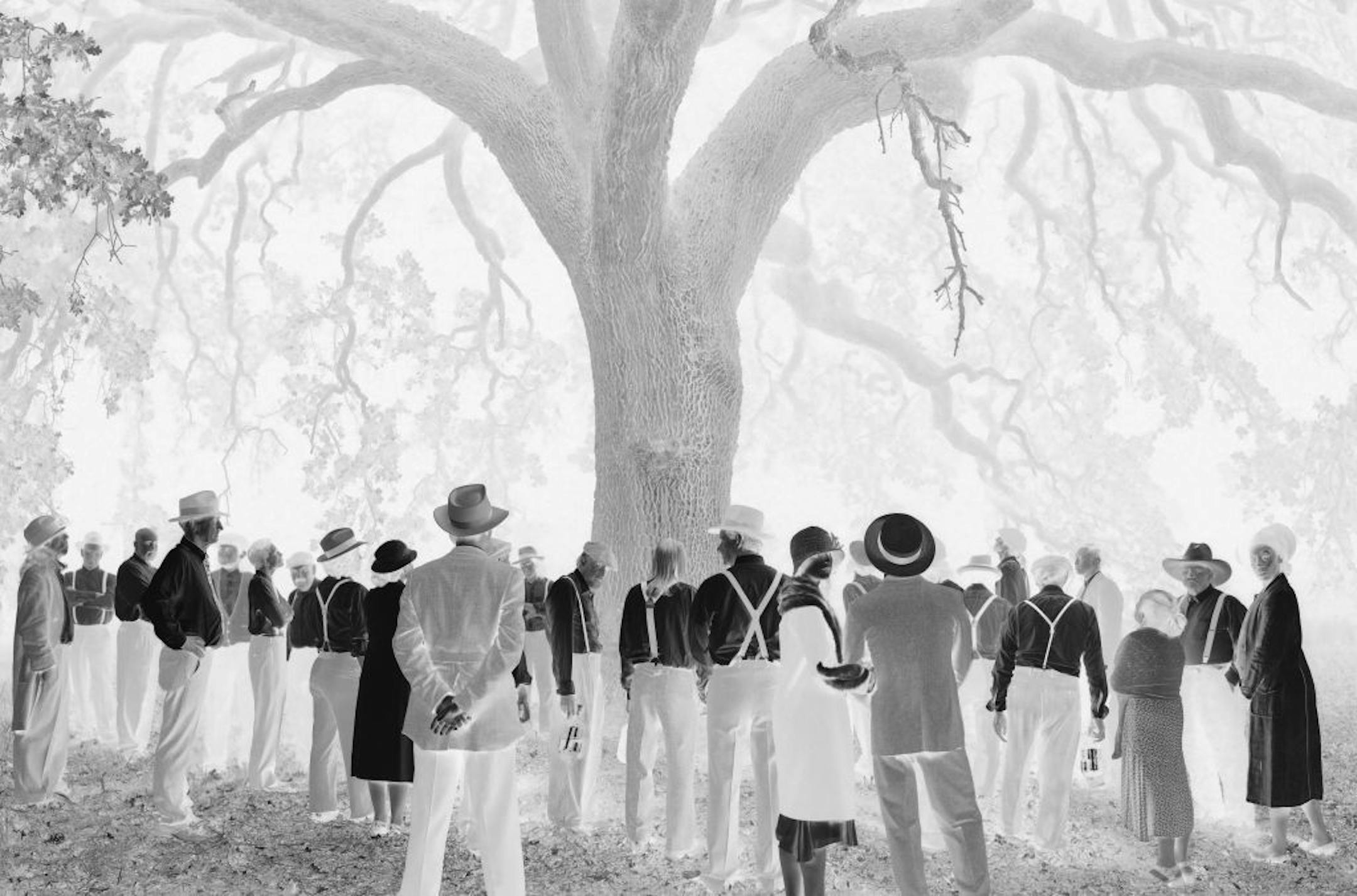
From the lynching of Charles Valento (aka "Spanish Charlie") in 1920 to the police shooting of Michael Brown in 2014, Los Angeles-based photographer Ken Gonzales-Day brings America's violent racial past into the present in a visceral show at the Minnesota Museum of American Art in St. Paul.
"Shadowlands," on display through April 16, amounts to a smart critical analysis of race in America. One series in the show, "Erased Lynching," presents images that Gonzales-Day created from vintage postcards of lynchings in the 19th and early 20th centuries — but the victim has been removed, in order to show only the crowd.
"Standing in front of the work, you begin to see the social conditions," the artist said in a recent interview. "You can see the mob, the people, the smiles, the grimaces. … That's what I'm putting on view."
Gonzales-Day is also hoping to remedy a larger erasure through his work: "Part of my project is to inform people about how Latinos have been erased" from the history of lynching, which claimed not just black Americans but other people of color as victims.
Christopher Atkins, the museum's curator of exhibitions and public programs, said that from the very day he started work in the fall of 2015, he has wanted to show Gonzales-Day's photographs.
"Unfortunately his work has become even more prescient. That legacy of violence against people of color has continued," Atkins said, pointing to the epidemic of young men being shot and killed, and the frequent failure of grand juries to bring their killers to justice.
"Shadowlands" includes several bodies of work centering on the topic of "racialized" violence. Gonzales-Day uses that word to suggest how race has never had a fixed meaning. For example, Latinos and Asians weren't originally counted as "coloreds" back in the 19th century, and even today, Latinos aren't considered a race but rather an ethnicity by the Census Bureau.
In the series "Searching for California's Hang Trees," he sought to document trees once used for lynching in his home state. In some cases, the trees are photographed from very far away, showing in ghostly silhouette; for others he got close up to capture the immense beauty of old trees that once served a murderous purpose.