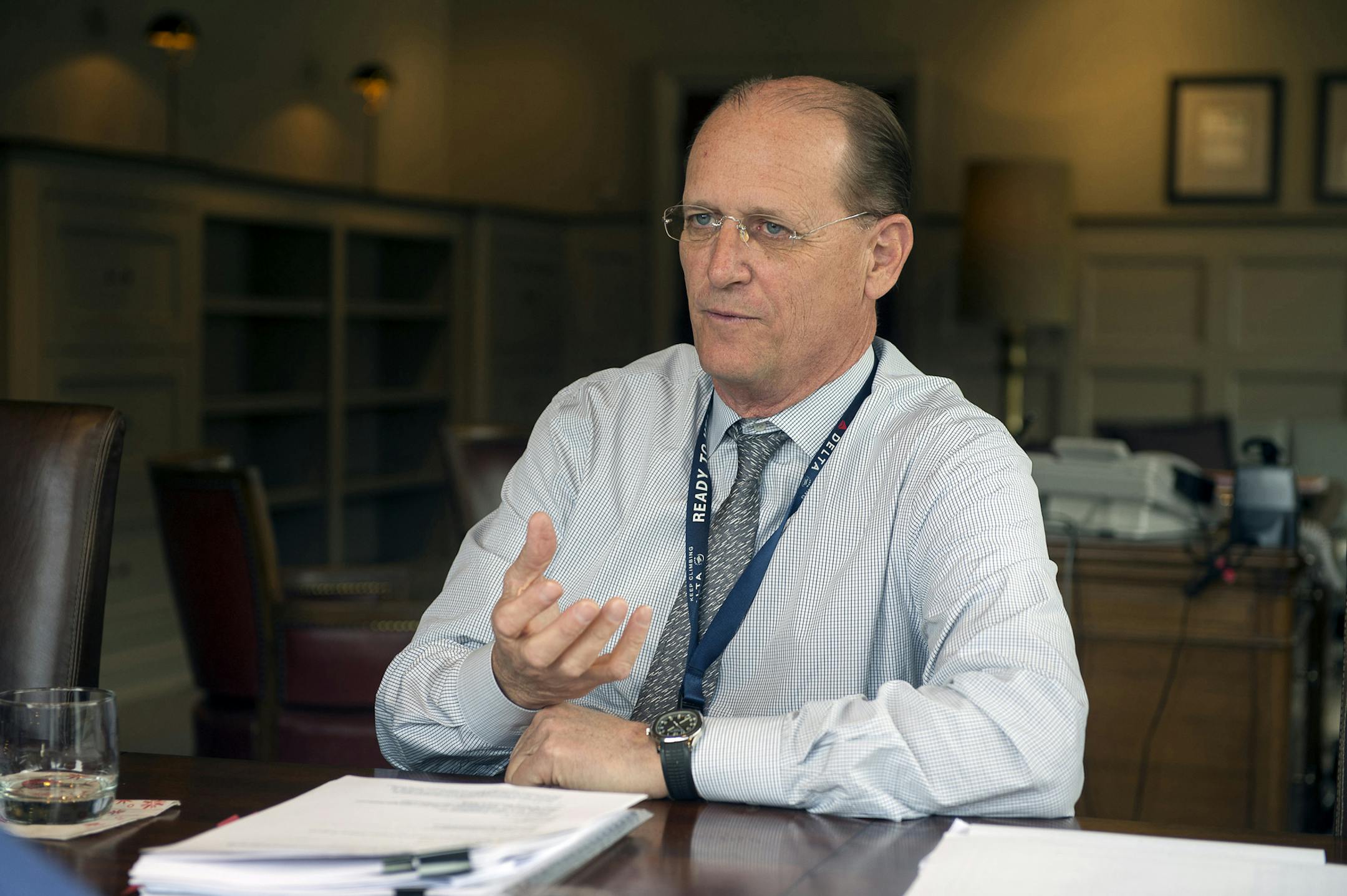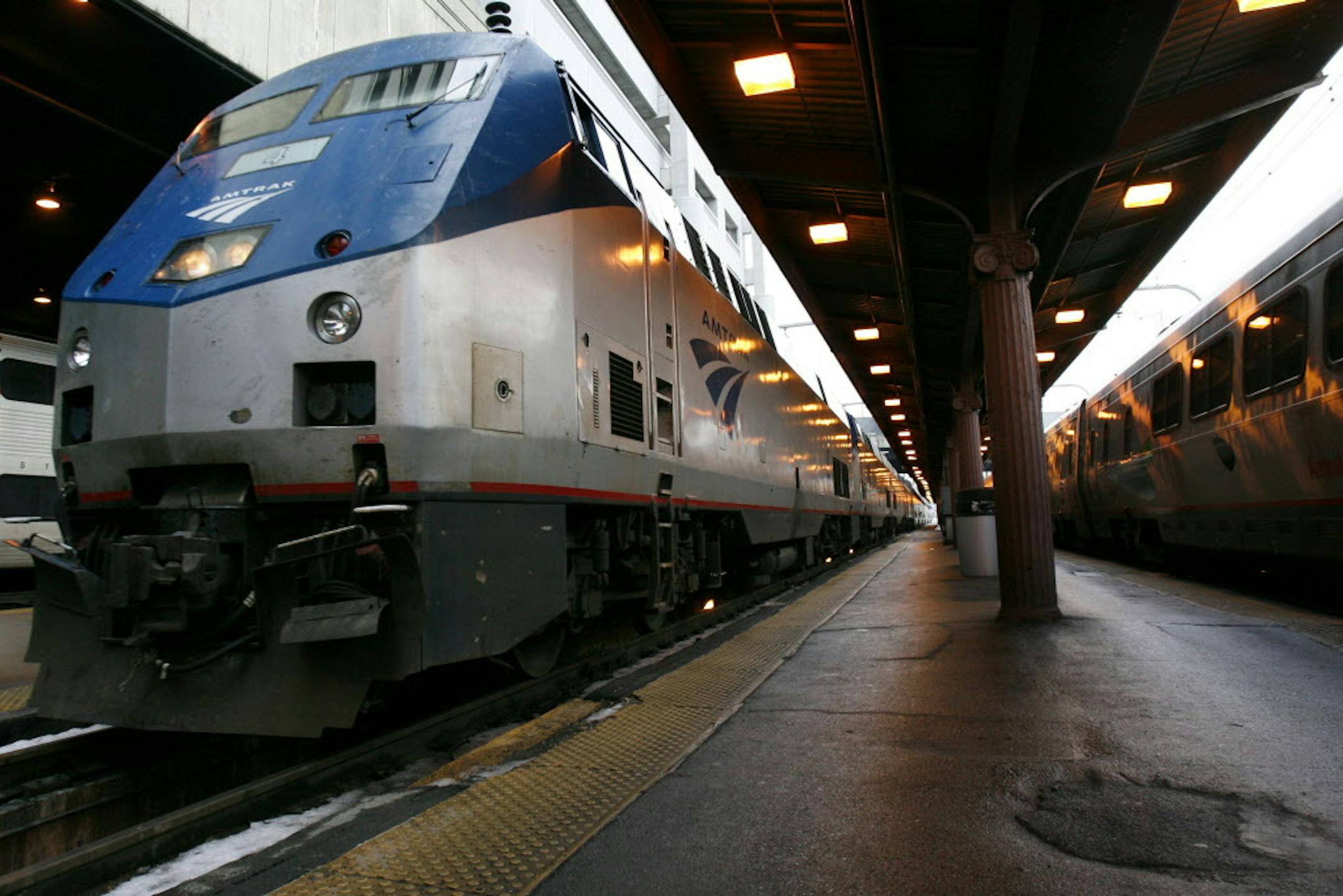
Richard Anderson knows exactly why so many people hate air travel. And as the former chief executive of Delta Air Lines, he is ready to exploit each of those pain points in his new role — as president and co-CEO of Amtrak.
The railroad has launched a new advertising campaign focused heavily on why so many airlines have been despised by so many for so very long.
From free Wi-Fi to the absence of middle seats to the two bags you may check for free, Amtrak is pitching itself as a more comfortable, civilized travel alternative to an airline — albeit not as fast, but you can't have everything.
"The coach on Amtrak is better than the first-class product on any domestic airplane," Anderson said Thursday in an interview. The new campaign, though it predated his arrival, is "spot-on in terms of the contrast" with U.S. carriers, he said.
Anderson, 62, arrived at Amtrak in July and will assume the CEO title at year's end, when co-CEO Wick Moorman steps down. Anderson said his first priority is to make the trains run on time; most depart punctually but then suffer delays en route and often arrive late. The company is also working to upgrade the interiors of passenger cars and will need to invest more on engineering work for Northeast Corridor tracks and other infrastructure, said Anderson, who moved to Washington this month.
Congress created Amtrak in 1970 via the Rail Passenger Service Act, and train service commenced the following year. The company's ridership has been heavily concentrated in the Northeast, with service connecting New York, Boston, and Washington. That's also the only region where Amtrak operates its high-speed Acela service, which began in 2000. Service in the corridor, however, is centered on the universally despised Penn Station in New York, a rat maze buried beneath Madison Square Garden. (Plans to expand Penn into a massive former Post Office at street level — and even clean up its nightmarish bathrooms — are gaining steam, though.)
Financially, the enterprise has struggled, even as it boasts more than 30 million annual passengers. Its long-haul routes are among the most challenged, but Amtrak sees huge potential in "state-supported" routes of fewer than 750 miles, such as Milwaukee-Chicago, Los Angeles-San Francisco, and Seattle-Portland — the kinds of urban corridors whose population density has increased.
"You're probably not going to build another freeway, and you're probably not going to build another airport in those places," Anderson said, noting the need for U.S. subsidies for rail travel, much as Congress appropriates large sums for U.S. highways.