

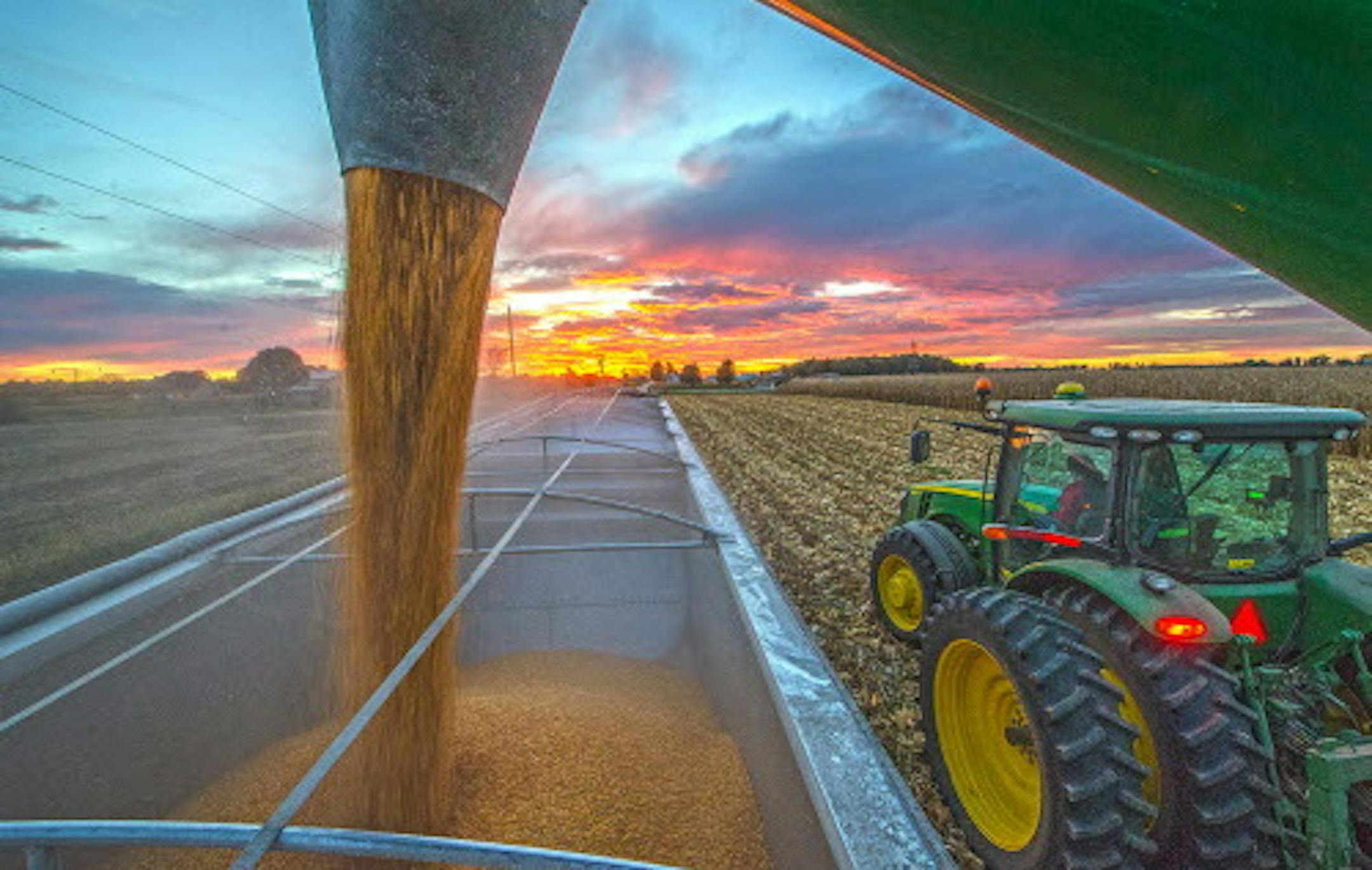
WASHINGTON -- The U.S. harvests of soybeans and corn this fall will each be the biggest ever, according to a U.S. Department of Agriculture (USDA) monthly outlook that boosted yield and production forecasts for both crops above market expectations.
The USDA on Friday pegged the corn crop at 15.153 billion bushels, based on an average yield of 175.1 bushels per acre while the soybean harvest was seen at 4.060 billion bushels, with yields expected to average 48.9 bushels per acre.
The forecast for corn and soy harvests and yield topped the high end of market expectations.
Corn futures sank to their lowest in nearly seven years immediately after the report was released while soybeans hit a one-week low.
"It's an astounding number, both the beans and the corn above the average guess," said Jack Scoville, analyst at the Price Futures Group. "What more do you need to know?"
Good weather for crop development during July across broad swaths of the U.S. Midwest, the key growing area for corn and soybeans, allowed crops to mature with relatively little stress.
The USDA forecast corn yields for Illinois, the second biggest state for production of the yellow grain, at 200 bushels per acre. If realized, that would be 25 bushels per acre higher than in 2015.
In Iowa, the biggest corn producer, yields were forecast at 197 bushels per acre, up from 192 bushels per acre in 2015.
The massive crops would outstrip the rising demand trend. The USDA boosted its supply outlook for the upcoming marketing year to reflect the expected bumper harvest.
For soybeans, domestic ending stocks were seen at 330 million bushels, up 40 million bushels from the government's July estimate. The USDA also boosted its 2016-17 soybean export forecast by 30 million bushels and its outlook for crushings by 15 million bushels.
Rising export demand led the government to cut its outlook for old-crop soybean ending stocks to a smaller-than-expected 255 million bushels from 350 million bushels. It raised its 2015-16 soy export forecast by 85 million bushels.
Corn ending stocks for 2016-17 were raised to a bigger-than-expected 2.409 billion bushels from 2.081 billion, despite a 125-million bushel increase in the export outlook and a 175-million bushel increase to feed and residual usage.
Old-crop corn ending stocks were pegged at 1.706 billion bushels, up just 5 million bushels from July.
djoles@startribune.com Crop estimates to be released Friday may show that Minnesota corn and soybean farmers are forecast to produce record crops in 2015, due largely to early planting and adequate summer rain. The healthy crops won't necessarily make farmers rich, since crop prices remain stubbornly low.](https://arc.stimg.co/startribunemedia/EI3OHQZRSNUDL4H6GGNMOGCVFM.jpg?&w=1080)



