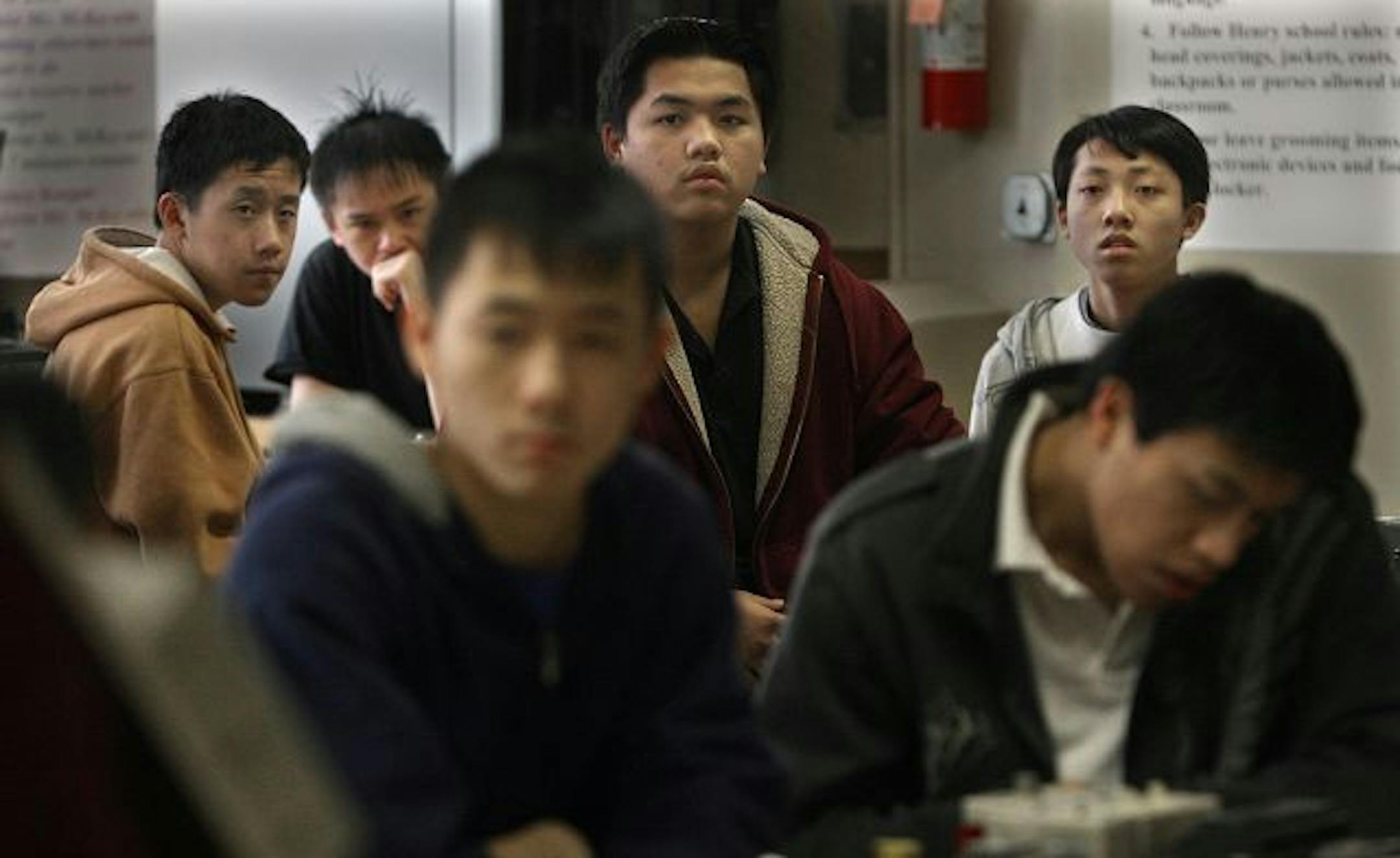
When Shabaka McKey decided to leave the engineering field a few years ago to teach, he wanted to work with underprivileged youth in a school where teachers were leaders and administrators listened.
McKey looked at several schools but gravitated to the engineering learning community at Patrick Henry High, a north Minneapolis school where 72 percent of the students qualify for free and reduced meals -- a sign of widespread poverty -- but 80 percent go on to attend two- and four-year colleges.
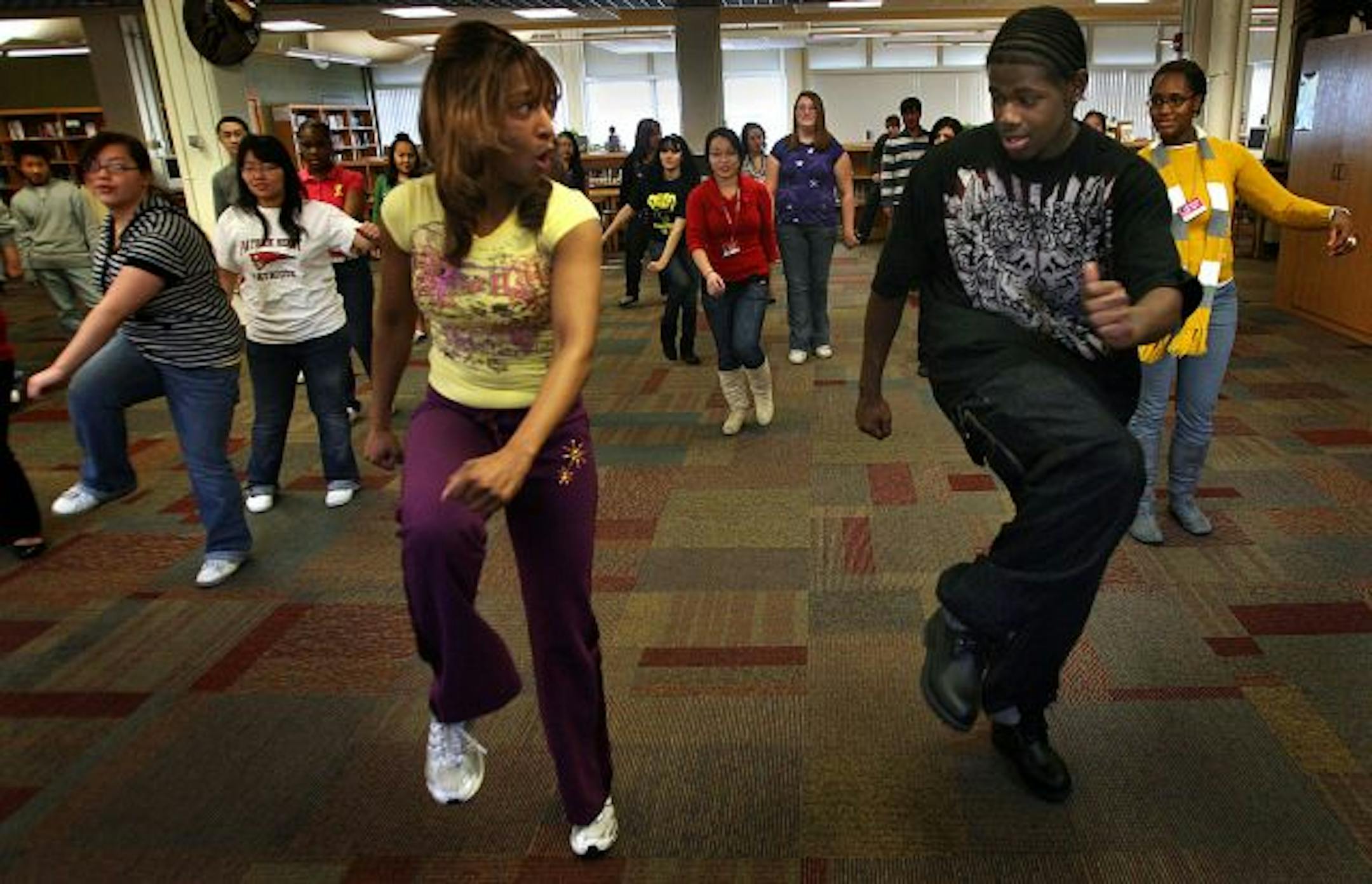
Still, that statistic didn't emerge overnight. More than a decade ago, a strong core of faculty loosened the hold that gangs, fights, rampant truancy and other symptoms of poverty had on Henry and it gradually became a place where students flock to teachers after school for help with homework or simply to talk.
"Henry is a place that runs on energy," said Tom Murray, a Henry teacher whose job includes several administrative duties. "The honest to God's truth is that the reason why we're succeeding with our kids is that we have good people here [like McKey] that have worked hard and connected with them."
In an era where schools, whether in affluent suburbs or working-class cities and small towns, are increasingly chided by state and national leaders for leaving low-income students behind, Henry High stands out.
Recently, the North Side school was recognized by two magazines -- U.S. News & World Report and BusinessWeek -- as one of the top high schools in the state, along with Edina High School and the Math and Science Academy charter school in Woodbury.
It's one of more than two dozen schools that participated in a pilot project in 2005 that led Gov. Tim Pawlenty to propose an intense summer mediation program for eighth-graders who didn't meet state testing benchmarks as part of his Teacher Transformation Act.
District and school staff members credit strong teacher-led mentor initiatives, ongoing staff training, a 22-year-old International Baccalaureate (IB) diploma program, strong extracurricular and after-school tutoring programs, a Hmong liaison, an emphasis on praising students' positive behavior via the school's website, and families who have attended Henry for generations.