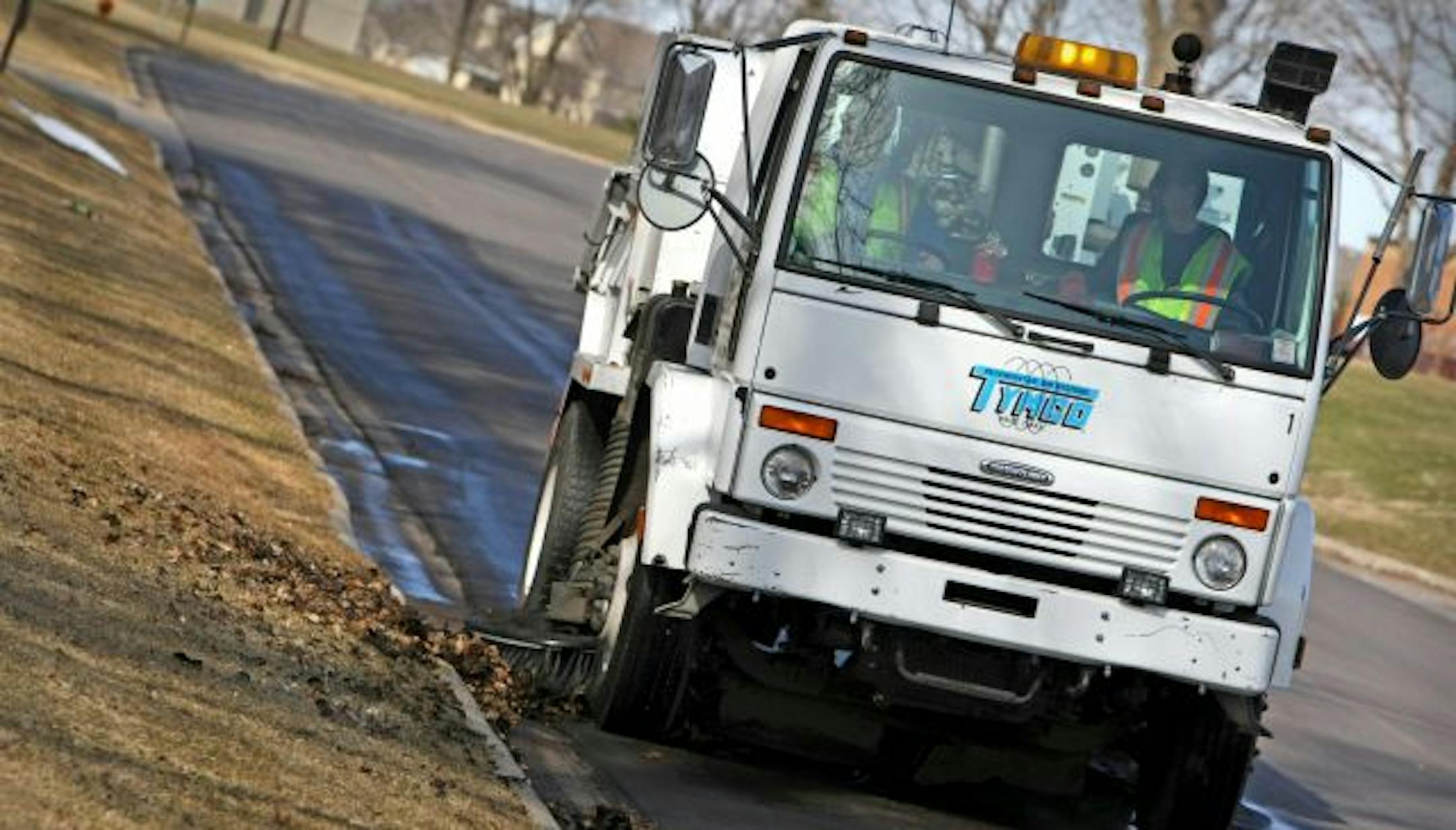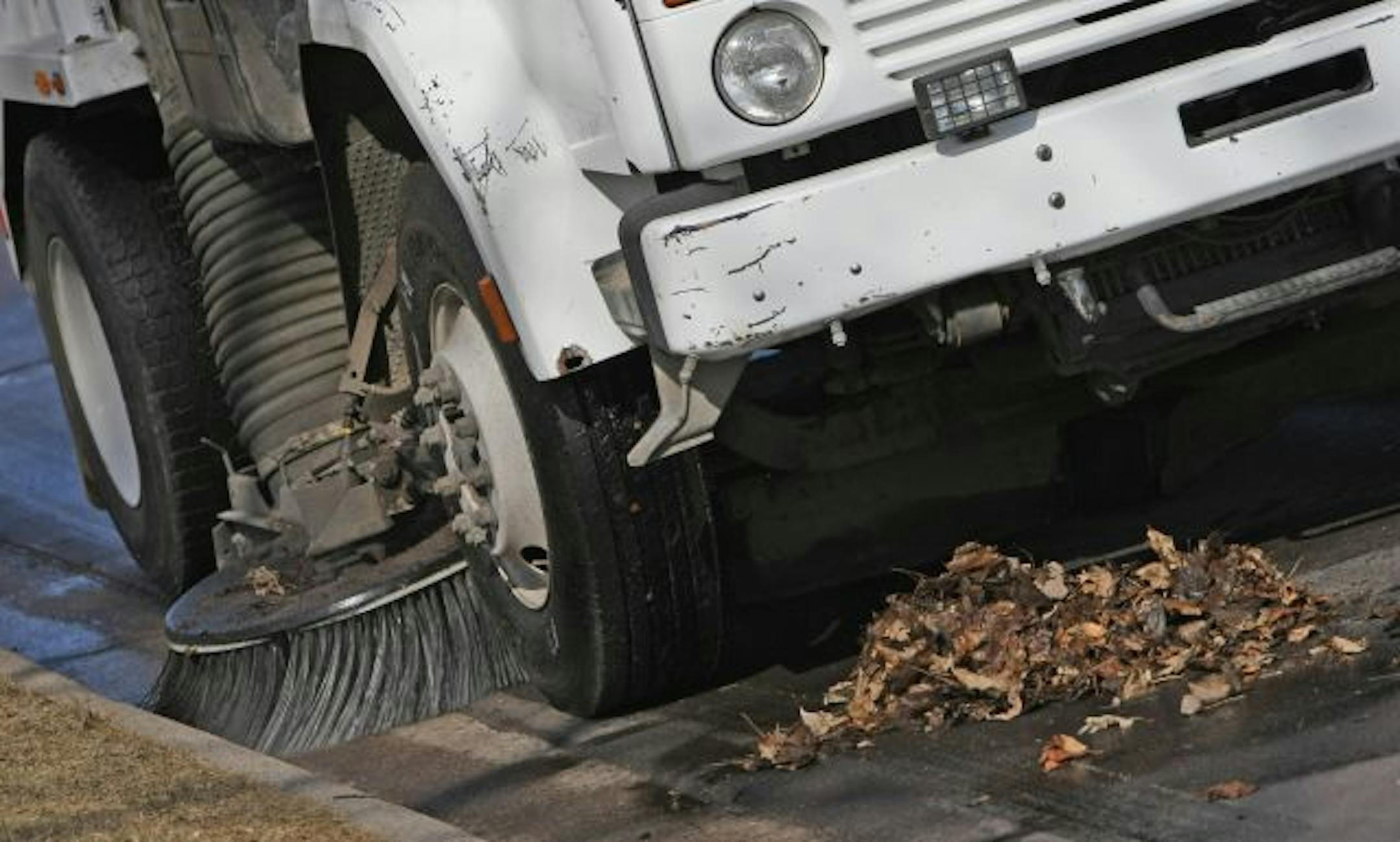
After decades of spring street-cleaning with mechanical sweepers that remove pebbles and sand, metro-area cities are slowly acquiring "air" sweepers that pick up fine dust, too.
Research shows that metals, phosphorous and other pollutants ride with finer particles into lakes, ponds and streams when it rains.
And because cleaner streets mean cleaner water, cities such as Plymouth, Eden Prairie, Eagan, Brooklyn Park, Minneapolis, White Bear Lake and others are spending extra money to buy or contract for the use of cleaners -- called "regenerative air" sweepers -- that rely on streams of air to pick up the fine dust particles other models leave behind.
"Anybody using the regenerative air has the top of the line, the elite in sweepers," said Jim Eiler, assistant maintenance superintendent for Bloomington. Because the air sweepers sell for close to $200,000 compared with $140,000 for traditional sweepers, Bloomington will consider one when a mechanical sweeper wears out, he said.
The Minnesota Pollution Control Agency (MPCA) encourages all styles of street sweeping because anything that falls on the street can wind up in a lake, said Keith Cherryholmes, senior engineer in the MPCA's municipal storm water program.
The MPCA recognizes that the air sweeper achieves superior results in removing fine particles, "but we can't really dictate that people go to the deluxe model," he said.
Cities are striving for cleaner streets because the federal Clean Water Act has made them the guardians of local surface water, Cherryholmes said.
Managing storm water