

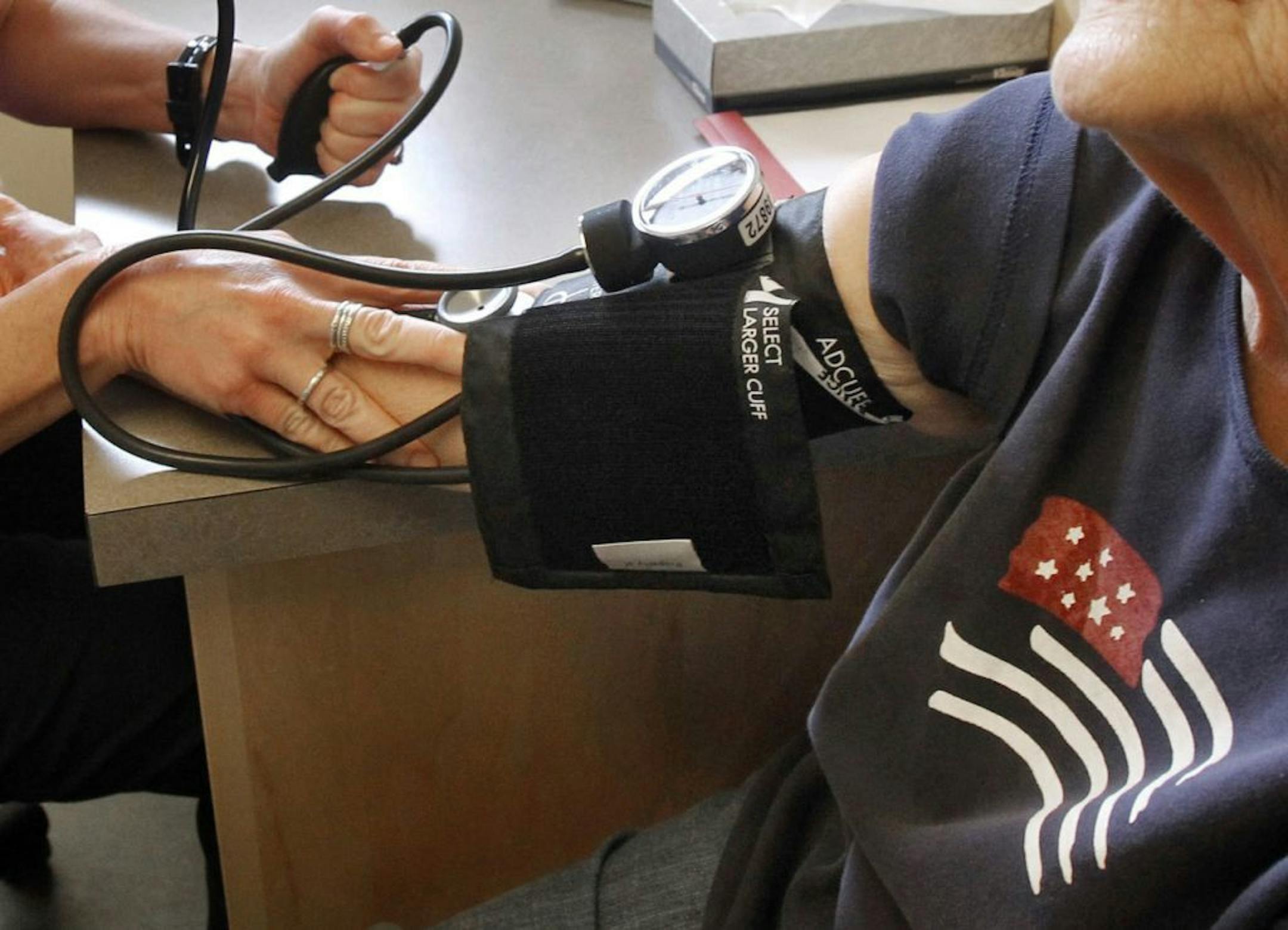
Aggressive treatment of high blood pressure reduced deaths and complications such as heart attacks or strokes in a high-risk population of patients, according to a massive national study published Monday that likely will reshape how doctors manage a disease that affects millions of Americans.
The so-called SPRINT study monitored 9,300 patients, including recruits from the Minneapolis Veterans Medical Center, and compared those whose systolic blood pressure was kept at 140 or less to patients with more aggressive treatment whose systolic numbers were pushed to 120 or lower.
The rate of deaths was 27 percent lower and the rate of heart failure was 38 percent lower in the patients treated more aggressively. Minnesota specialists said that the findings are persuasive, due partly to the large population studied, and that they will influence how they discuss and approach treatment options with high-risk patients.
"There isn't going to be another study like this anytime soon," said Dr. Paul Drawz, who recruited patients to SPRINT in Cleveland before coming to the University of Minnesota three years ago. "If you're not going to change your practice based on this, you're going to wait a long time."
Just how many patients will be affected remains an open question. As many as 1 in 3 American adults have high blood pressure, or hypertension, whether they know it through screenings or not. A much smaller group, 17 million, would match the criteria of the high-risk patients in the study.
The findings contrast with the most recent national treatment guidelines, which generally recommend keeping systolic blood pressure (the top number in the common blood pressure measure) below 140 for patients 60 and younger and below 150 for older patients.
Study halted early
The results of the federally funded trial were so compelling that the study was halted early last fall after observing patients for an average of about three years.
The study excluded patients with diabetes and stroke and focused on those at risk because they were 75 or older, or because they were 50 or older and had known risks including a prior heart attack, smoking habit or cardiovascular intervention such as a stent placement. On average, patients in the "aggressive" treatment group took one additional medication.


