

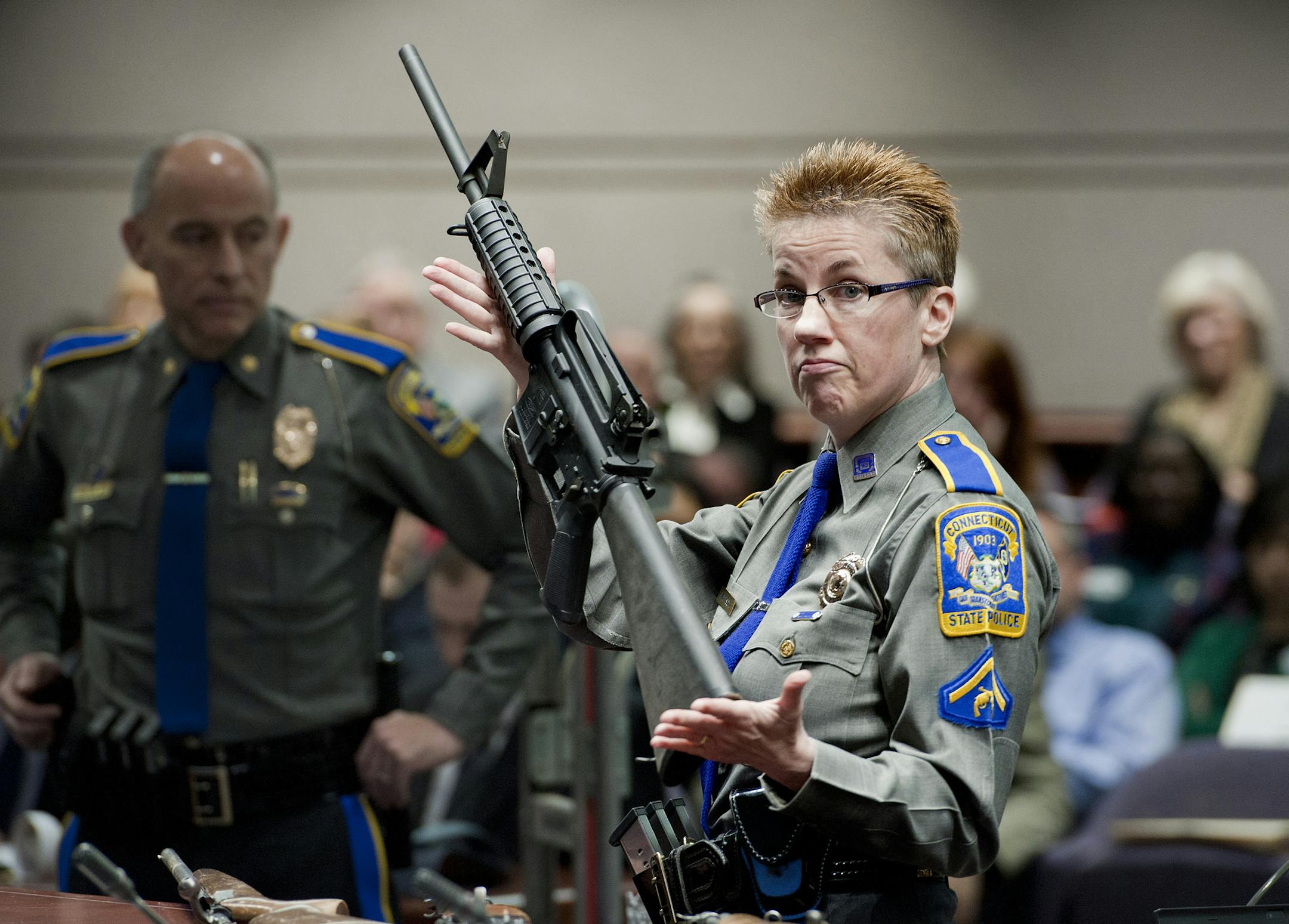
The U.S. Supreme Court last week allowed a lawsuit against Remington Arms by families of victims in the Sandy Hook Elementary shooting to go forward, despite a federal law that on its face seemed to block the suit.
That raises a challenging question for the manufacturer of the XM15-E2S weapon that gunman Adam Lanza used to kill 20 children and six adults in Newtown, Conn., back in 2012. Should Remington now fight the case in state court, arguing to a judge and jury that it shouldn't be held liable under state and federal law? Or should it settle the case and hope that other states don't follow Connecticut in interpreting federal law to allow for such lawsuits?
In one sense, the dilemma is familiar for any corporate defendant faced with high-profile litigation and the potential for substantial financial liability. The conventional thing is for the corporate defendant to make the case go away by settling it. That's usually thought to reduce bad publicity: Litigation stretches out over time, whereas a settlement is a one-time event.
Also, the damages that a jury might assess are outside the control of the defendant. So sound financial planning usually favors a settlement, which is a known quantity that the defendant can negotiate.
What makes the Sandy Hook case potentially different from the arms manufacturer's perspective is the theory of legal liability that the Connecticut Supreme Court allowed and that the U.S. Supreme Court declined to review. It rests on a slender thread. A federal law, the Protection of Lawful Commerce in Arms Act (PLCAA) of 2005, was designed to protect gunmakers from state or federal lawsuits for violence committed with their weapons. Nearly every court to have applied the PLCAA has blocked lawsuits by victims. The Connecticut court in the Sandy Hook case, however, found what it said was a narrow exception.
If Remington settles, that might encourage similar suits in other states, where other courts might follow Connecticut's lead. Remington might then have to settle with them, too. The result could be a fresh round of litigation risk for the industry.
If, however, Remington lets the case go forward, it might conceivably win on the merits, which would discourage future suits. Even if it loses, it sends the message that it won't settle, and indeed is willing to appeal all the way to the U.S. Supreme Court. It remains entirely possible that, under the right circumstances, the justices might agree to hear a future case on the meaning of the PLCAA.
But let's get back to how the Connecticut court interpreted the law this time. The PLCAA allows lawsuits that are based on violations of a law applicable to the sale or marketing of firearms. Lawyers who work on PLCAA cases call this the "predicate exception," because the idea is that the lawsuit can go forward when it is predicated, or based, upon such a statute.


