

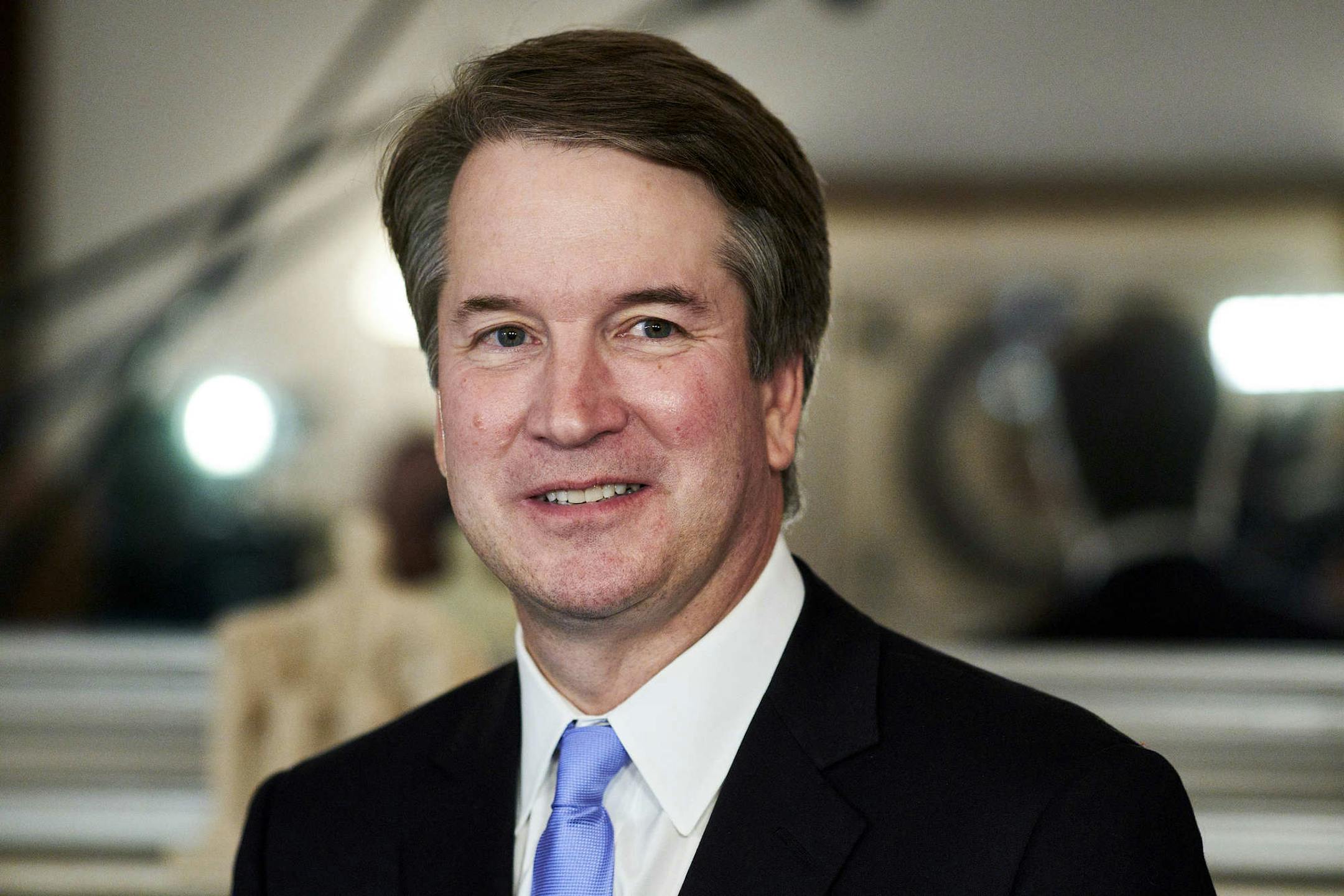
When Supreme Court nominee Judge Brett Kavanaugh gave his "separation of powers" speech at the University of Minnesota a decade ago it hardly made a splash.
But when President Donald Trump announced his nomination on Monday to the country's highest court, a tenet of that address quickly became a national sensation: Kavanaugh proposed that sitting presidents be exempt from criminal or civil investigations to avoid distracting them from their work.
Kavanaugh delivered the keynote address at the Oct. 17, 2008, Minnesota Law Review's annual symposium, "Law & Politics in the 21st Century." His remarks were later published as an article in a 2009 edition of the Law Review.
"Ten years ago, there was discussion about it, but it wasn't seen as a massively controversial thought or paper," said Timothy Johnson, a U political science and law professor who attended the speech. "It didn't strike me as particularly partisan at the time, but now you put it in the context of these times … it puts it in a completely different light."
Minnesota Sens. Amy Klobuchar and Tina Smith have expressed concern about Kavanaugh's track record, and others worry about his presidential immunity philosophy, given the investigation into possible links between the Trump campaign and allegations of Russian interference in the 2016 presidential election.
Johnson, who spoke on a panel at the same symposium, said the issue is a relevant point to raise at Kavanaugh's confirmation hearing, but didn't think it necessarily outweighed other issues.
"That is, in some sense, his personal interpretation of the law," Johnson said of Kavanaugh's speech. "Whether it is something of great concern, I don't know, but I think it's absolutely something worth asking about."
Although Kavanaugh co-authored the 1998 Starr Report outlining the case for impeaching President Bill Clinton for lying under oath, he said in his U speech that Congress should ensure it never happens again.


