

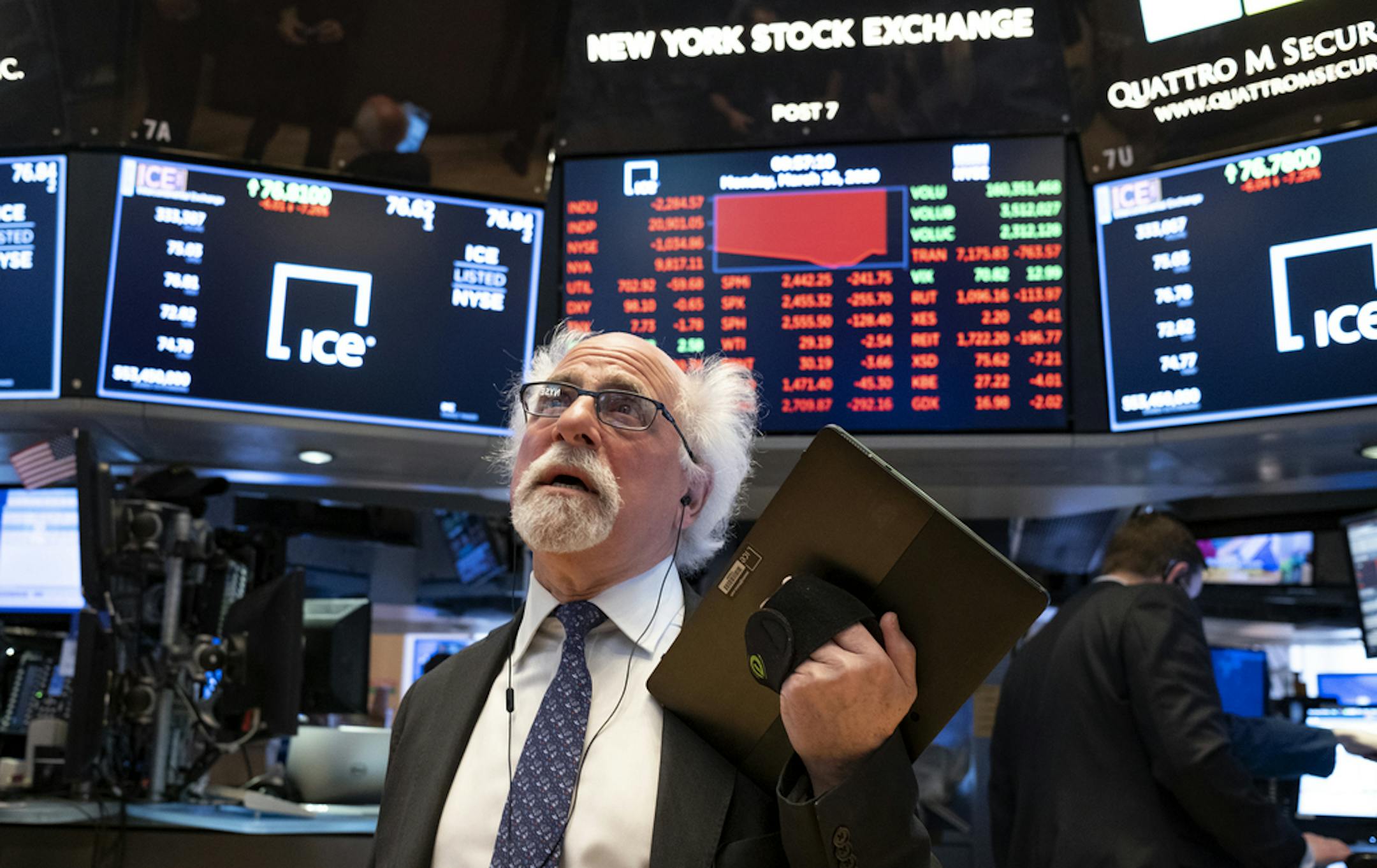
Market professionals often dig deep into history to find precedents that can help them understand current times. But the rapid decline of this market from a record long bull run to a bear market has market professionals casting about for good parallels.
Jim Paulsen, chief investment strategist for Minneapolis-based Leuthold Group, has been in the investment business for 37 years and has seen a number of market panics.
Paulsen has looked at a number of recent technical market signals to gauge if the worst of the market panic has subsided.
"There is a lot of the characteristics that we've witnessed so far already that are very much end-of-crisis things," Paulsen said. "Things that you typically get at the end of the panics, as opposed to its start."
In 2019, the S&P 500 Index, a broad measure of the stock market, had a return of 29%, the second-best annual performance in the last 20 years. Through Thursday, the S&P 500 was down enough to erase all of 2019's gains.
"It's really the speed of this decline that is interesting," said Sean Naughton, senior vice president of U.S. equities at RBC Wealth Management, who sees some resemblances to the market crash in 1987 and others.
Market observers are looking to medical professionals to help unwind some of the biggest questions about this market downturn, which has been centered around the worldwide spread of the virus.
"There is a possibility that there is a lot of information we don't know about the spread of this virus," Naughton said. "I think it's going to be critically important for us to get comfortable that there is some control mechanisms on the pandemic."


