
Afield: New photo blind has the right height and weight

Ability to photograph over – and not through – vegetation is huge.

For the Minnesota Star Tribune
February 25, 2016 at 6:20PM
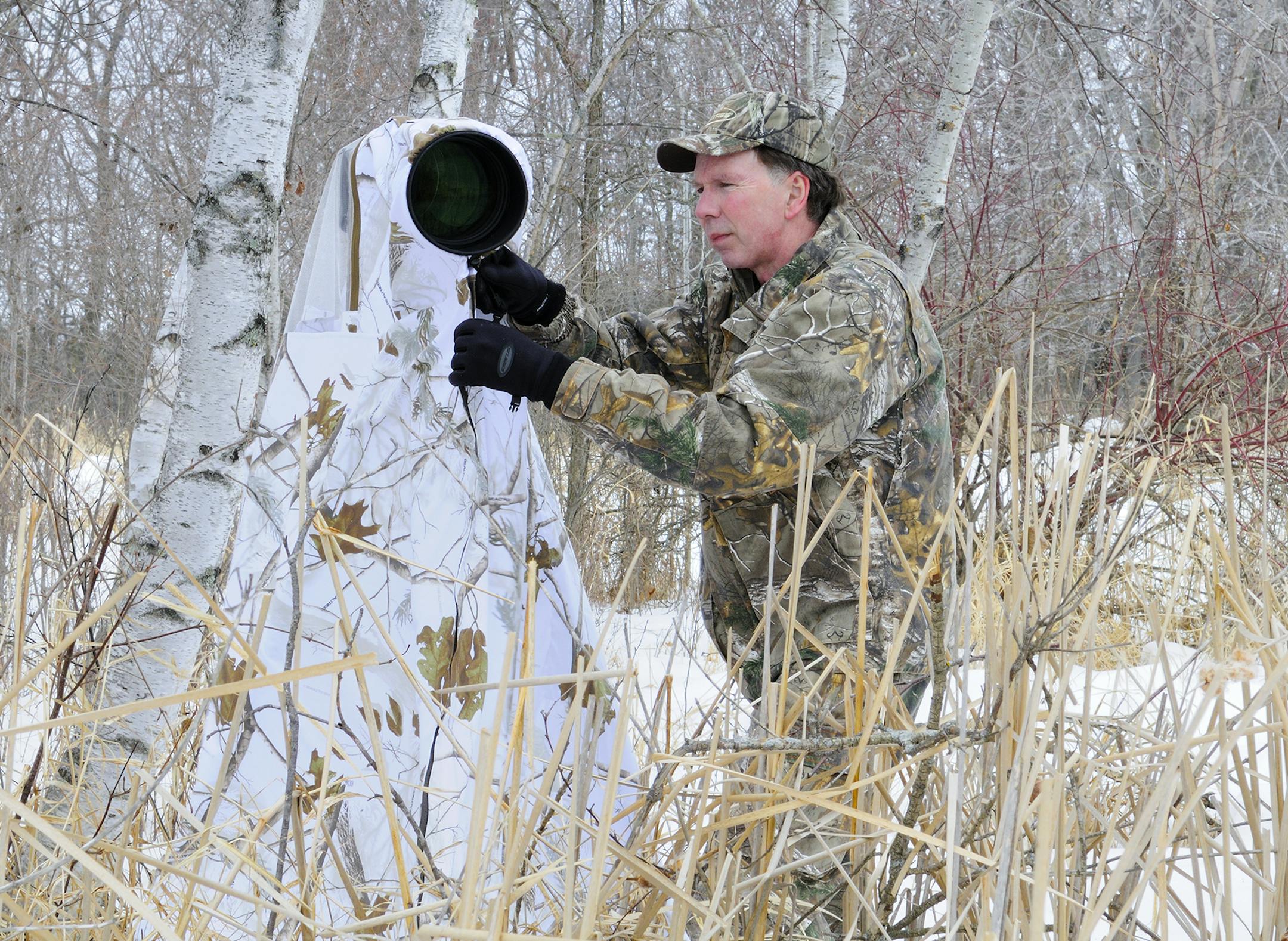
Marchel prepares a photography blind called LensHide. The versatile blind can be used while in a sitting position, or in this case, a standing position. This allows him to photograph above the cattails in the foreground.
Bill Marchel prepared a photography blind called LensHide. The blind can be used while the user is sitting or standing, as in this case. (The Minnesota Star Tribune)

It's not often I buy gear for wildlife photography that doesn't need some sort of alteration to improve its functions.

So, I'm excited about a newly released photography blind called LensHide. I've been using this versatile blind for about a month, and there isn't one modification I would make to it.

LensHide photography blinds are made by the company LensCoat. The company makes many items for the outdoor photographer, from camera supports to lens covers. I've used LensCoat products for many years and find its goods quite useful and well-made.

LensHide blinds fit my style of photography well. I regularly go afield with no particular photography goal in mind. I often find myself in a situation where I wish I had a blind with me.

For example, when photographing white-tailed deer during the fall rut, many times I pussyfoot through the woods and fields, stopping occasionally to use rattling antlers to try to lure a lovesick buck into camera range. Hunters call this technique "running and gunning."

During those forays I don't carry a pop-up tent-style blind. Those types of blinds are heavy, bulky and noisy going through brush. They also limit me to shooting photos from a sitting position.

The LensHide blinds address these situations.

First, LensHide blinds fold into a built-in storage pouch that is compact and lightweight (only 2.5 pounds). There isn't a need to carry supports because the blinds are supported by the photographer's tripod-mounted camera and lens — and the photographer. The folded blind employs belt loops and d-rings so I can easily transport it by attaching it to my waist or backpack. Or I can stuff the entire package into my backpack.
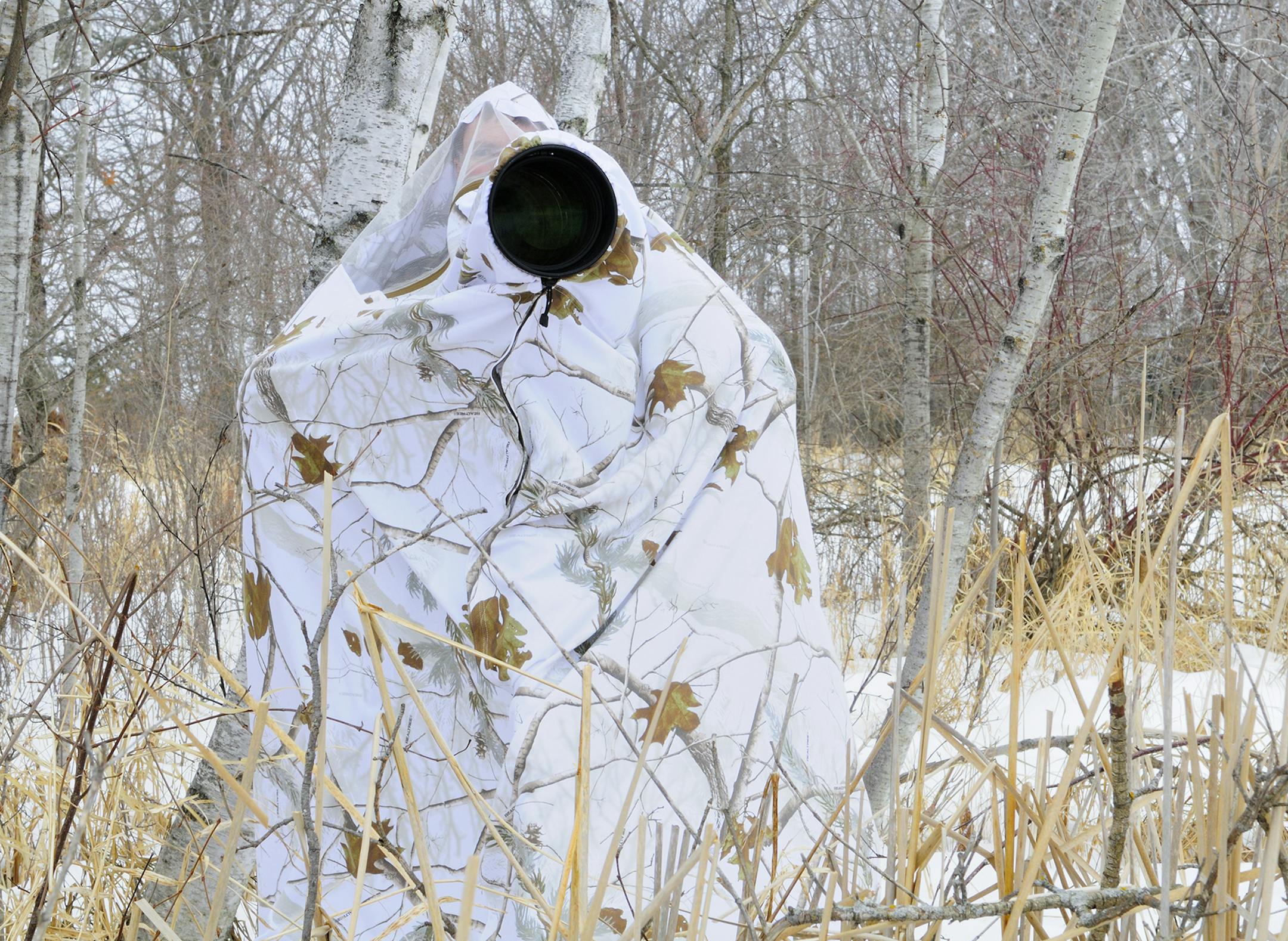
Second, I'm equally happy that LensHide blinds allow me to photograph from a standing position. Often, grass and brush obscure my subjects while I'm seated in a blind. Not with the LensHide. I'm able to shoot over vegetation that interferes. I don't have to make excessive noise and leave my scent in photography locations as I would if I spent time removing those obstacles. But I still have the option to sit if I bring along a folding camp stool.

LensHide blinds come in two camouflage patterns, Realtree AP Snow and Realtree Max 4, and retail for $120. The blind material is a polyester and cotton blend that, unlike some of the nylon blinds, is extremely quiet. Also, LensHide blinds breathe well, an attribute I'm sure I'll find comforting on those sweltering summer days.

In addition, LensHide blinds have a mesh window that allows the photographer a view above the lens, or to either side. I found I can see more than 180 degrees while inside the blind, yet my face remains hidden.

Other LensHide features include a Velcro front closure, an adjustable cap that fits over the photographer's head to hold the blind in place, and an elastic cord to secure the blind to the lens.

LensHide blinds will provide me with new options, from photographing songbirds and waterfowl, to deer and other large mammals.

Bill Marchel is an outdoors writer and photographer. He lives near Brainerd.

Marchel is inside a called LensHide. The versatile blind can be used while in a sitting position, or in this case, a standing position. This allows him to photograph over the cattails in the foreground.
Marchel is inside a called LensHide. The versatile blind can be used while in a sitting position, or in this case, a standing position. This allows him to photograph over the cattails in the foreground. (The Minnesota Star Tribune)
about the writer

about the writer

Bill Marchel

More from No Section

See More
FILE -- A rent deposit slot at an apartment complex in Tucker, Ga., on July 21, 2020. As an eviction crisis has seemed increasingly likely this summer, everyone in the housing market has made the same plea to Washington: Send money — lots of it — that would keep renters in their homes and landlords afloat. (Melissa Golden/The New York Times) ORG XMIT: XNYT58
Melissa Golden/The New York Times

It’s too soon to tell how much the immigration crackdown is to blame.