

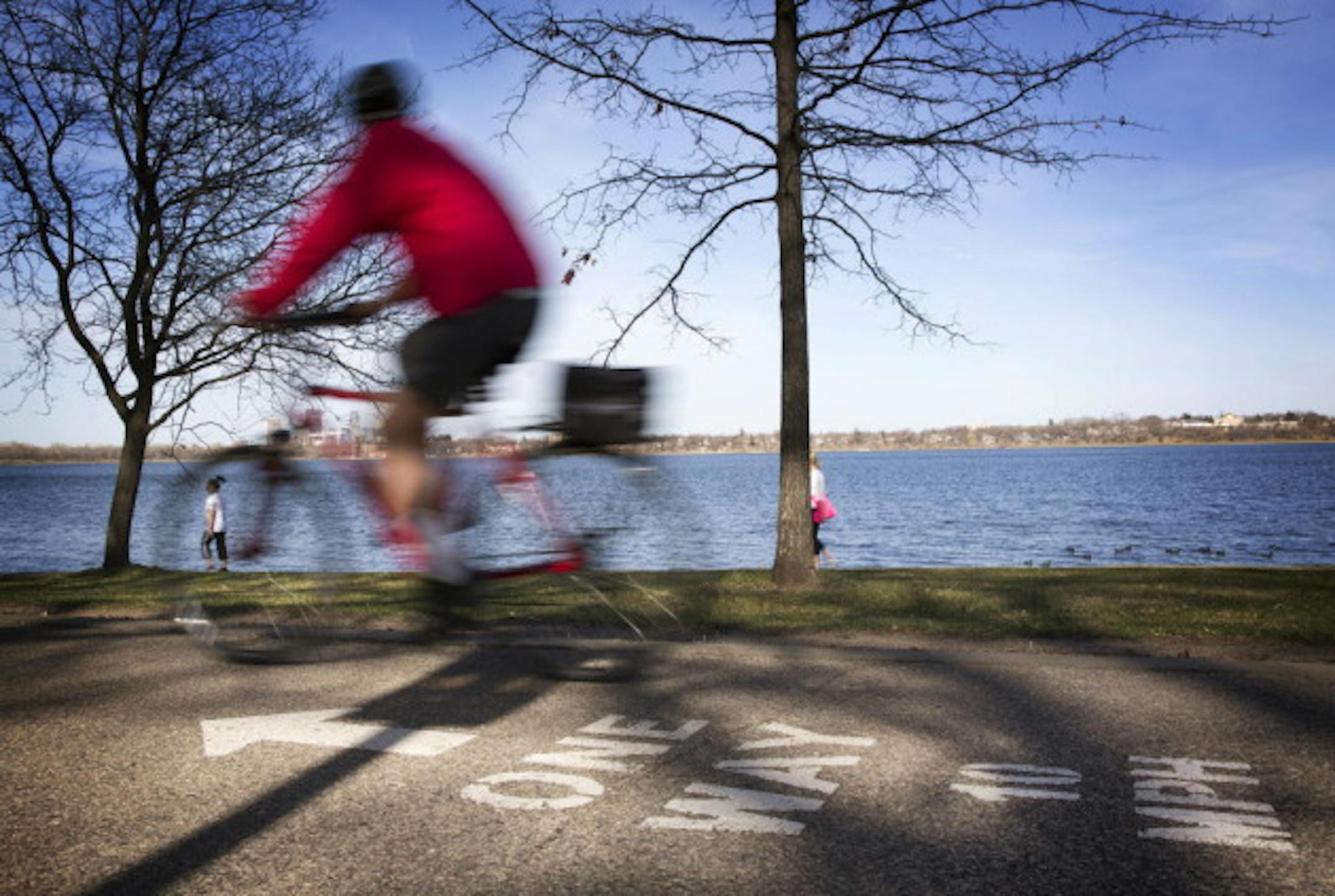
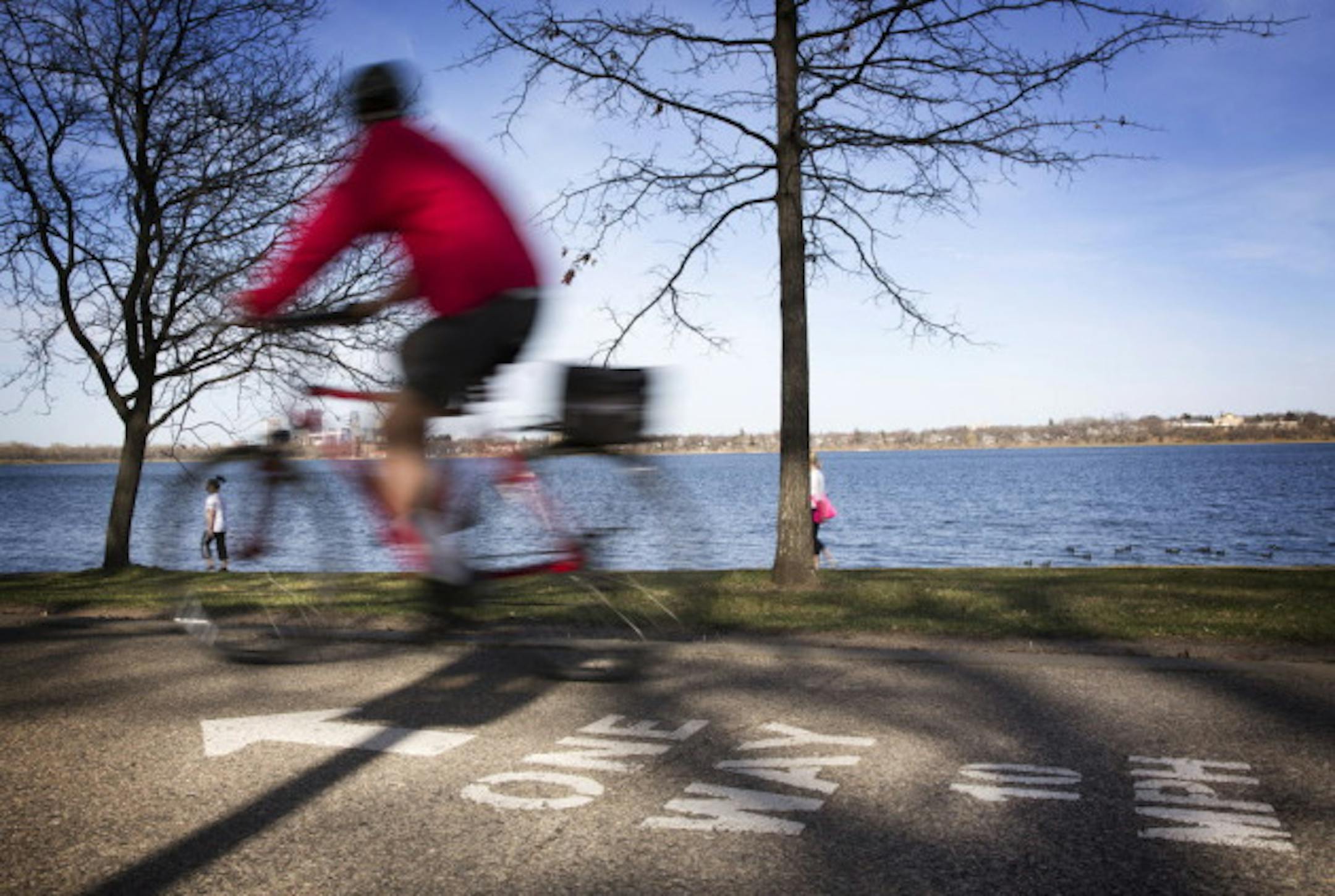
The idea of building wider, two-way bike paths around lakes Harriet and Calhoun was shot down resoundingly Tuesday night by those advising park commissioners on renovations at the two lakes.
A strong majority of the Harriet-Calhoun advisory group opposed the idea on safety and environmental grounds. Some also disliked its appearance late in the group's deliberations as it was debating its recommendations to the Minneapolis Park and Recreation Board.
The rationale for the proposal was that converting the current one-way trails to two-way would offer bikers more flexibility in accessing destinations around the lake.
For example, King Field resident Ben Schweigert noted that he has to bike more than 2 miles around most of Lake Harriet to reach a band shell that's only half a mile in the wrong direction from the Rose Garden area, where he accesses the lake. The other alternative is competing with cars in the parkway, but he avoids that if he's hauling his 18-month-old, the advisory panel member said.
The proposal also was described as more commuter friendly, but members of the advisory committee argued that the bike paths should instead be oriented toward recreational use.
Another concern for the advisory group was the proposed widening of the paths in order to accommodate two-way traffic. The current paths, nearly 10 feet wide, would grow to 11 to 14 feet wide where feasible under the park staff proposal. That would require the removal of a minimum of 146 trees at the two lakes, and the work could potentially affect another 93 trees, according to a partial analysis.
But most of those would be ash trees already doomed under the Park Board's program to remove all such trees in the city because of the emerald ash borer.
Lake Harriet-area resident Lisa McDonald was among those faulting the late introduction of an idea not discussed previously. "It's very complex. A lot of people would have an opinion on this," she said. Another panel member, Constance Pepin, was applauded by many in an audience of several dozen people when she called tree removal "ecologically disastrous."


