

The people hoping to adopt research dogs from the University of Minnesota know them only by code numbers: 14AC2, 12AC1, 14CC4 and so on.
They want to learn more, so they have filed public records requests to find out what experiments have been done on the dogs. It's part of a campaign by a California-based animal rights group, the Beagle Freedom Project, that's trying to end the practice by shedding more light on what happens in university laboratories.
"You're an advocate for this animal," said one of the "adopters," Nicole Stundzia of Rochester. "You're trying to get the animal released to you once testing is completed. That's what we're fighting for. That's why we're trying to get records."
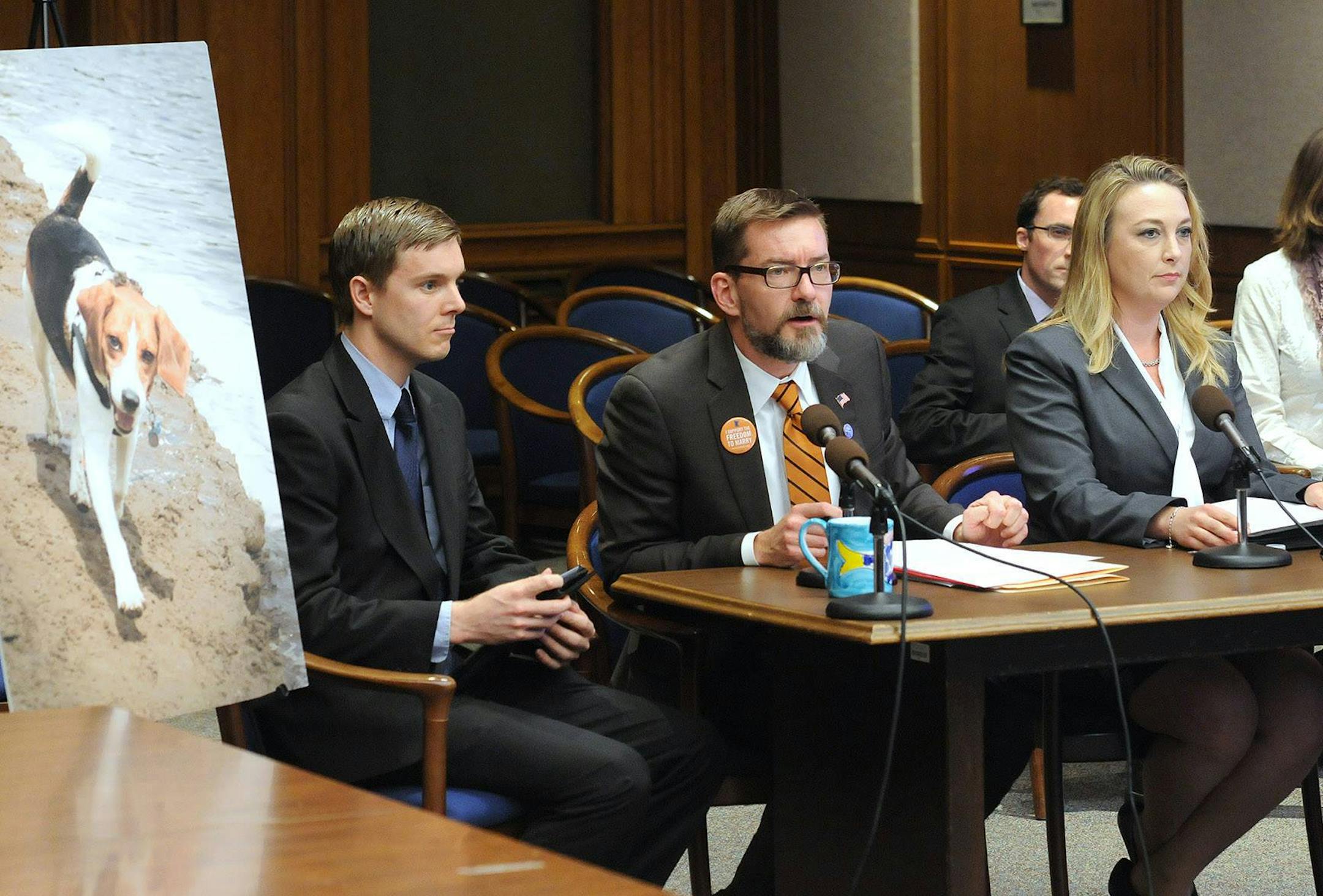
The possibility of adopting former laboratory animals is more than an abstraction in Minnesota, which last year became the first state to require universities to offer research dogs and cats for adoption, whenever possible.
The law was championed by the Beagle Freedom Project, which advocates for the dog breed that's often used in research.
Since the law passed, nine former research dogs have been successfully adopted through the university's partnership with the Animal Humane Society in Golden Valley, said Cynthia Gillett, institutional veterinarian at the U. Gillett said the dogs are not identified as former research animals when they are put up for adoption at the shelter.
"You should be adopting the animal because you want the animal, not because [of] its provenance," Gillett said.
Yet the animal advocates see that as precisely the reason for their "identity campaign." "We don't want those animals to be invisible and forgotten about," said Jeremy Beckham, a Salt Lake City man who runs the campaign full-time for the Beagle Freedom Project.


