

WASHINGTON
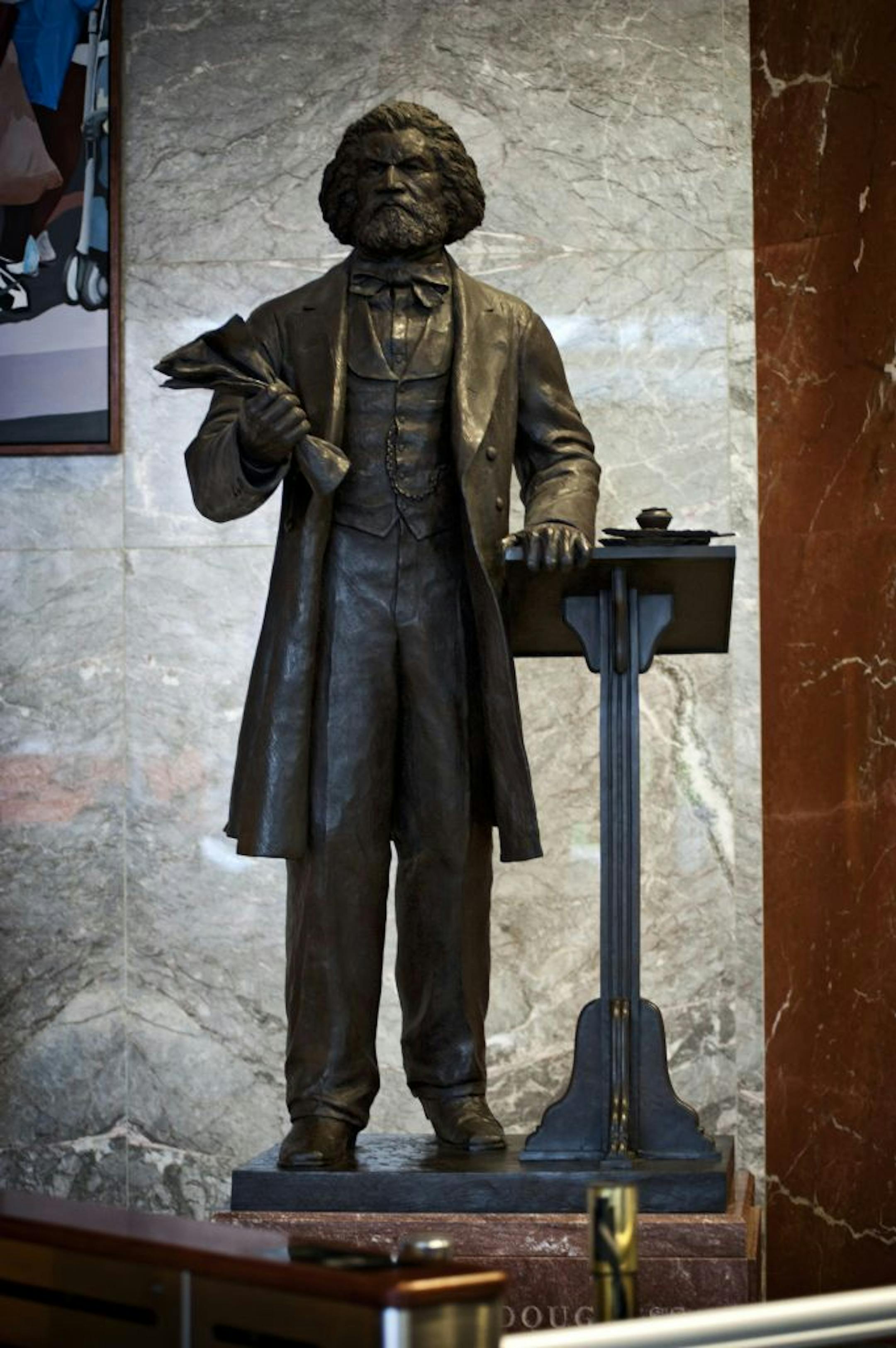
The towering statue of abolitionist Frederick Douglass that's standing in the atrium of a Washington government office building has been a symbol-in-waiting -- until now.
Congress approved and the president signed a bill in September that directs the move of the 19th-century icon's image to the Capitol's Emancipation Hall, where it will be one of only three statues of African-Americans.
It will be the first time that a statue in the Capitol will represent the District of Columbia, which is excluded from the Capitol's Statuary Hall collection because it isn't a state. The 1864 law that created the hall entitles every state to display two statues of distinguished residents who are deceased.
D.C. Delegate Eleanor Holmes Norton said that what might seem like a "little thing" was an important step. "For us, it's a great triumph," said Norton, who represents the city in the House of Representatives but has limited voting privileges.
The District of Columbia has long struggled with Congress for recognition. Lawmakers have thwarted its statehood efforts.
The city was created as the federal capital in 1791 with land donated by Maryland and Virginia. Residents didn't win the right to vote in the presidential election until 1961, with ratification of the 23rd Amendment to the Constitution, and the right to elect a mayor and City Council until the 1970s.
"We're delighted that the president has signed the legislation, and are proud that our statue of Frederick Douglass will finally have a place in the Capitol," Washington Mayor Vincent Gray said recently. "While we're thankful for this victory, our larger quest to secure the same rights that our fellow citizens across the country enjoy will continue."


