

Toronto is a safe, clean, comfortable city. Its eclectic streets and scenic avenues appeal to your inner walker, and few parts are better to explore on foot than the automobile-free, pedestrian-friendly Distillery District.
Just off Lake Ontario, with the CN tower and a collage of skyscrapers hovering above, this former industrial area melds the corporate and cultural in a historic setting. Walking through the Mill Street entrance, you'll immediately get the picture, sensing the significance of it all.
This uncommon center was once a distillery, one of the world's largest, beginning in 1832 when James Worts operated a windmill to mill grain. He and his brother-in-law William Gooderham formed the Gooderham & Worts Distillery, and by the 1880s it was the world's largest distillery of alcoholic beverages, before being sold to Hiram Walker in the 1920s.
When Prohibition began in Ontario in 1916, the law prohibited the "selling of liquor for beverage purposes," not its manufacture. Gooderham & Worts distilled on, shipping its product around the world. But the last rum barrel rolled out of the distillery in August 1990.
By 2001, the distillery had become mainly rubble when Mathew Rosenblatt and his development partners began to re-create the area into something that people, locals or tourists, would return to, says Rosenblatt.
Viewing business as art, and intent on establishing a neighborhood where you "get a sense of the city's culture," Rosenblatt and his partners have taken 44 buildings, possibly the largest collection of Victorian industrial architecture in North America, and incorporated business, retail and artist spaces into a setting that exudes small-town charm. Walking these streets is akin to visiting an amusement park, and not having to pay for the rides, as the visual feast is entertainment enough.
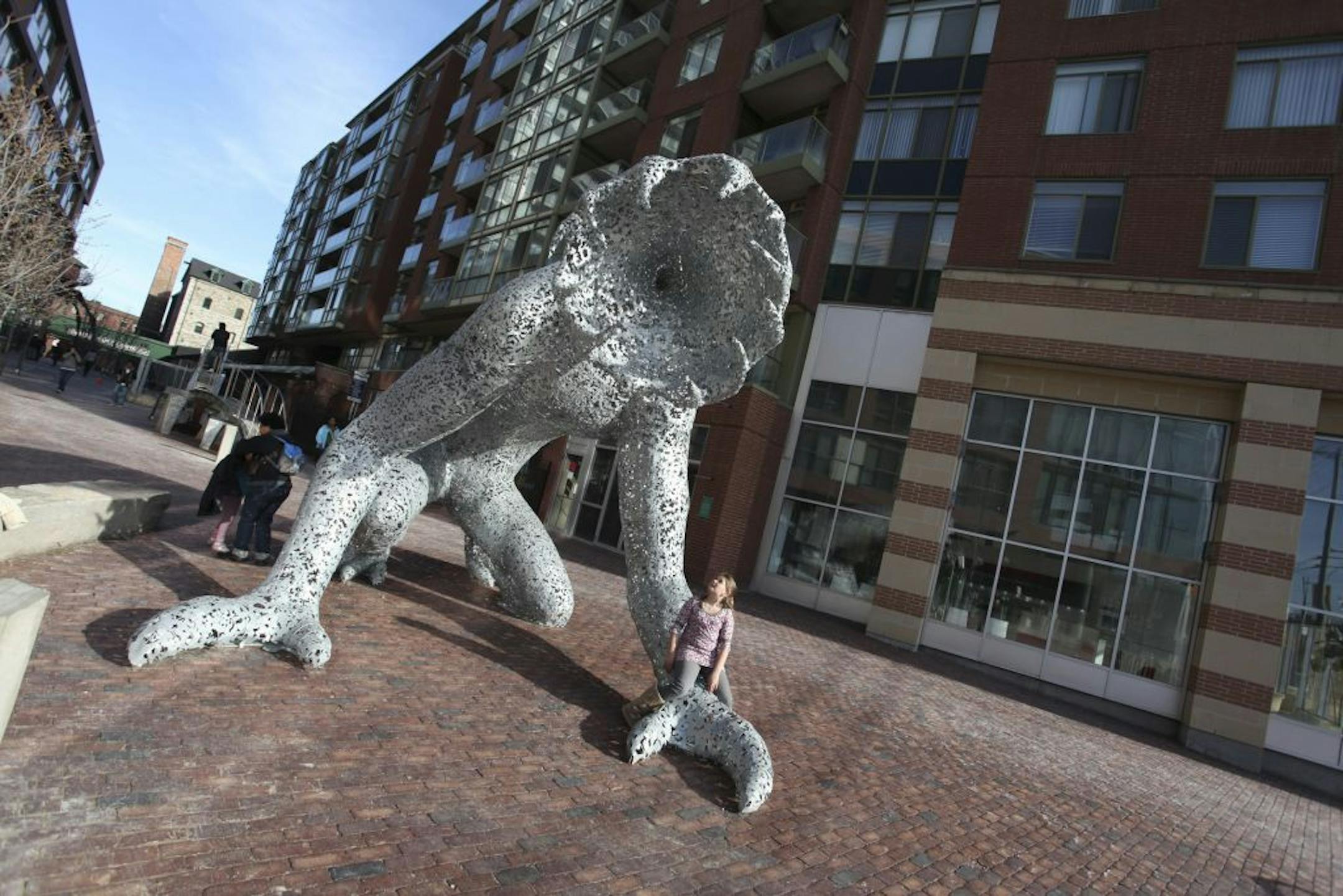
"Koilos," a 14-foot tall, crouching sculpture by California artist Michael Christian, lords over Distillery Lane, alerting Parliament Street entrants that this is not going to be your ordinary walkabout.
"Still Dancing," a 36-foot-tall sculpture by New York's Dennis Oppenheim, is the Distillery's Trinity Square centerpiece. Oppenheim views it as a combination of sculpture, architecture and theater, explaining it "derives content from an association with early distillery images," and "evokes the extraordinary drama inherent in the distilling process."


