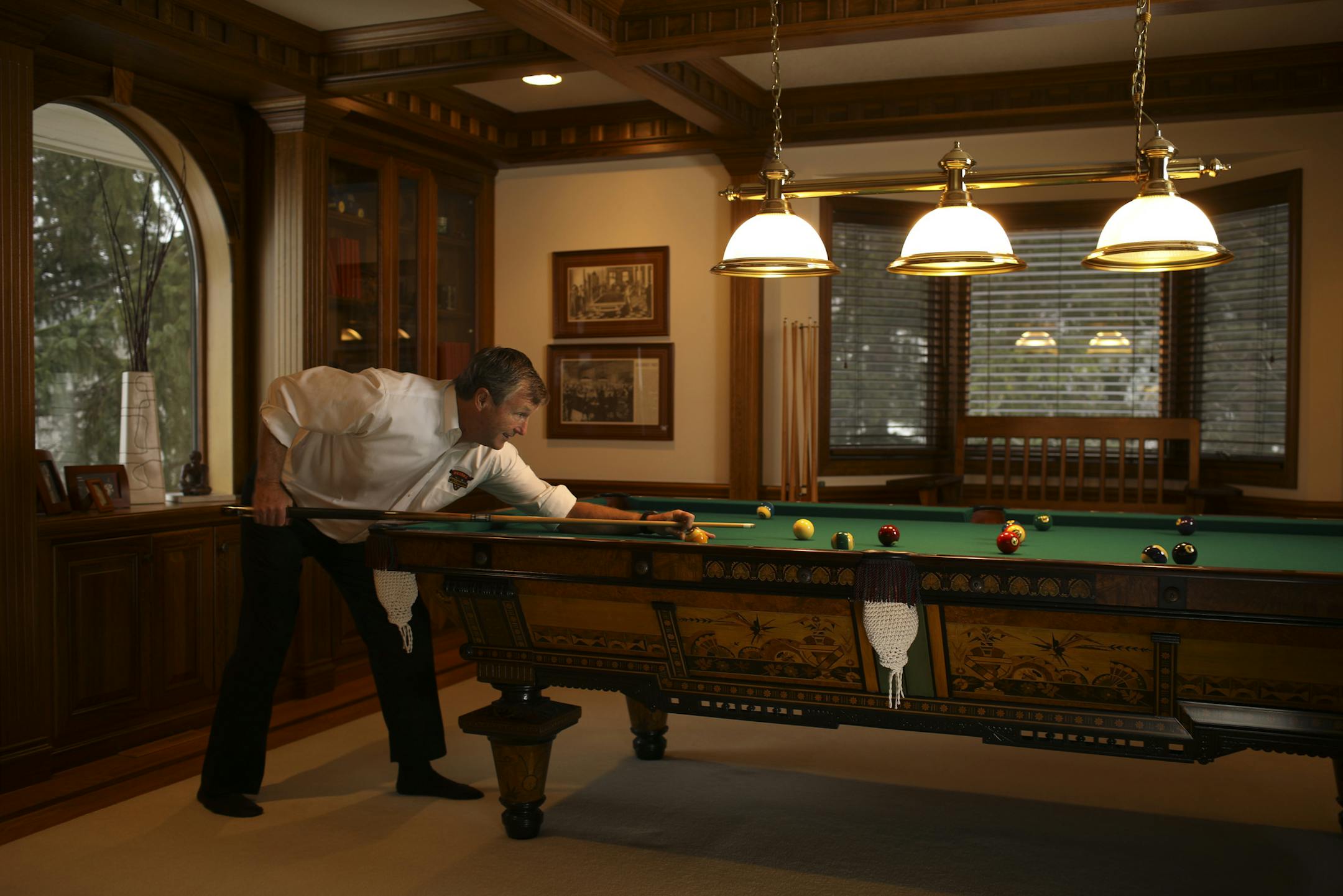
When Greg Peterson first played pool at a friend's house, he liked the game — but he really liked the table.
"I went home and said I wanted to buy a pool table," he recalled. His dad suggested they make one instead. So Peterson, already an ace in his school wood-shop class, came up with a design, based on his friend's table, and started gathering materials. "I couldn't afford slate, so I used particleboard."
He was just 15 when he finished that first table. Homemade tables were an interesting project, but he soon found himself fascinated with antique pool tables, especially the elaborate ones from the late 19th and early 20th centuries, with their exotic woods, intricate details and fine craftsmanship.
Peterson was eager to put his newly acquired skills to work restoring vintage tables, a quest that would change the course of his life.
His supportive father became his accomplice, helping him sleuth out and acquire the gigantic collectibles that can weigh up to 1,600 pounds. Soon father and son were scouring classified ads and driving around the state, finding tables in Summit Avenue mansions, men's clubs, taverns, pool rooms and even a farm in Wisconsin — where the farmer led them to his chicken coop.
Peterson refurbished the old tables in his parents' Minneapolis garage, then sold them, using the money to pay his tuition at the University of Minnesota, where he had decided to study architecture.
By his senior year, however, he wasn't sure he wanted to be an architect. About the same time, the owner of a small billiards store, Ken Peters, whom Peterson had befriended over the years, decided he was ready to sell his business.
"I said I'd gladly buy it," said Peterson, who was all of 22 at the time. "I gave him a few dollars and assumed his two leases and his store" on Nicollet Avenue S., near Lake Street.