

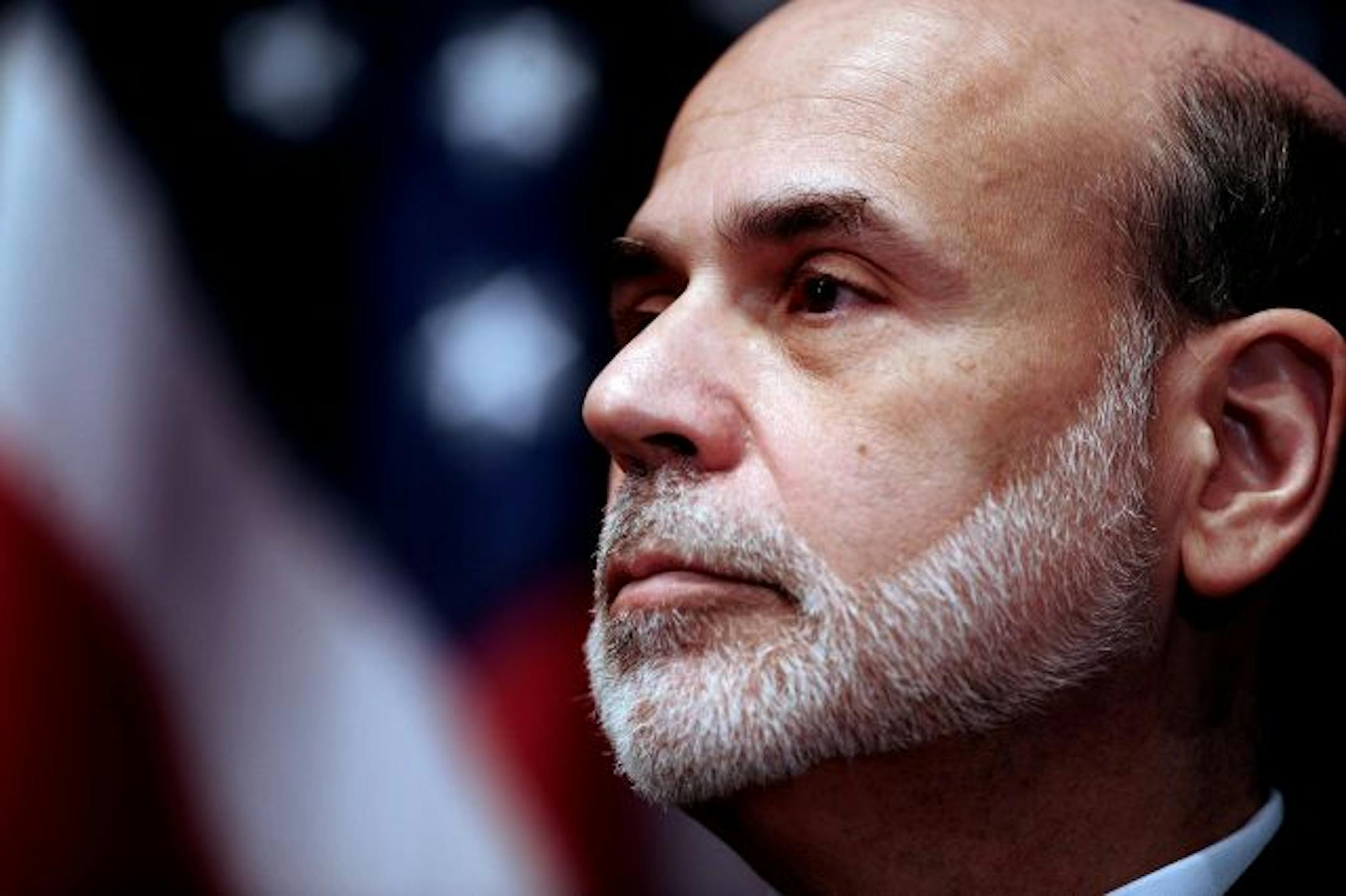
At his recent news conference, Ben S. Bernanke, the Federal Reserve chairman, was asked about the falling dollar. He parried the question, saying that the Treasury secretary was the government's spokesman on the exchange rate -- and, of course, that the United States favors a strong dollar.
Listening to that statement, I flashed back to one of my first experiences as an adviser to Barack Obama. In November 2008, I was sharing a cab in Chicago with Larry Summers, the former Treasury secretary and a fellow economic adviser to the president-elect.
To help prepare me for the interviews and the hearings to come, Larry graciously asked me questions and critiqued my answers.
When he asked about the exchange rate for the dollar, I began: "The exchange rate is a price much like any other price, and is determined by market forces."
"Wrong!" Larry boomed. "The exchange rate is the purview of the Treasury. The United States is in favor of a strong dollar."
For the record, my initial answer was much more reasonable. Our exchange rate is just a price -- the price of the dollar in terms of other currencies. It is not controlled by anyone. And a high price for the dollar, which is what we mean by a strong dollar, is not always desirable.
Some countries, like China, essentially fix the price of their currency. But since the early 1970s, the United States has let the dollar's value move in response to changes in the supply and demand of dollars in the foreign exchange market.
The Treasury no more determines the price of the dollar than the Department of Energy determines the price of gasoline. Both departments have a small reserve that they can use to combat market instability, but neither has the resources or the mandate to hold the relevant price away from its market equilibrium value for very long.


