

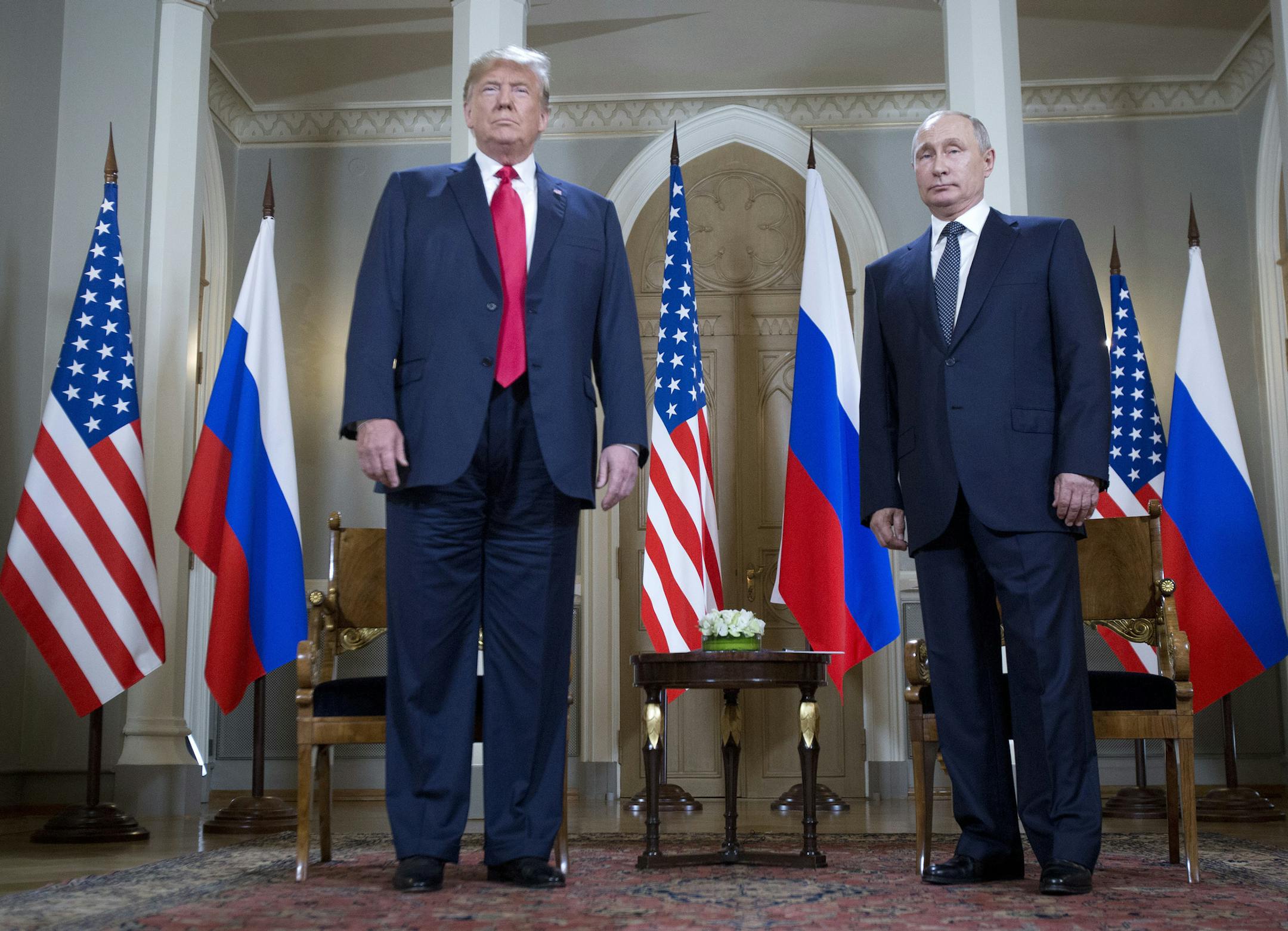
This week's Washington news narrative focused mostly on Russia.
But Soviet shadows reappeared, too.
Just ask U.S. Sen. Ron Johnson. The Wisconsin Republican accused President Donald Trump's trade tirade of moving the U.S. toward U.S.S.R.-like central planning.
"This is becoming more and more like a Soviet-type economy here," Johnson said of the administration's announcement of a $12 billion bailout for farmers on the front lines of an escalating trade war. "Commissars deciding who's going to be granted waivers, commissars in the administration figuring out how they're going to sprinkle around benefits."
Other Republicans rejected the plan, too, agreeing with U.S. Sen. Ben Sasse of Nebraska, who rightly called the subsidies "golden crutches."
Another Soviet-era rhetorical reference came not from Moscow, but Washington, as Trump tweeted of his summit with Russian President Vladimir Putin: "The Summit with Russia was a great success, except with the real enemy of the people, the Fake News Media."
The Stalin-era phrase "enemy of the people" was nixed by his successor, Nikita Khrushchev, who said it "was specifically introduced for the purpose of physically annihilating" those who disagreed with the supreme leader. It's not the first time Trump has used it. And the more modern moniker "fake news" is ubiquitous, with Trump applying it to the fourth estate seven times in just one week, according to Reporters Without Borders.
Trump's tweet continued: "I look forward to our second meeting so that we can start implementing some of the many things discussed, including stopping terrorism, security for Israel, nuclear…….."


