

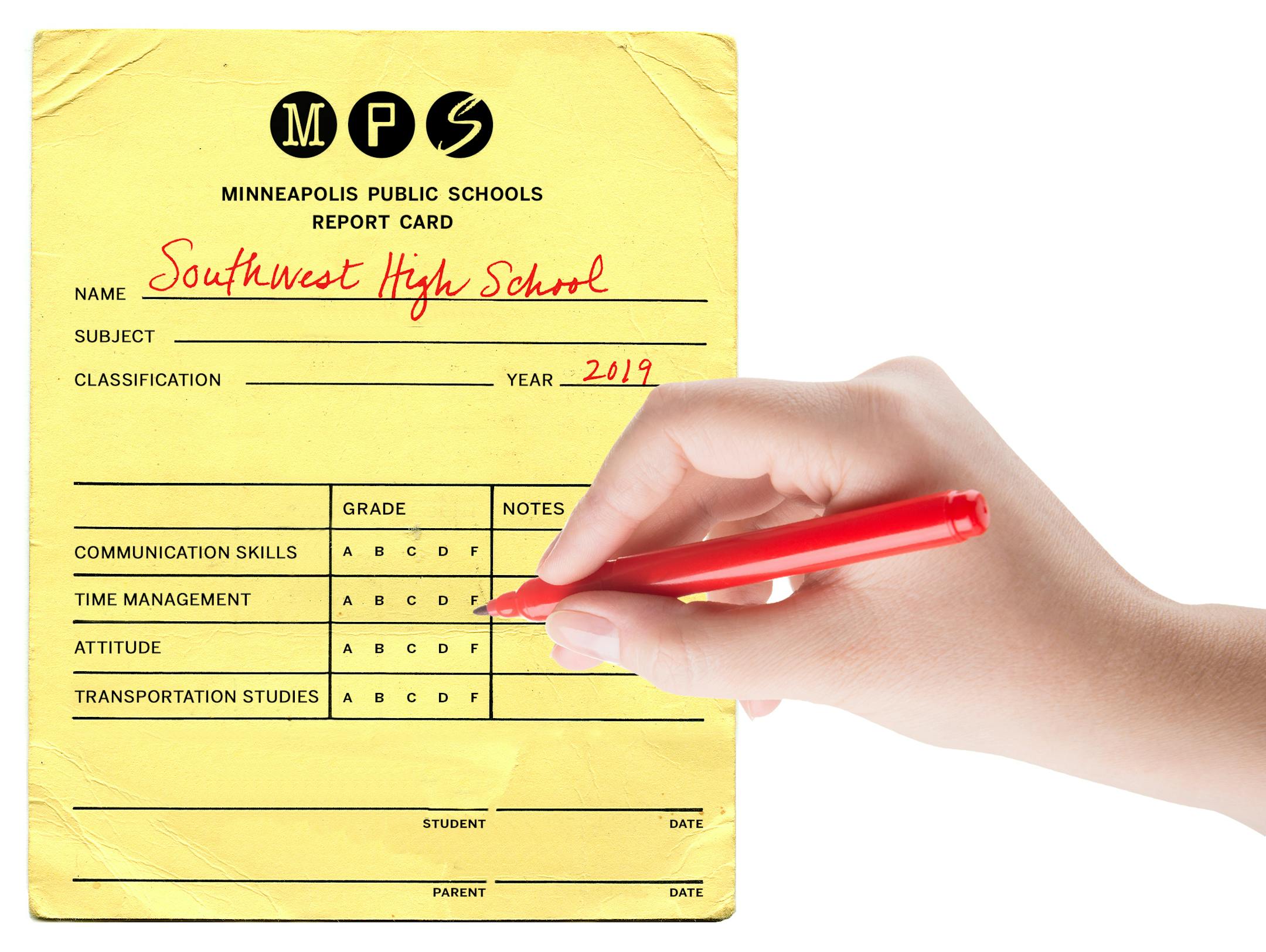
We got an e-mail survey from our high school this week, asking about our impressions of parent-teacher conference night. I was flabbergasted, because I can't remember the last time the Minneapolis Public Schools (MPS) asked me my opinion on anything. I was gratified, and it got me thinking about why, despite a parade of superintendents and reforms in our time in Minneapolis, the district still is staggeringly challenged at making families feel valued and "seen," in the current lingo.
In a few weeks, MPS will release revisions to its latest proposed reorganization, one of at least a half-dozen I've seen in our 16 years with children in the city's public schools. I recognize the complex array of challenges urban public schools face. Yet I hope among the weighty issues around equity and academic pathways, that the district will tackle the many phenomena that contribute to a sense that parents' time is not valued and that their needs are too disparate for the district to respond to.
My daughter attends Southwest High in the Fulton neighborhood. It is deserving of its reputation for some truly extraordinary teachers and learning opportunities. It's also frequently impersonal, disorganized and unresponsive to kids and parents, be they disadvantaged or advantaged (the school has plenty of both, despite stereotypes). And these challenges are surely common to other public schools in the district and the state.
On this "MEA weekend," when educators are focused on self-improvement, I thought it might be useful to discuss ways the district could reorganize with an eye toward providing a truly student/family-centered experience:
• Transportation is a hot button. In high school settings, MPS does not operate school buses but instead distributes Metro Transit passes. It takes two buses (or one bus and a mile walk) to get to our house, but most afternoons that's how our daughter gets home. This school year, those passes were distributed during a three-hour weekday window in August. It required my wife or me to leave work for roughly a third of the day.
It does not require an education degree to realize that many parents (or teens working summer jobs) could not conveniently be at school on a summer weekday. Yet there was no plan B offered, and calls of concern to the school generated no reply.
I remember that more than a decade ago the district moved a large group of schools to exhausting 7:30 a.m. starts to more efficiently use its bus fleet. A couple of years ago, most of those schools were moved back to later starts. No one seemed to know what had changed to render the previous approach a problem in need of a solution rather than a solution to a problem.
• Access is another issue. I've been reminded this fall how frequently parents are called to school for curriculum nights, teacher conferences, and arts/sports events. At these times, there is insufficient parking at many city schools to accommodate parents. Fulton is replete with no-parking zones designed to keep students from parking in the neighborhood, and on event nights the school warns parents to obey parking signs. So you arrive, pack in around the limited legal spaces and cross your fingers. Inevitably, police descend and issue citations for parking too close to a crosswalk and other picayune infractions.


