A fresh take on Chicago

To get to the heart of the Windy City, hop on the El, get out of downtown and take an eye-opening tour through the city's rich neighborhoods.

July 24, 2010 at 4:01PM
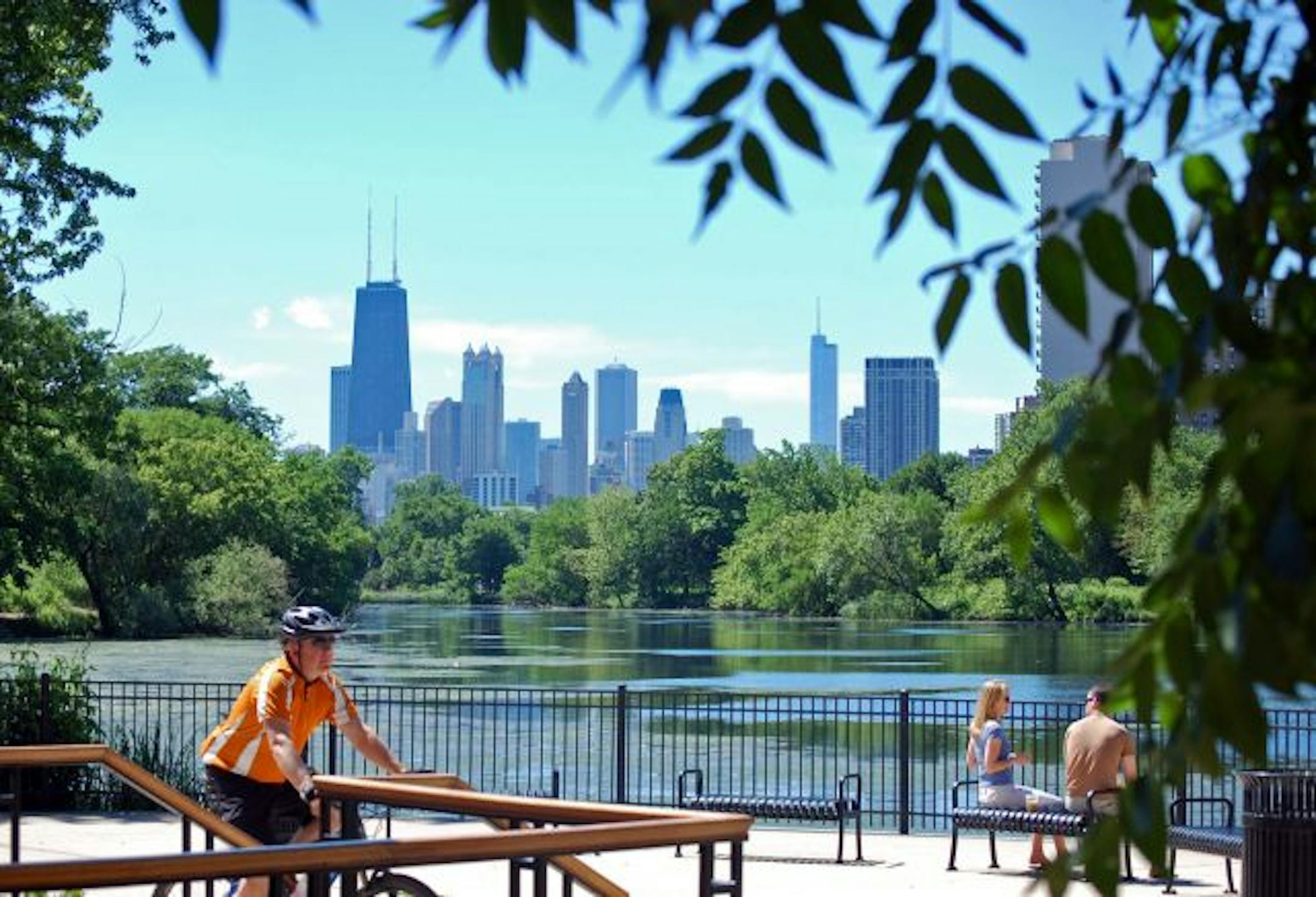
View of downtown Chicago from the North Pond restaurant in Lincoln Park.
View of downtown Chicago from the North Pond restaurant in Lincoln Park. (Star Tribune/The Minnesota Star Tribune)

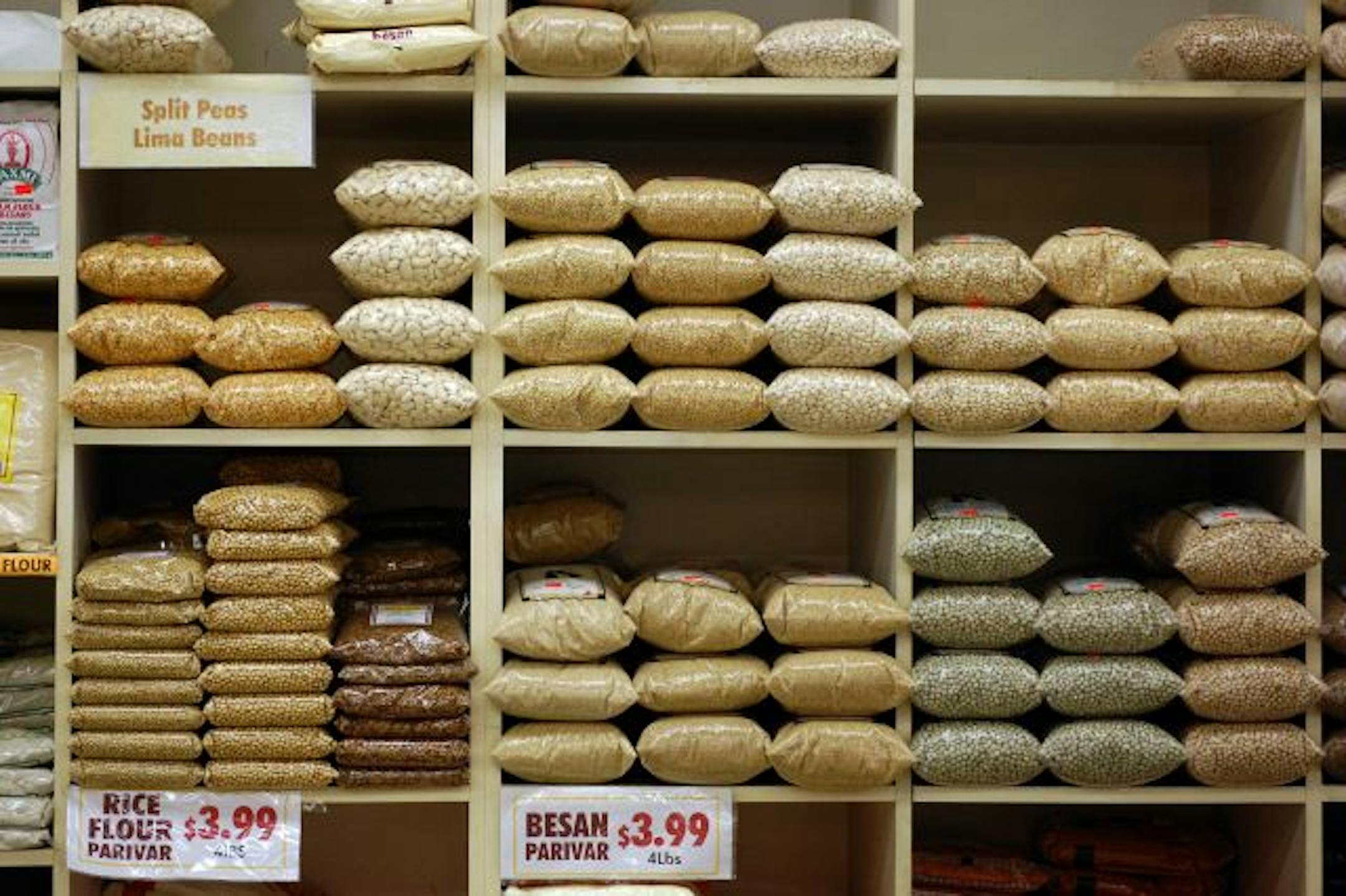
The man wearing the white skull cap at the Hindu grocery store on Devon Avenue plucked a quarter from his pocket and began plunking it on a coconut. If it sounded too hollow, he explained, that meant it was too dry. This time, the fruit seemed fresh -- just like my trip to Chicago.

My premise was simple: It's easy to get to Chicago these days. A couple tanks of gas. The dirt-cheap Megabus. Or round-trip airfare to Midway Airport at a generation-low $139. Hop on the "El" with your wife, and it costs $5 to clank and jerk yourselves downtown.

It's almost too easy, especially to hang out downtown. So on this journey, I set strict ground rules. We'd stay downtown, but that would be it. No Michigan Avenue shopping. No deep-dish pizza at Gino's East. No Rush Street carousing. No Millennium Park. No gazing down from the Sears Tower, especially now that it's called Willis Tower.

My wife and I would spend the long weekend exploring the city's vibrant neighborhoods. Because there are more than 80 distinct Chicago neighborhoods, and dozens of unofficial ones, I devised a workable game plan -- dedicating roughly one full day each to the South Side, North Side and West Side. (The east side of Chicago, of course, is Lake Michigan. But I'd be remiss if I failed to give a nod to the city's sumptuous beaches, to which I saw countless young folks on the El flocking with towels in their bag.)

South Side: From left (Obama's house) to Wright The Secret Service has set up barricades blocking off Greenwood Avenue in Hyde Park, protecting President Obama's tree-shrouded red brick house. So we needed to exercise a little creative chutzpah to get inside the perimeter. A call ahead to Jessica Cavanagh, an office assistant at the K.A.M. Isaiah Israel Congregation across the street from the Obamas, led to a free tour of the imposing domed Byzantine synagogue built in 1924.

First, a friendly Secret Service agent waved us through the metal fencing without even checking our I.D.s or whispering into his wrist. It helped that Obama was at the White Sox-Nationals game in Washington, D.C., at the time.

"He was home on Memorial Day weekend and we had a bar mitzvah and a wedding and it all went off without a hitch," Cavanagh said.

From the temple's vegetable garden, there's a clear view of Obama's whitewashed wooden porch, an American flag fluttering in the breeze. A mile north, through Hyde Park's mixture of leafy trees and crisp brick architecture, sits a century-old testament to both Chicago's genius and its resiliency.
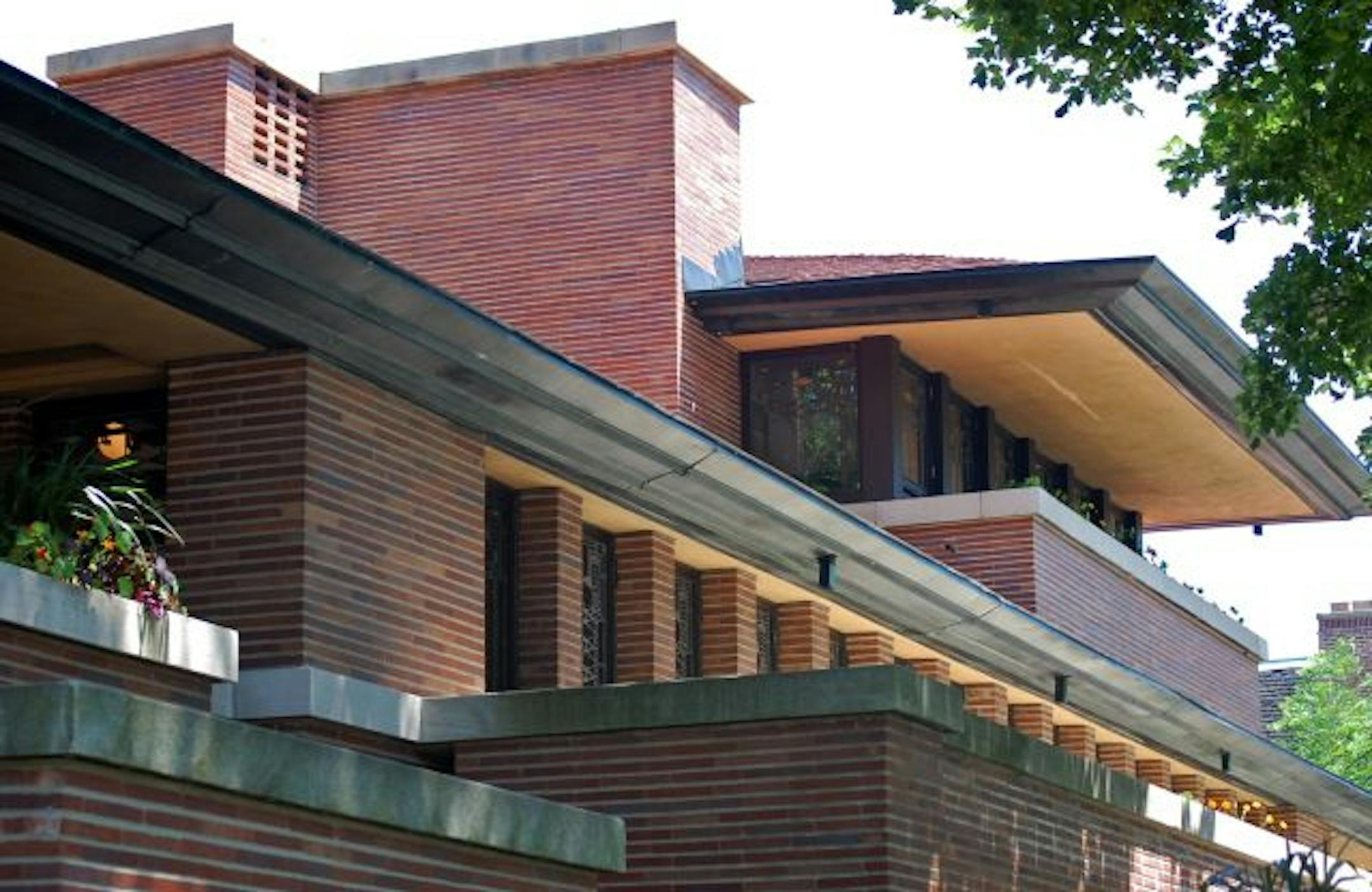
A bicycle maker named Fred Robie hired a young architect in 1910 to build a house for his family. The low-slung brick home, now open for tours as a quintessential example of Frank Lloyd Wright's Prairie Style, was nearly torn down twice when the Theological Seminary wanted to raze it for a dormitory. The highlight of the $15 tour was Wright's central fireplace topped with open space, allowing you to look straight through the entire first floor. He somehow engineered twin flanking chimneys to carry the smoke up the sides.

After spinach-feta croissants and iced coffees at the nearby Medici Bakery, we headed to the DuSable Museum of African American History, the nation's first black history museum. Call it dumb luck, but Illinois Gov. Pat Quinn just happened to be there, bestowing honors on the museum's 90-year-old founder, Margaret Burroughs.

"This museum began in the neighborhood, in a house in 1961," he said, "and has become a living, breathing repository of African-American treasures."

Not to be played by an election-year politician, Burroughs (wearing a multicolored sequin cap) seized the podium and demanded the name and phone number of the Quinn aide who would help secure grant money to expand the museum. Now that's real chutzpah, South Side style.

For dinner, we hit a deliciously understated French restaurant, La Petite Folie, which sits off a strip mall plaza and serves entrees ranging from brace of quail with lavender honey to duck a l'orange nicely presented like a winning hand of cards.

North Side: An ethnic hodgepodge Evelyn Thompson doesn't have an office, let alone a cell phone. But take the El to the northern end of the Red Line at Howard Street and you'll find the guru of Chicago's countless ethnic grocery stores. From her white house in the city's northernmost neighborhood of Rogers Park, the feisty fireball and self-proclaimed "street kid" leads tours in her blue 1987 Volvo that will leave your head spinning and mouth watering.

In her four-hour, $75-per-couple tours, she shows off markets and restaurants of Bosnian, Jamaican, Georgian, Belizean, Vietnamese, Ethiopian, Greek, Jewish, Persian, Croatian, Belgian, Indian, Korean, Bhutanese, Iraqi, German, Polish, Swedish, Thai and even Assyrian origin.

"Oh, look, a new Peruvian place," she said, pointing to a strip mall on Clark Street.

Highlight of the whirlwind tour was W. Devon Avenue in Rogers Park, basically the Tower of Babel laid on its side and paved. Every block brings another language, aroma and flavor.

Yarush Pelskily, owner of the Argo Georgian Bakery, slid the lid off his tandoori clay oven and retrieved a cheese-filed pastry. Up the street at the Hindu-owned Fresh Farms International Market, shoppers picked out fava beans and bittermelons. Camel meat? Evelyn knows where to get it.

In the Uptown neighborhood off Argyle Street, gentrification jeopardizes but hasn't claimed a thriving Vietnamese neighborhood, where older generations have retired and their kids are selling banh mi sandwiches and Vietnamese coffee.

"All these neighborhoods pretty much feature an El station surrounded by retail," Evelyn said, standing below the pagoda-style Red Line stop at Argyle. "Go a few blocks out, and it's all residential."

If Evelyn's pace sounds a little too frenetic, rentable bikes are everywhere. We pedaled an easy 10-mile loop along Lake Shore Drive though Lincoln Park, with its zoo, lagoons and conservatory. Like everywhere in Chicago, traffic can be irksome and bikers share lanes with inline-skaters, strollers and runners.

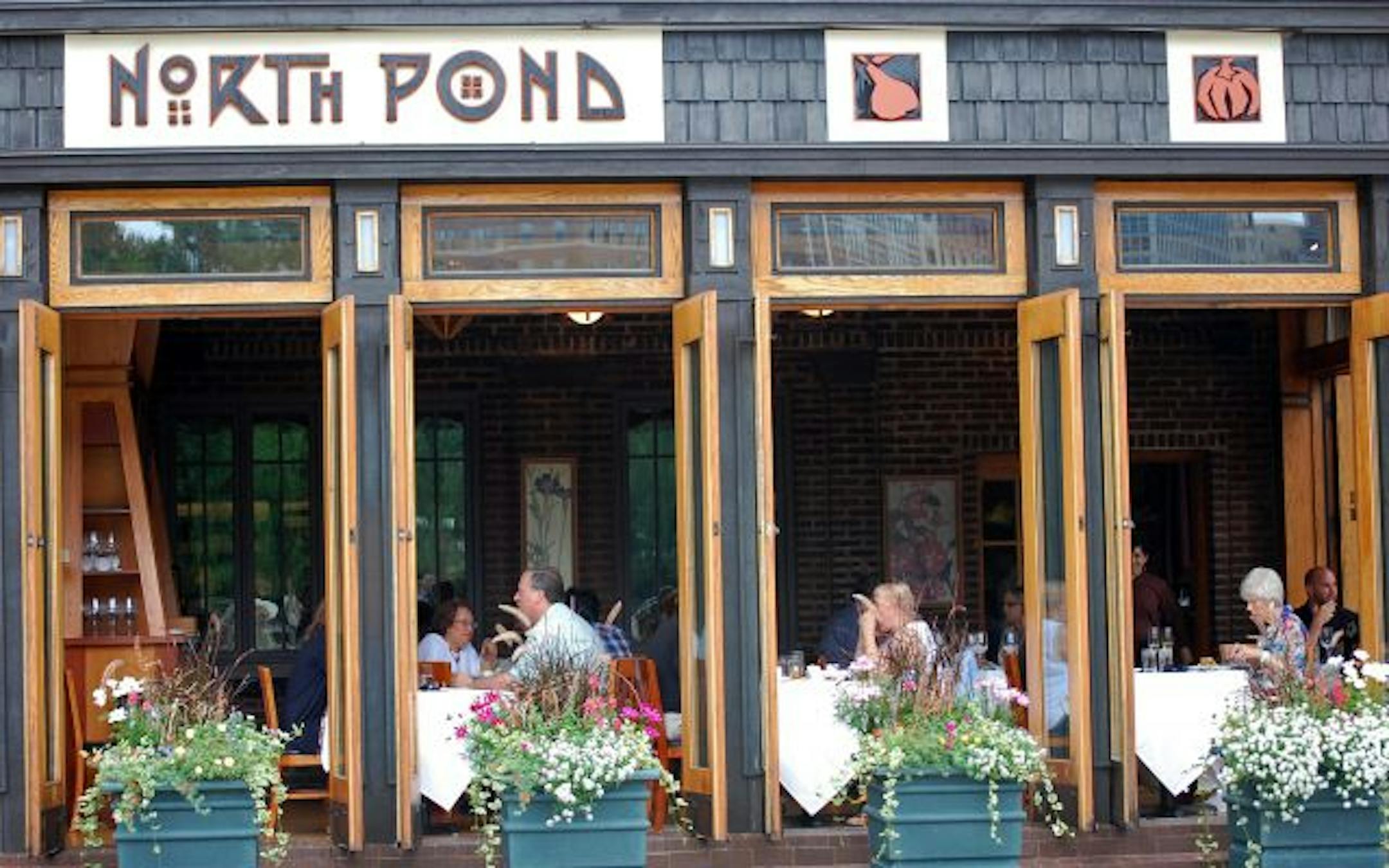
A former ice skating warming shack has been turned into the trendy North Pond, a upscale seasonal gourmet restaurant that looks over the pond back to the Chicago skyline. We found a Chinese woman picking mullberries right off a tree behind the restaurant. She didn't speak English, but gladly shared her bag of bounty.

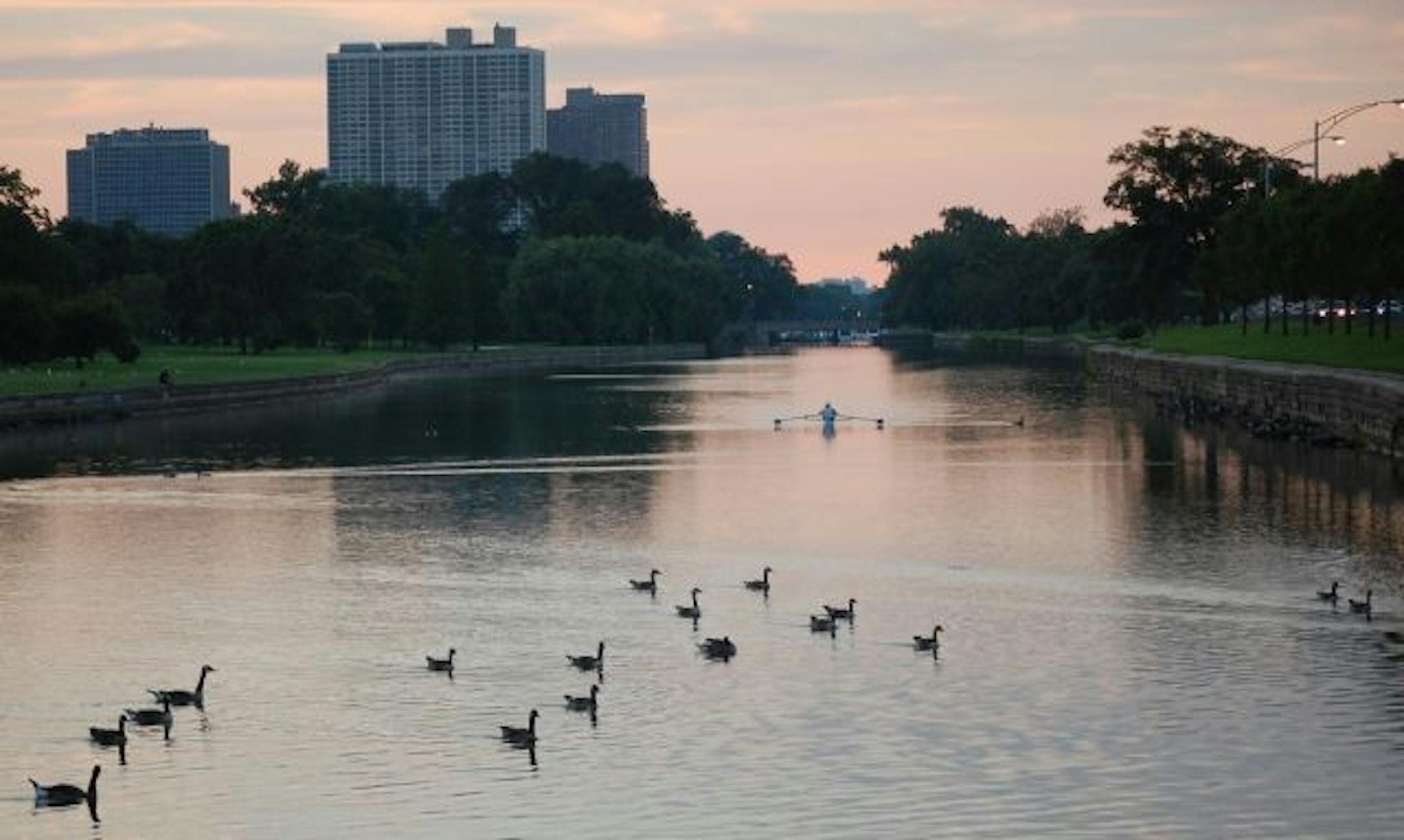
As the sun set on a hot summer day, and scullers and kayakers skimmed along Lincoln Park's canals, we ventured a few neighborhoods north to Lincoln Square, where the new Old Town School of Folk Music features on opera house-style venue with pin-drop acoustics. For a $15 cover charge, we heard three jazz guitarists perform some dazzling Brazilian pieces. A few blocks south, the Chalkboard restaurant offers a mix of menu items such as macaroni and cheese, fresh salmon and chocolate chip cookie dough egg rolls topped with chocolate ice cream and caramel sauce.

West Side: The hip 'hood Despite Greektown's big reputation, we found a few restaurants and little charm in our pass through. So we wandered around Fulton Market, a West Loop neighborhood where horse-drawn wagons have been replaced by refrigerated trucks, disbursing the city's meat and fish.

The area is punctuated with eclectic galleries, coffee shops, bars and boutiques. Our favorites: the Mars Gallery, which sits above the Jupiter Outpost coffee shop, and oysters and beer at Publican, a two-year-old tavern with long tables evoking a European beer hall.

We stumbled upon the real action west of downtown at night in Wicker Park, a once dangerous but now thriving pulse of Chicago hip 4 miles west of the Loop on the El's Blue Line. We found wine shops, hat shops, bong shops and even the Wormhole Coffee shop with a real DeLorean parked inside.

We also found our favorite Chicago restaurant: Spring, an upscale splurge built in the old Luxor bath house on North Avenue. Russian immigrants called it a schvitzbed when it opened in 1924 and, while you can still see the old white tiles, the place is now a softly lit den of calm.

Spring's seafood-laden menu reads and tastes like poetry: Barramundi/Maine lobster/potato gnocchi/sweet curry/citrus/cilantro pesto. Yes, that's one $34 entree.

Our waitress said friends of Chicago writer Nelson Algren used to pin notes for him on the bath house board when he lived in the area.

In his 1951 story, "Chicago, City on the Make," Algren summed up our weekend well: "Yet once you've come to be part of this particular patch, you'll never love another. Like loving a woman with a broken nose, you may well find lovelier lovelies. But never a lovely so real."

Curt Brown • 612-673-4767

Diners enjoying lunch at North Pond, a one-time ice skating warming shack and now one of Chicago's trendiest eateries in Lincoln Park.
Diners enjoying lunch at North Pond, a one-time ice skating warming shack and now one of Chicago's trendiest eateries in Lincoln Park. (Star Tribune/The Minnesota Star Tribune)
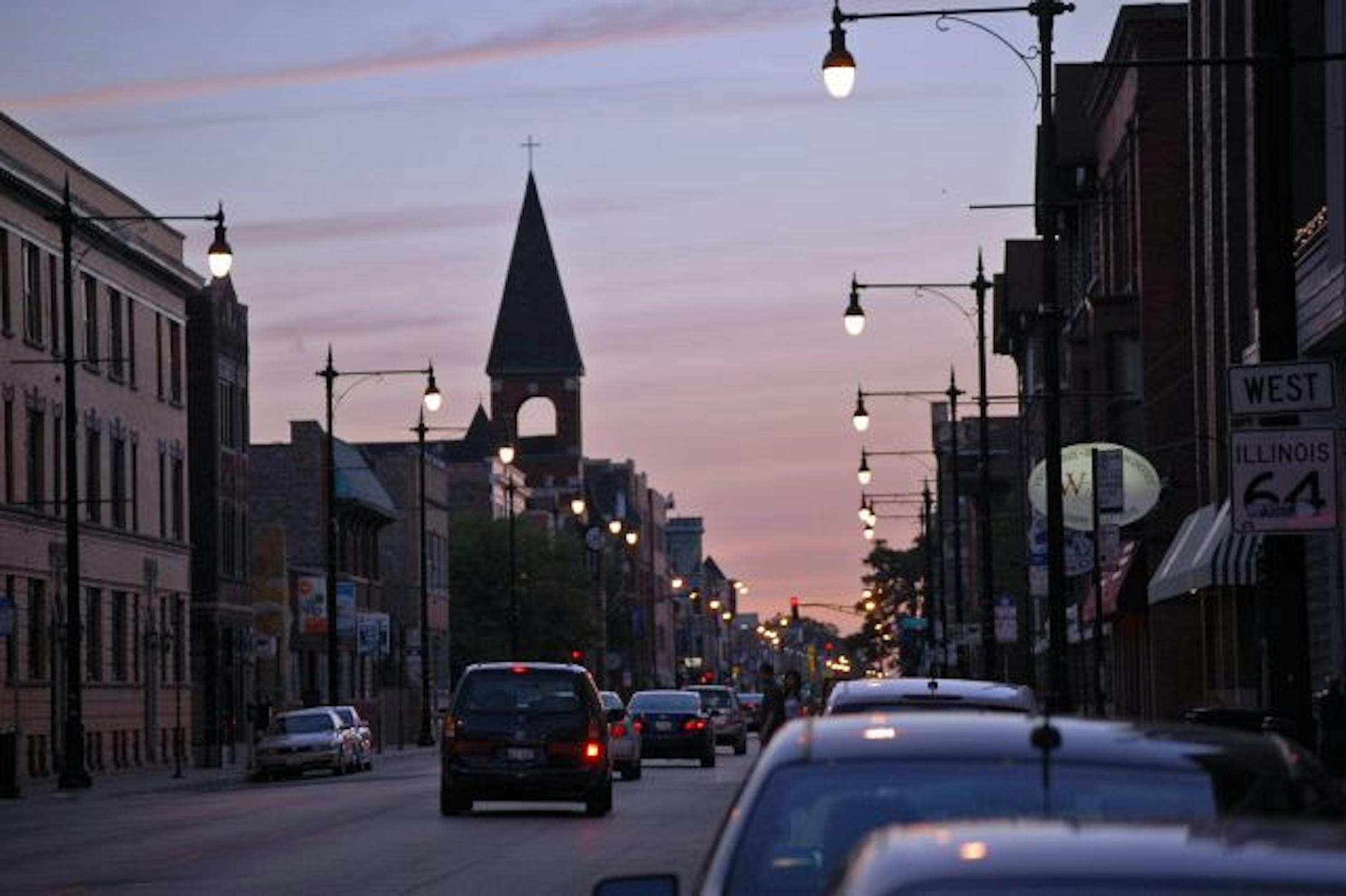
North Avenue at dusk in Wicker Park, a once rough and tumble now trendy neighborhood for Chicago hipsters west of downtown.
North Avenue at dusk in Wicker Park, a once rough and tumble now trendy neighborhood for Chicago hipsters west of downtown. (Star Tribune/The Minnesota Star Tribune)
A rower pulls herself through Lincoln Park's lagoon just west of the cars whizzing by on Chicago's Lake Shore Drive.
A rower pulls herself through Lincoln Park's lagoon just west of the cars whizzing by on Chicago's Lake Shore Drive. (Star Tribune/The Minnesota Star Tribune)
The century-old Robie House in Chicago's Hyde Park is considered the quintessential example of Frank Lloyd Wright's Prairie School architecture.
The century-old Robie House in Chicago's Hyde Park is considered the quintessential example of Frank Lloyd Wright's Prairie School architecture. (Star Tribune/The Minnesota Star Tribune)
Beans and other grains in a Hindu market on Chicago N. Devon Avenue.
Beans and other grains in a Hindu market on Chicago N. Devon Avenue. (Star Tribune/The Minnesota Star Tribune)
about the writer

about the writer

Curt Brown

Columnist

Curt Brown is a former reporter for the Minnesota Star Tribune who writes regularly about Minnesota history.

See Moreicon

More from No Section

See More
FILE -- A rent deposit slot at an apartment complex in Tucker, Ga., on July 21, 2020. As an eviction crisis has seemed increasingly likely this summer, everyone in the housing market has made the same plea to Washington: Send money — lots of it — that would keep renters in their homes and landlords afloat. (Melissa Golden/The New York Times) ORG XMIT: XNYT58
Melissa Golden/The New York Times

It’s too soon to tell how much the immigration crackdown is to blame.