

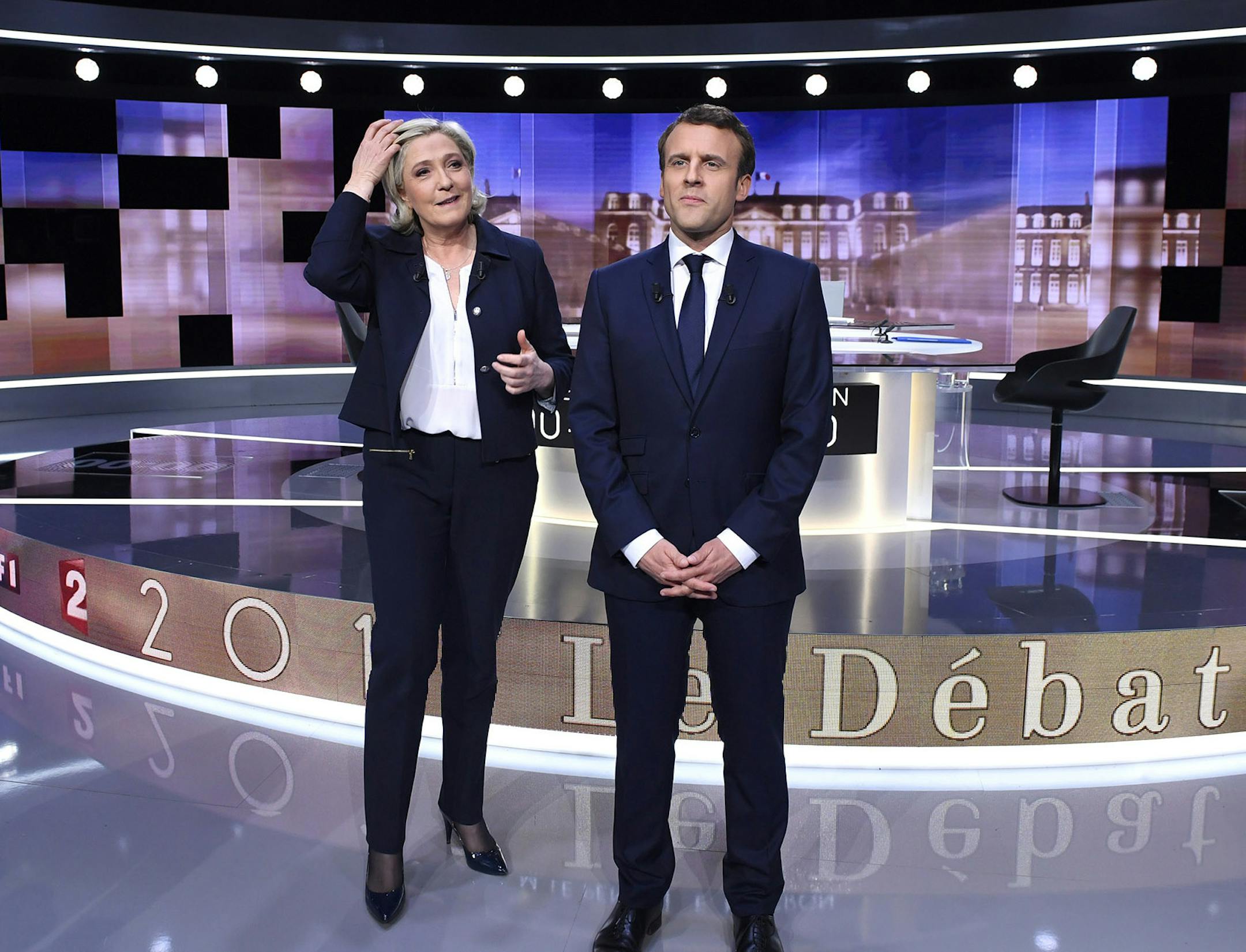
Has populism's popularity peaked? The latest test for Western democracies takes place on Sunday in France, where populist Marine Le Pen faces globalist Emmanuel Macron in a presidential election with continental consequence. Indeed, the results may forge the future of Europe, which is the subject of this month's Global Minnesota "Great Decisions" dialogue.
The high stakes are partly due to a stark contrast between the candidates. Unlike Brexiteers and other nationalist leaders following the anti-European Union mood, Macron is proudly pro-E.U. and pro-NATO. He doesn't seek to hide from an internationally integrated economy, but to have France compete better in it by reforming regulations.
Conversely, Le Pen's pensiveness on globalization has led her to disdain it, along with the E.U. and the euro, and even to cast doubt on NATO. But looming larger than Le Pen's policies is her party, the National Front founded by her father, whose past racist and anti-Semitic sentiments led Le Pen to purge him. The candidate did some distancing of her own after the election's first round a fortnight ago by leaving her post as president of the far-right party to declare herself a candidate for "all of the people."
Despite the dramatic differences, Le Pen and Macron share one transcendent trait: They're outsiders. Sure, Le Pen and her party are established, but not establishment. In fact, she has fought France's political, economic and social structures throughout the campaign. Macron has widespread establishment backing but bucked the Socialist Party he once served as a Cabinet minister to form his own party, En Marche! (On the Move!), when like Le Pen he sensed the French were fed up with a political system as sclerotic as France's economy.
"It's a rather stark contrast between an internationalist view of economics and politics, one that wants France to be a leader in organizations like NATO and the E.U. that we care deeply about, and about someone who wants to erect barriers," said Atlantic Council Vice President Frances G. Burwell, an expert on the E.U. Burwell added that "this is a choice for the French: Do they want to go back to the economy that was — and can they do that? — or do they want to go forward?"
The similarities to the U.S. election are striking, with Le Pen channeling Donald Trump's upending of the political order and Macron marshaling the establishment. But there are differences, too: Macron is more outsider than Hillary Clinton, and Le Pen is more politically experienced than Trump.
Like America's deepening divide between the thriving, globalized coasts and Midwest states suffering manufacturing job loss, France is fractured between cosmopolitan, globalized Paris and other successful French cities and hamlets hollowed out by deindustrialization. Other French echoes of America's mood include anti-immigrant sentiment that's sending some voters to Le Pen, as well as an emphatic emphasis on terrorism.
And, unfortunately, like America's debased debates, the one between Macron and Le Pen turned personal, obscuring the obvious need to focus on solving France's profound problems.


