

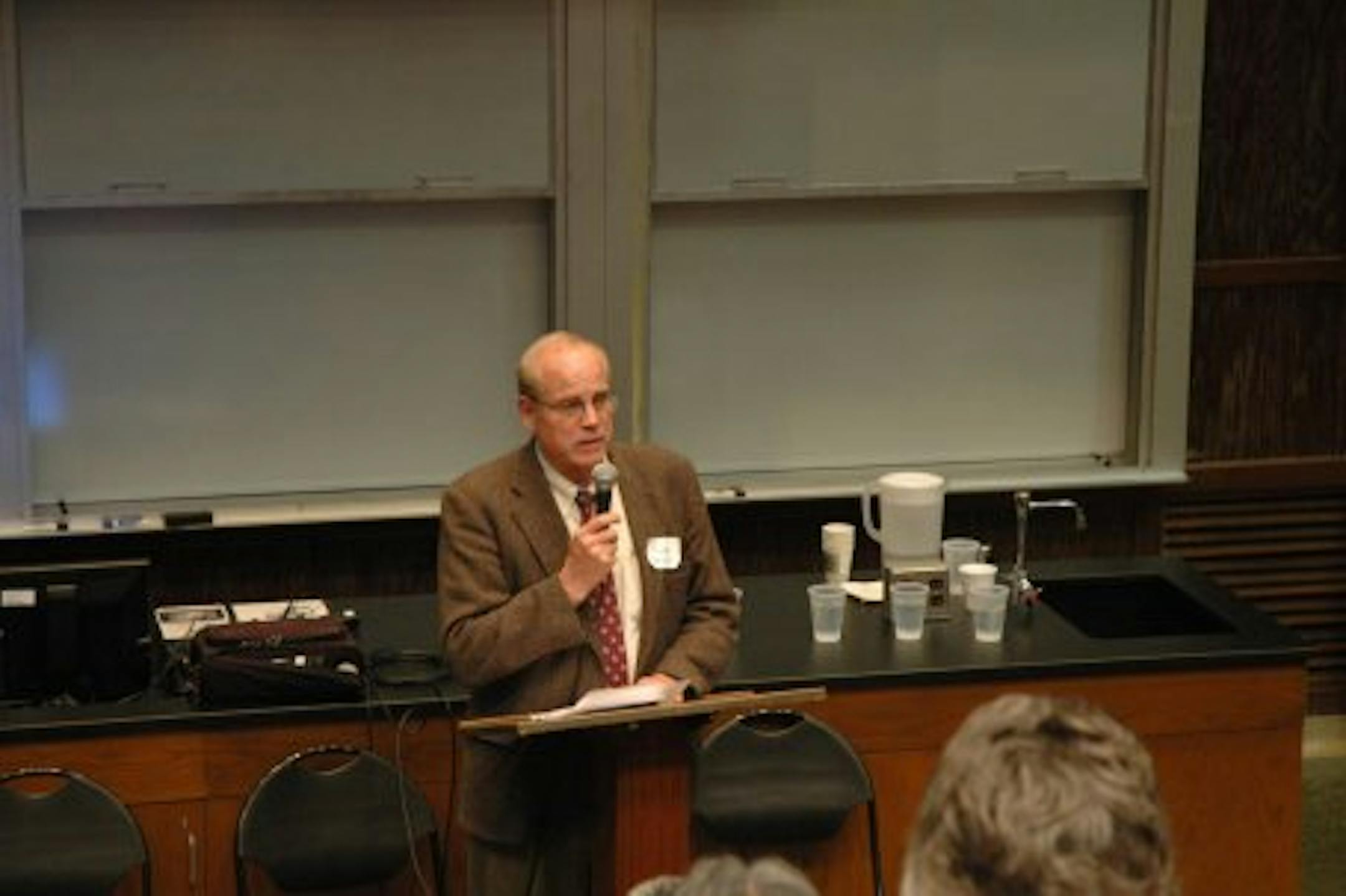
This is the second part of my report on the panel discussion held at the St. Thomas University last week. As part of the discussion, Dr. Terence Nichols, co-director of the university's Muslim Christian Dialogue Center, gave a very moving talk about the "A Common Word" document. He discussed three main themes in the document. (1) The centrality of the command to love God above all things, (2) the centrality of the command to love one's neighbor, (3) the importance of peace between Christians and Muslims for world peace.
Dr. Nichols gave an excellent overview of this initiative, discussed it in a historical context, and examined the theological aspects of the two greatest commandments that this project addresses. What I found extremely interesting in his talk was the third part of his speech, which dealt with the importance of peace between Christians and Muslims for world peace. I am reproducing the transcript of the third part of his speech below:
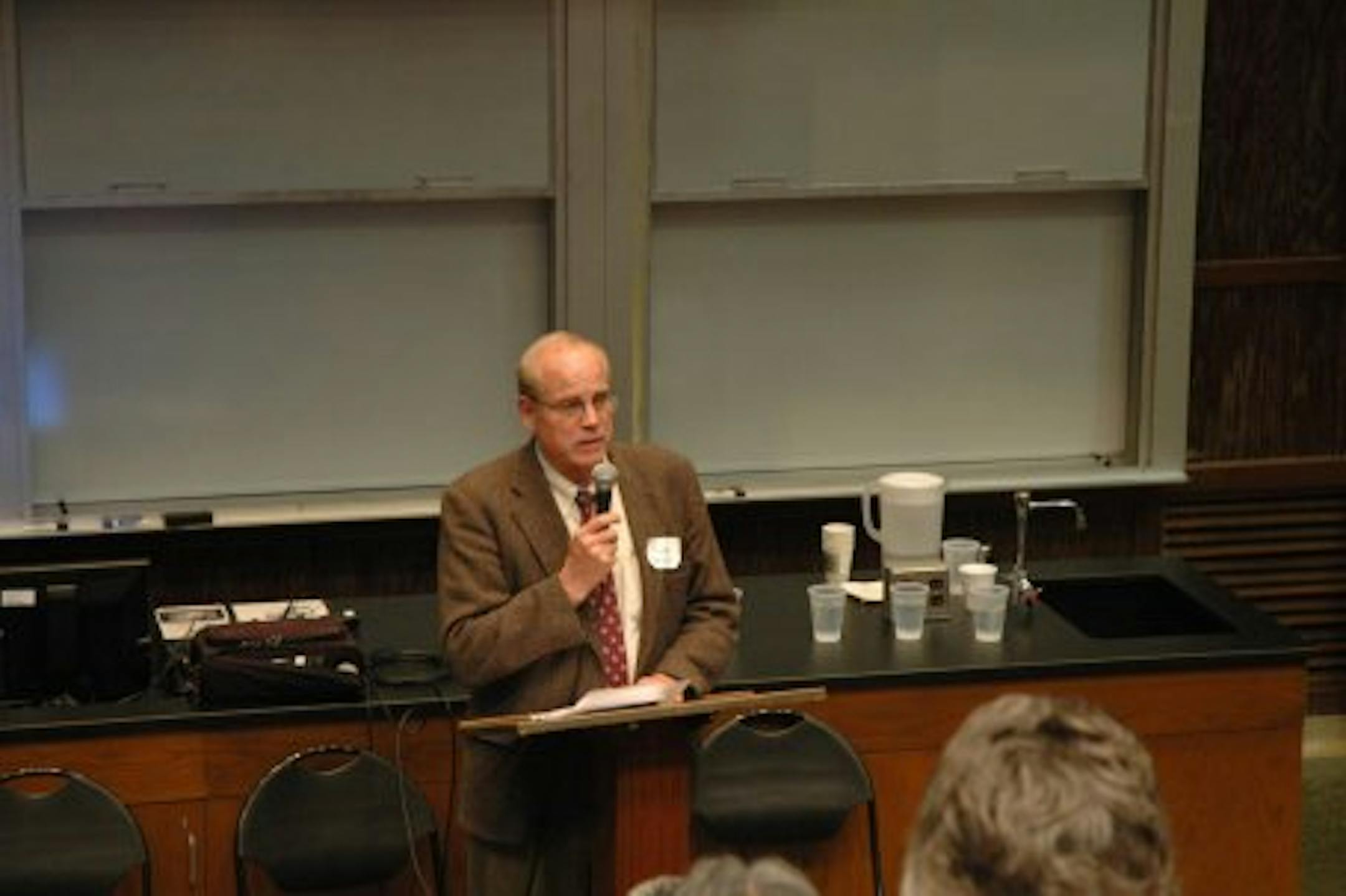
Dr. Terence Nichols "I agree with the words of this document: "Together they [Muslims and Christians] make up more than 55% of the world's population, making the relationship between these two religious communities the most important factor in contributing to meaningful peace around the world, If Muslim and Christians are not at peace, the world cannot be at peace." This document itself, which is well on its way to becoming a consensus document among Muslims, seems to me to be the most hopeful sign that Muslims and Christian can work together to achieve world peace. Let us try to imagine, then what the world would look like if Muslims and Christians put war and polemicism behind them, and based on their common belief in the one God, and the importance of love of neighbor, were able to work together for world prosperity and peace. The billions of dollars now spent on wars could be spent instead on projects of peace. Now, when I wake up in the morning, I read the New York Times. Every day I read about the wars in Afghanistan and Iraq, I read about civilians being killed by errant U.S. drones, or about Iraqis killed in the latest suicide bombing attacks, or about battles between the Taliban and U.S. troops. But imagine if I read instead about Muslims and Christian cooperating to dig wells in Nigerian villages, or to replant trees in Ethiopia, or to treat AIDS victims in Africa, or to build homeless shelters in cities in the U.S., or working together to get young people off of drugs and out of gangs. Imagine if the evening news were not filled with accounts of war, but of Muslims and Christians cooperating locally to care for the homeless, feed the poor, educate children, and so on. Both of our religions command us to do this. According to Jesus' own words in Matthew 25, on the last day, we will be judged on our love: did we feed the poor, clothe the naked, care for the sick, and visit those in prison. There is a hadith of the Prophet Muhammad which says much the same thing: [On the authority of Abu Hurairah (May God be pleased with him), who said that the Messenger of God (May the blessings and peace of God be upon Him) said: God (mighty and sublime be He) will say on the Day of Resurrection:] " O son of Adam, I fell ill and you visited Me not. He will say: O Lord, and how shall I visit You when You are the Lord of the worlds? He will say: Did you not know that My servant So-and-so had fallen ill and you visited him not? Did you not know that had you visited him you would have found Me with him? O son of Adam, I asked you for food and you fed Me not. He will say: O Lord, and how should I feed You when You are the Lord of the worlds? He will say: Did you not know that My servant So-and-so asked you for food and you fed him not? Did you not know that had you fed him you would surely have found that with Me? O Son of Adam, I asked you to give Me to drink and you gave Me not to drink. He will say: O Lord, how should I give You to drink when You are the Lord of the worlds? He will say: My servant So-and -so asked you to give him to drink and you gave him not to drink. Had you given him to drink you would have surely found that with Me." [Muslim; Forty Hadith Qudsi, selected and translated by Ezzeddin Ibrahim and Dennys Johnson-Davies. printed by R.R. Donnelley & Sons Company] Let this, then, be the common ground between us: the love of God and the love of neighbor, put into action cooperatively by Muslims and Christians, in the service of world peace."

