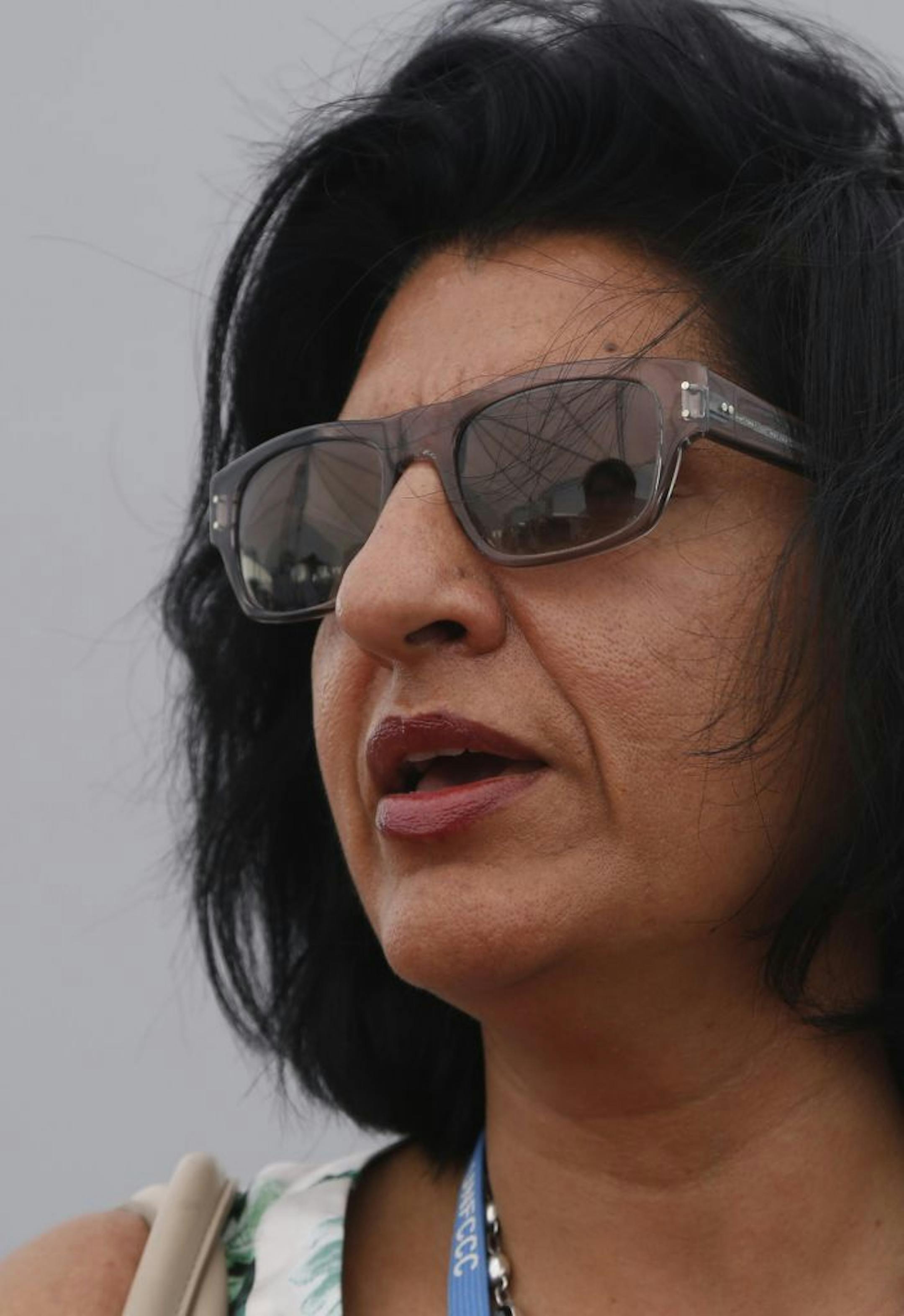
LIMA, Peru — Pulling a worn, yellowed copy of the 1992 U.N. climate change convention from her handbag, Farhana Yamin points to the paragraph that states its goal: To stabilize greenhouse gas concentrations at a level that would prevent dangerous warming.
It doesn't provide any guidance on how to do that.
But Yamin does. And, in a historic first, dozens of governments now embrace her prescription. The global climate pact set for adoption in Paris next year should phase out greenhouse gas emissions by 2050, says the London-based environmental lawyer.
"In your lifetime, emissions have to go to zero. That's a message people understand," said the Pakistani-born Yamin, who has been instrumental in getting that ambitious, some say crucial, goal into drafts being discussed at U.N. talks in Lima this week.
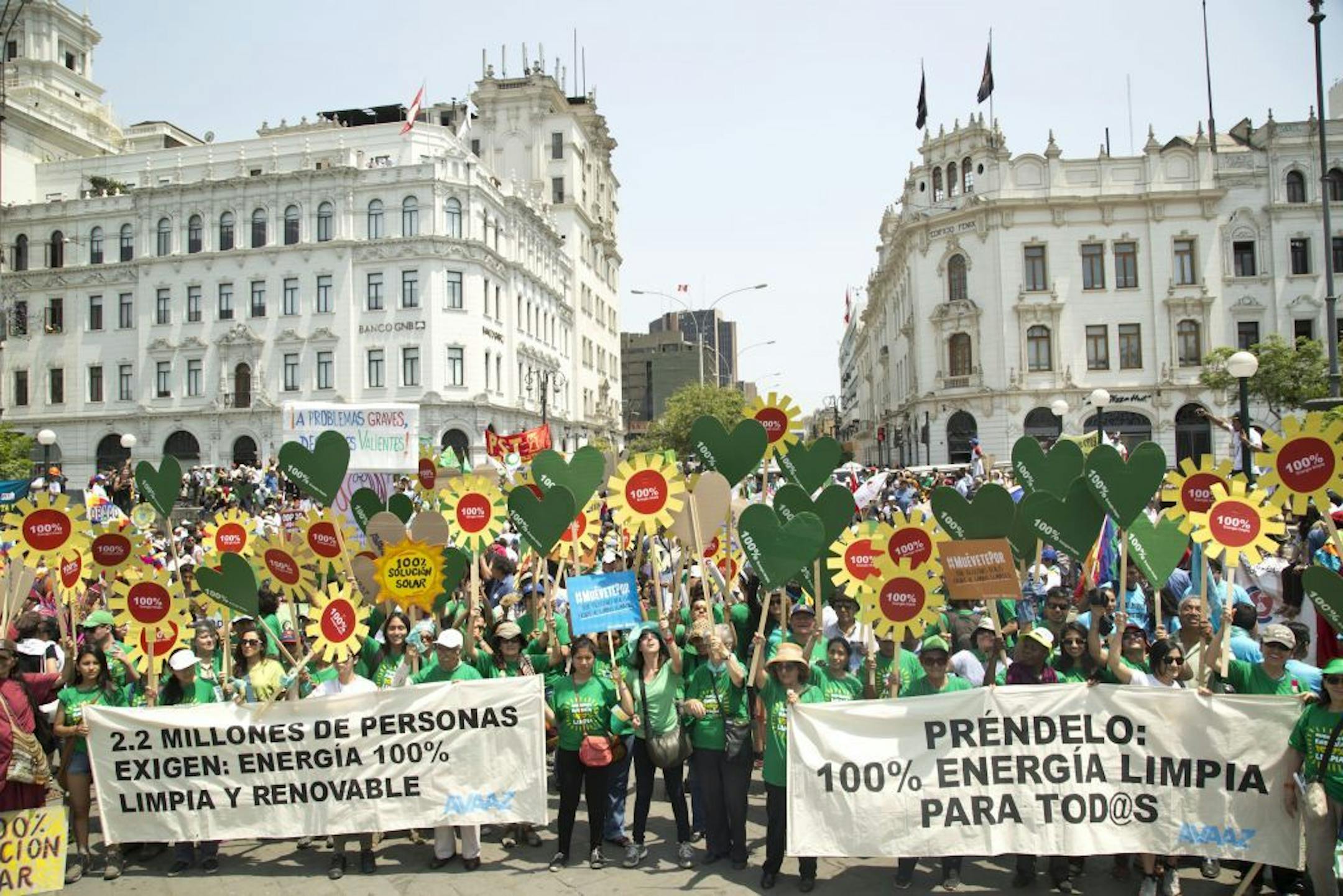
Indeed, it was a demand of many of the roughly 8,000 people, including Andean and Amazon natives who say they already feel global warming's impact, who marched through downtown Lima Wednesday demanding "climate justice."
Since Yamin launched the idea in 2013, it has exploded. Papers have been written, seminars held. U.N. Secretary-General Ban Ki-moon, environmental groups and celebrities including Leonardo DiCaprio have backed variations.
Critics call the idea unrealistic because it restricts us to two hard options. Either we abandon fossil fuels, our main current source both of energy and greenhouse gas pollution, or we find ways to capture emissions from coal, oil and gas and bury them underground.
The first would require a tectonic shift to renewable energy. The second would mean rapid deployment of expensive technologies yet to be tested at scale.