

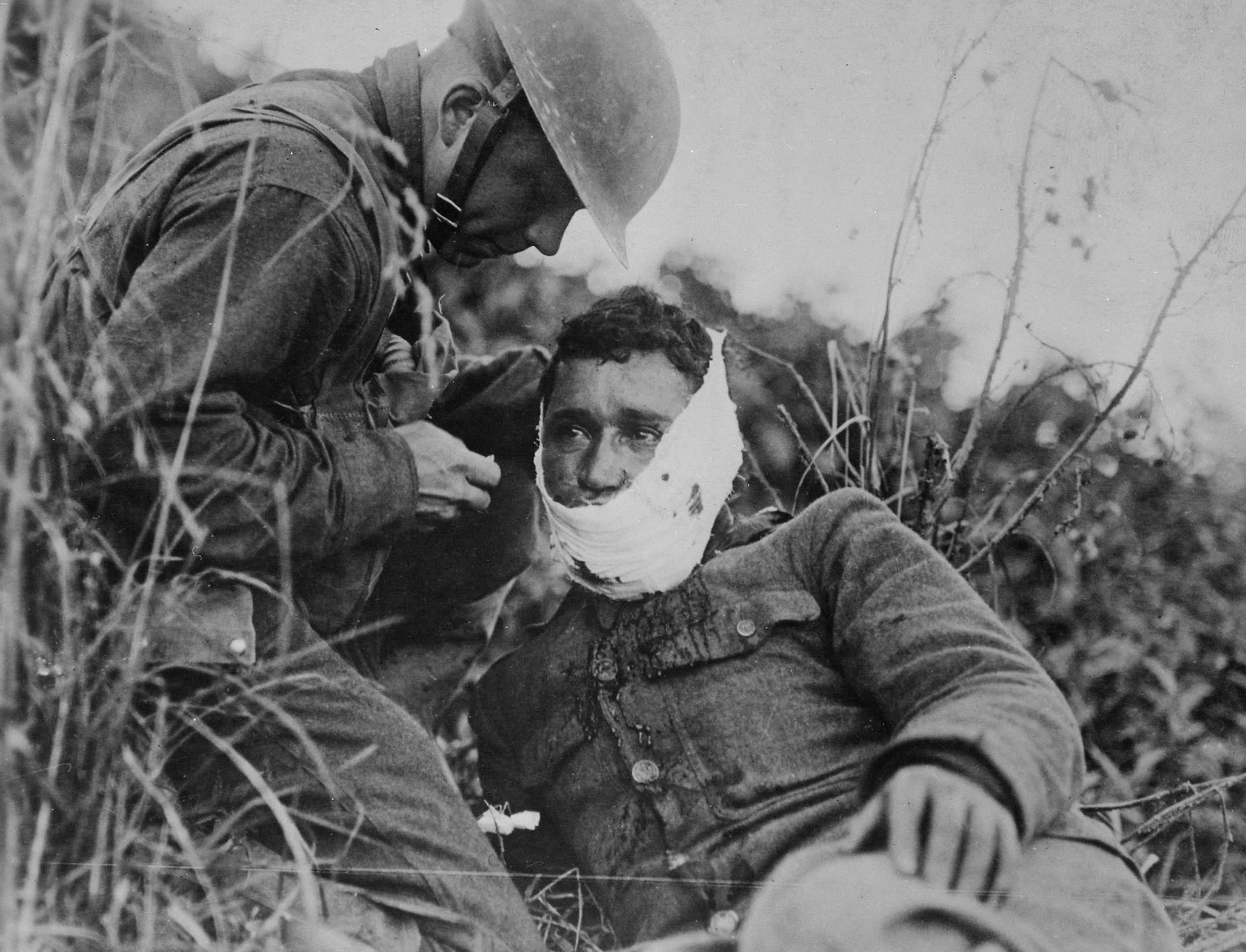
A century separates America's entry into World War I and 2017, but some of the same issues roiling society then are manifest today. Be it debates over the country's place in the world, its military mission and preparedness, European alliances, the U.S.-Mexico relationship, civil and women's rights, the balance between civil liberties and national security, terrorism and other schisms, America is a nation still riven with divisions.
"It's almost unbelievable how contemporary and relevant what was going on between 1914-1918 is to today," said Mark Samels, executive producer of "The Great War," a riveting three-part "American Experience" documentary that will run April 10-12 on PBS.
"The first world war took place at a time when America was changing rapidly and Americans were changing rapidly," Samels said. "You had this cataclysmic world event that occurs and it forces Americans to ask themselves, 'Who are we? Who are we as individuals and who are we as a country?' And I think that we're in a moment that's similar to that again."
November's election revealed that Americans are still split on our role in the world, and, as is the case now, in 1917 the perception of that role shaped opinions on military readiness.
In fact, "preparedness" became a rallying cry and code word as the conflict convulsed Europe.
"If you were for preparedness, that meant you were a militarist," said Brian Horrigan, exhibit developer for the Minnesota History Center's "WW1 America" exhibit that opens April 8.
"Preparedness and peace" were binary narratives at the time, said Horrigan, who added that's also when the modern peace movement began, with most of its key leaders women who were fighting their own battle to get the right to vote.
As for African-Americans — including the throngs streaming north in "the great migration" — many fought abroad while beginning battles for equality at home. Those years were "the seed bed for the civil rights movement," Samels said.


