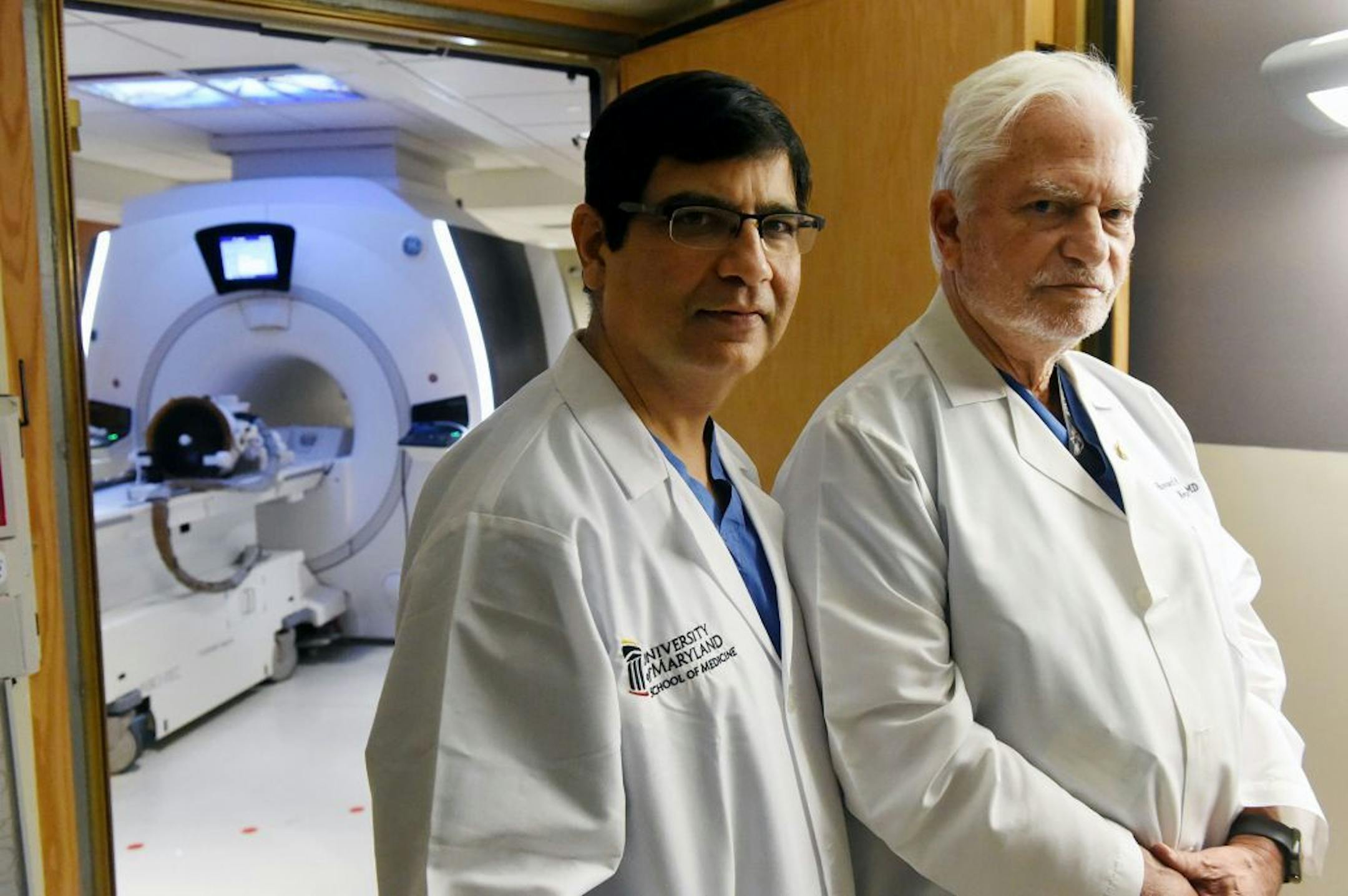
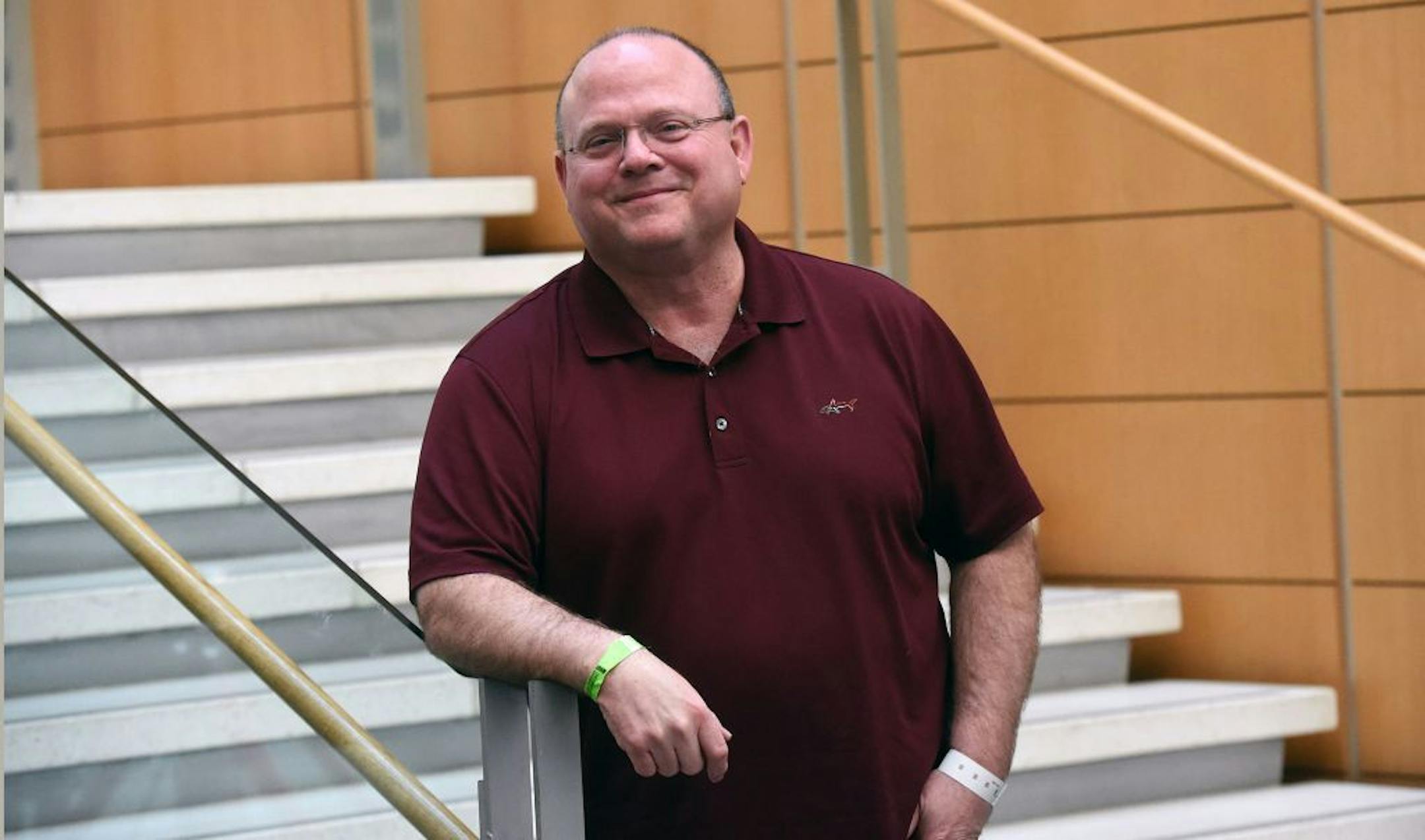
Steroid injections, nerve stimulators and spinal fusions were no match for the chronic pain in Tammy Durfee's left side — never mind the "searing-hot poker" sensation that would jab her leg without warning. After a decade searching for relief, a four-hour procedure in Baltimore put her pain to rest.
Durfee was the first U.S. patient to be treated for neuropathic pain using focused ultrasound in a medical trial being conducted by University of Maryland School of Medicine researchers. Just as a magnifying glass can concentrate sunlight to burn holes in leaves, focused ultrasound concentrates sound waves to singe a small area of the brain, preventing neurons from overreacting and triggering pain.
Durfee's treatment is part of a broader trial in which researchers are studying the use of focused ultrasound on neurological conditions including essential tremor, Parkinson's disease and other movement disorders. Proponents of focused ultrasound are hopeful the noninvasive therapy could in coming years become a mainstream treatment for dozens of conditions ranging from cancer to Alzheimer's disease.
Ultrasound is a technique that sends sound waves through the body, often to create medical images. Focused ultrasound pinpoints the sound waves to a specific area to burn tissue.
The technique looks to be a promising treatment for neuropathic pain, a fairly common condition that is notoriously difficult to treat. The sensation is caused by damage to nerves, the spinal cord or neurons in the thalamus, the part of the brain that relays information from the body's sensory receptors.
Neuropathic pain encompasses a range of diagnoses, and symptoms affect an estimated 7 to 10 percent of the population. It can manifest in different ways, with both continuous and intermittent pain. The condition does not usually respond to pain medications, and surgical remedies only work for some patients.
"Even if it responds early on, the treatments eventually fail. And the side effects of treatments are many and very, very serious," said Dr. Dheeraj Gandhi, the University of Maryland's director of interventional neuroradiology. "Most patients don't have very many options and they have to live through this constant pain and the effect it has on the rest of their brain, including cognition, the effect on mood and unemployment. The majority of patients are not able to live their lives to their fullest."
Gandhi said focused ultrasound could provide more lasting relief for neuropathic pain and help reduce their reliance on pain medications — including opioids, which are often used to manage neuropathic pain. "If you look at overall health costs for pain-related treatments, the U.S. probably spends more than $500 billion annually on treatments related to pain," he said. "If this procedure works well in these types of patients, it could be a very significant alternative to what we have today."