

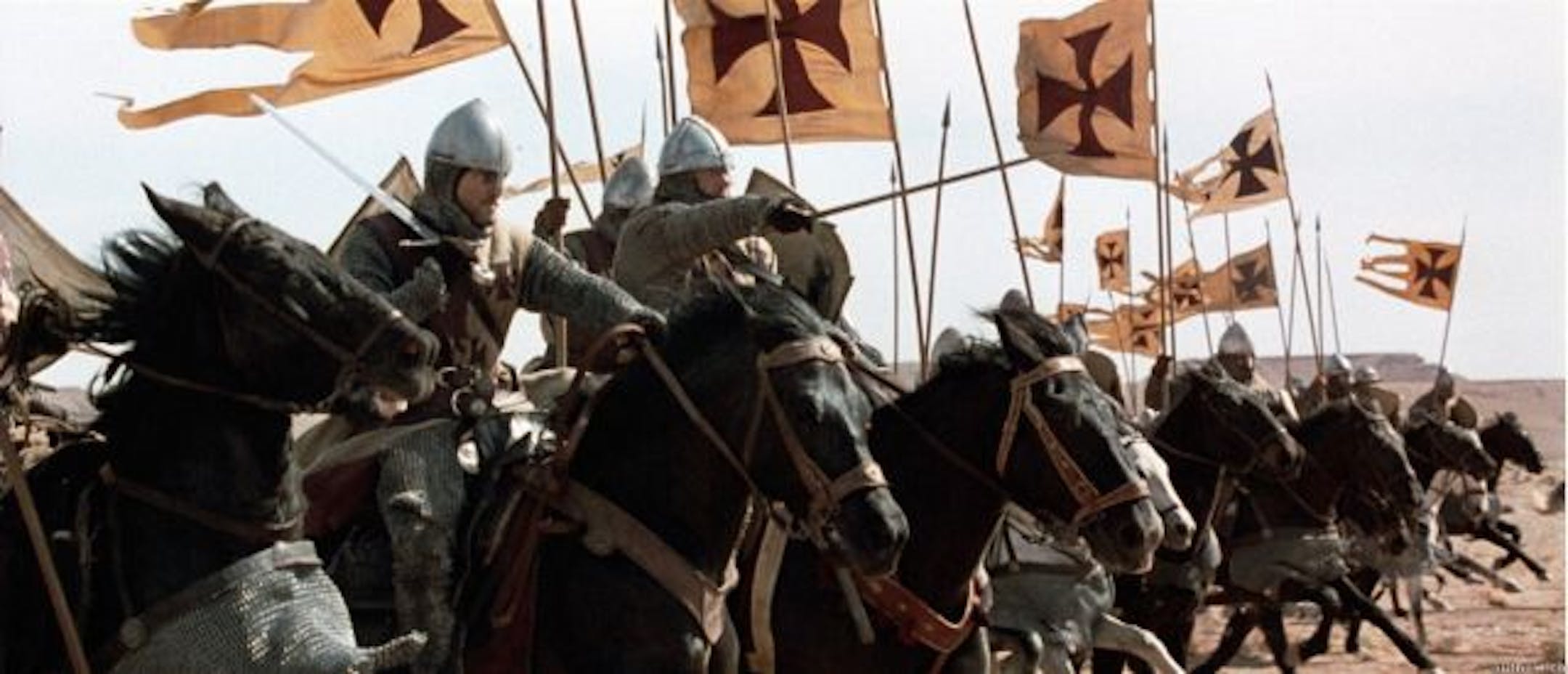
The Crusades, when Christians tried for two centuries to oust Muslims from the Holy Land, left more than a million dead, with territory lost and gained and lost again -- all in the name of Jesus.
These days, Christians are not so quick to call the Crusades the golden age of Christendom, but a millennium later, their memory still reverberates.
Even so, Rodney Stark, 75, a professor of social sciences at Baylor University, says the crusaders were not all that bad, and certainly not barbaric, greedy warmongers.
In his new book "God's Battalions: The Case for the Crusades," the 1996 nominee for the Pulitzer Prize depicts soldiers who truly believed their military service under God would cover over a multitude of sins -- namely all that murdering and marauding required of them in the tumultuous Middle Ages.
"I get tired of people apologizing for the Crusades, like Christians were a bunch of dirty looters that went over there and killed everybody," Stark said. "It just wasn't true."
Of course, apologies on the subject have been many. Pope John Paul II expressed regret for the medieval violence in 2000, the same year Wheaton College changed its nickname from the Crusaders to the Thunder.
Stark argues that Muslims asked for it, that the Crusades were the first military response to Muslim terrorists and their looming, advancing Islamic empire. "It wasn't like they were harmless, little people minding their own business and tending their sheep," he said.
Indeed, Islamic powers were mighty before the Crusades and bounced back after Christian attempts at conquest ultimately failed.


